
Porsche Macan PPF: a Right of Passage
Why the Porsche Macan Hood is a PPF Right of Passage
Why the Porsche Macan Hood is a PPF Right of Passage
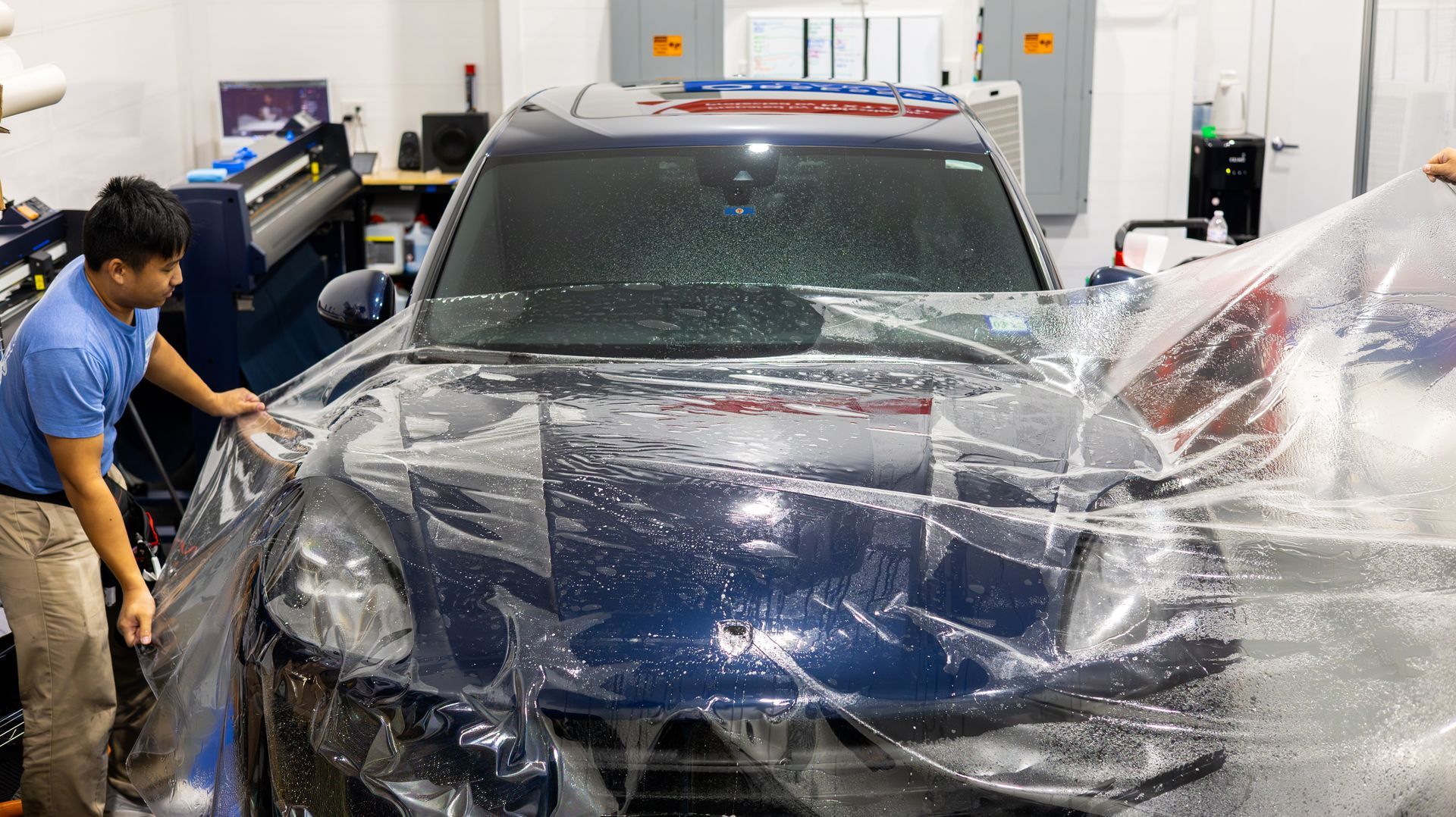
If you ask any seasoned paint protection film installer in the Dallas-Fort Worth area what their least favorite hood is to wrap, the Porsche Macan comes up almost every time. It's not because Macans are bad cars — they're fantastic. It's because the hood is one of the most technically demanding panels in the modern PPF world. The aggressive clamshell shape, the deep wrap-around at the fenders, the long stretch toward the doors — it punishes any installer who tries to shortcut the process.
At Humble Crew Auto Spa in Plano, TX, the Macan hood has become something of an internal benchmark. We call it a right of passage for a reason. If an installer can lay film cleanly on a Macan hood — no lifted edges, no torn adhesive, no fingers, no squeegee marks — they can handle just about anything that rolls into our shop.
This blog walks through exactly what we do differently on a Macan hood, why those steps matter, and why Plano-area Porsche owners trust us with their cars.
The Porsche Macan Hood: Why It's So Hard to Wrap
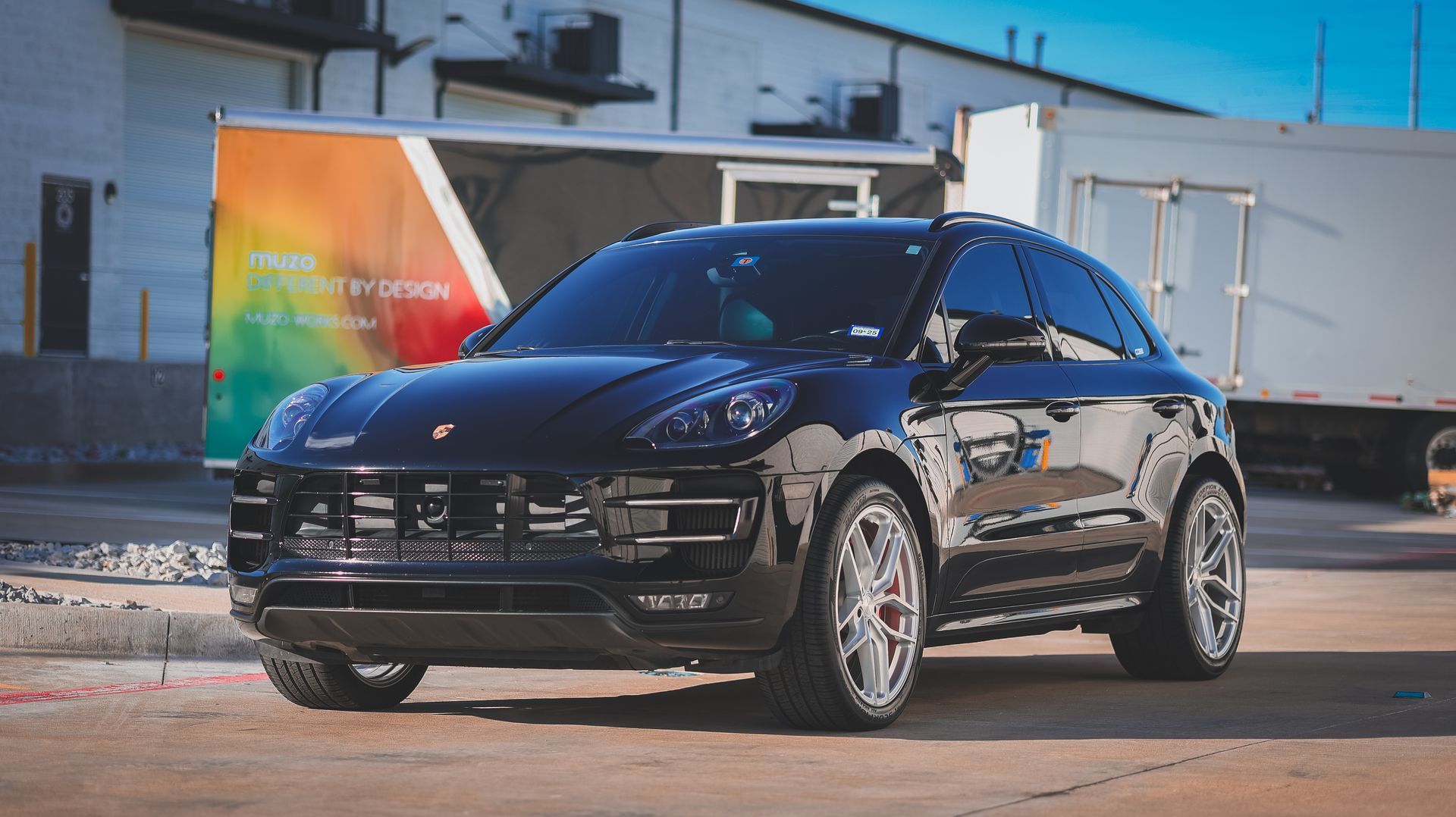
The Macan's hood is a clamshell design, meaning the hood doesn't just sit flat on top of the car — it wraps down and over the front fenders, creating a continuous body line from the windshield all the way down to the headlights. From a design standpoint, it's gorgeous and very Porsche. From an installer's standpoint, it's a nightmare.
Here's why:
- The film has to travel a huge distance from the centerline of the hood out to the fender edges, which means massive stretch.
- That stretch causes the film to thin out, which can affect long-term durability if the install isn't dialed in.
- The wrap-around contour at the fender corners is one of the tightest compound curves on any production SUV.
- Once the film gets pulled aggressively, the adhesive wants to grab the paint prematurely before you've had a chance to lay it correctly. That's a one-way ticket to a torn install or visible adhesive marks under the surface.
If you've heard the phrase "this is where shops cut corners," the Macan hood is exactly where it happens. We don't.
Step 1: The Prep Work Most Plano PPF Shops Skip
Before we even open a roll of film, we spend serious time on prep. On a typical hood, prep is straightforward — wash, decon, clay, alcohol wipe, install. On a Macan? We do all of that, plus a few things you won't see at most other Plano-area PPF shops.
Badge Removal
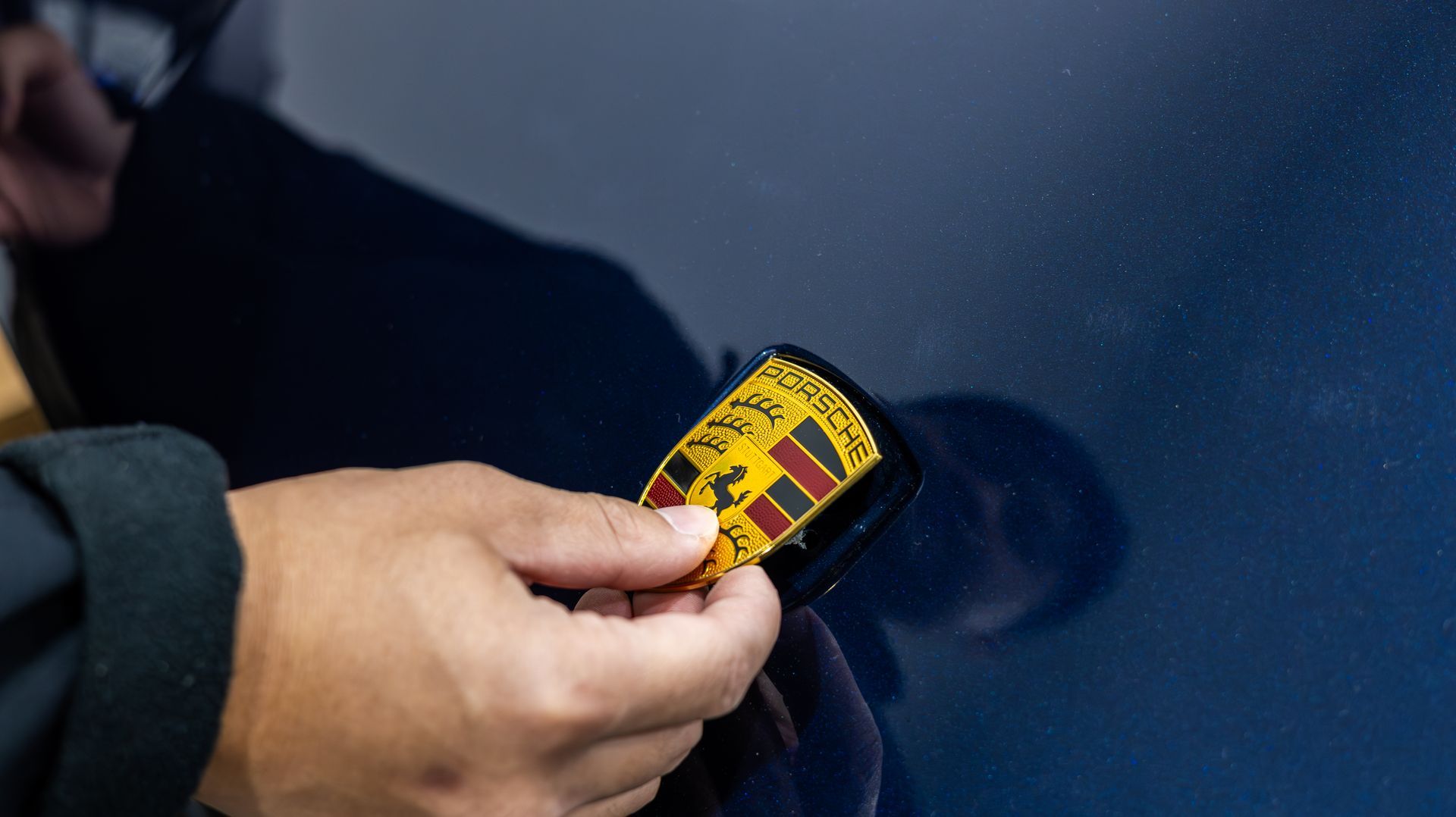
The Porsche crest comes off. Period. Wrapping around a badge looks lazy and traps adhesive, soap, and slip solution where you can't get to it. We carefully remove the front crest, set it aside, and reinstall it after the film has cured.
Clay and Decontamination
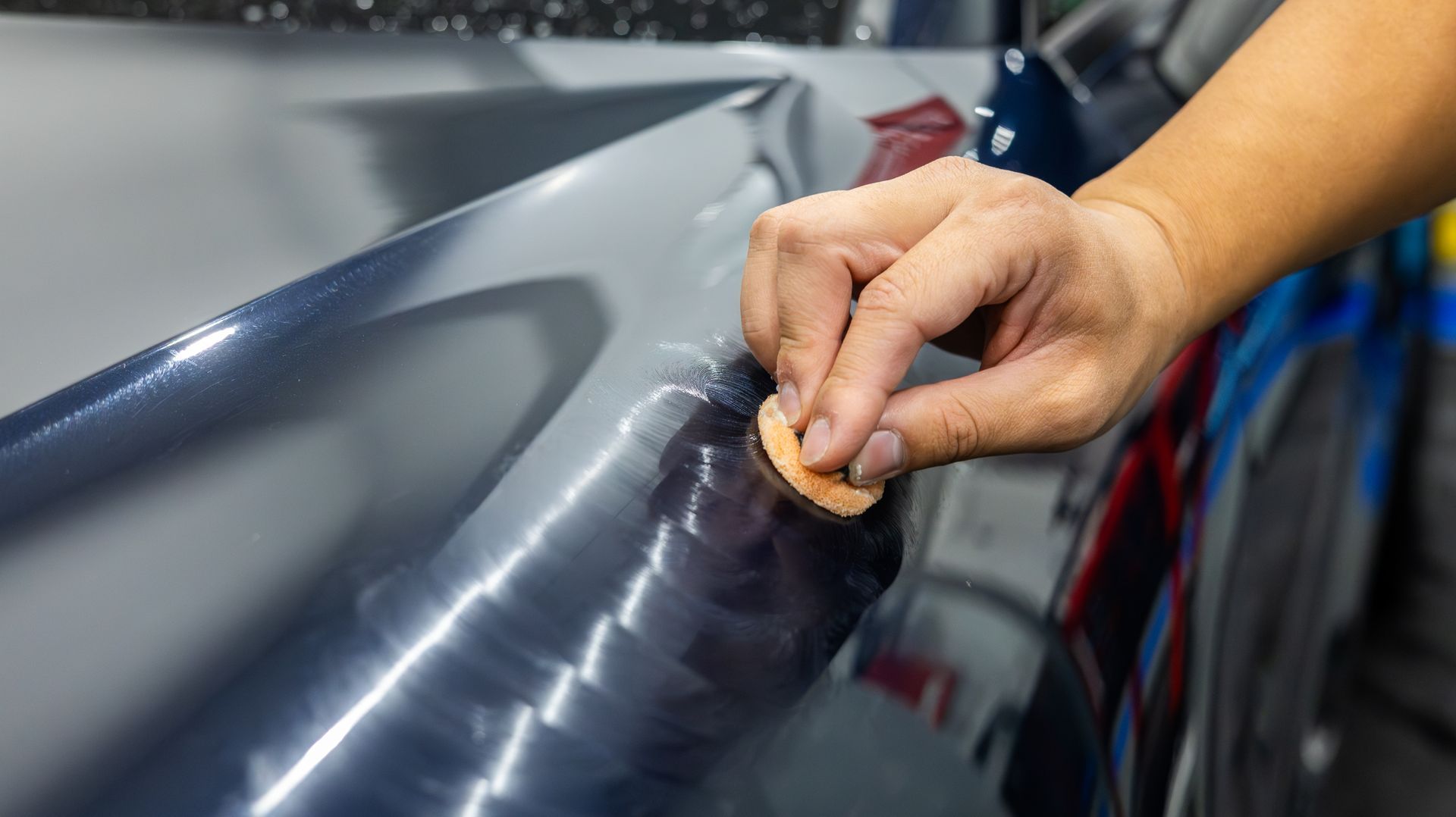
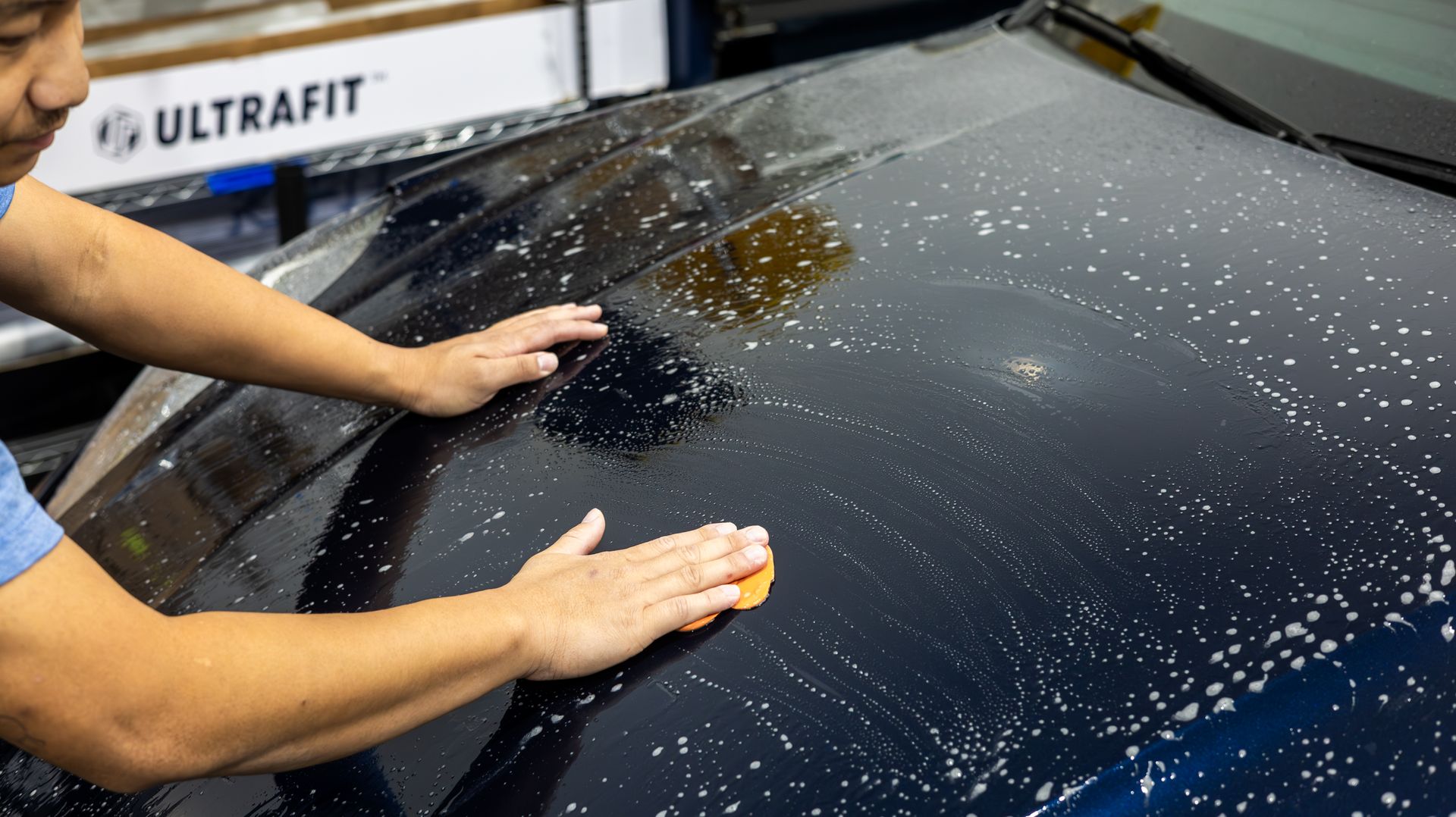
Even on a brand-new car, the paint is rarely clean enough for film. We clay the entire hood to pull bonded contaminants out of the clear coat, then follow with an isopropyl alcohol wipe to strip any oils, polish residue, or factory wax. Film bonds to the paint — not to whatever is sitting on top of it. If your installer skips this step, you'll see edge lift within months.
Waxing the Hard Edges (The Move That Saves the Install)
This is the step that separates the experienced installers from the rest. Before we begin the install, we
wax the hard edges of the hood — specifically the perimeter and the wrap-around fender contours.
Why? Because the Macan hood requires such an aggressive stretch that the film's adhesive will want to grab the paint
before the installer is ready. If that happens, you end up with what we call
torn adhesive marks — areas where the glue has separated from the film backing and stuck to the paint, leaving cloudy, splotchy artifacts visible under the clear film for the life of the install.
A thin layer of wax at those high-friction zones gives the film a few critical seconds of slip — just enough time to position, stretch, and lay the film without the adhesive grabbing prematurely. After the film is set, the wax is fully sealed under the panel and never affects bond strength on the actual coverage area, because the wax is only on the hard edges where the film tucks, not on the broad surface.
This is one of those quiet pro moves that takes years to learn the hard way. We've already done that learning so you don't have to.
Nature's Symphony
Faces of Humanity
Sands of Time
Step 2: The Stretch — Where the Real Skill Shows
Once prep is locked in, it's time to lay film. And on a Macan, the install method is fundamentally different from a standard hood.
Why We Use 72-Inch XL Film
Most PPF rolls are 60 inches wide. That's plenty for the vast majority of vehicles on the road. The Macan hood, because of its clamshell wrap, is wide enough that 60-inch film either won't cover the panel in a single piece or it'll require relief cuts that compromise the clean look we're after.
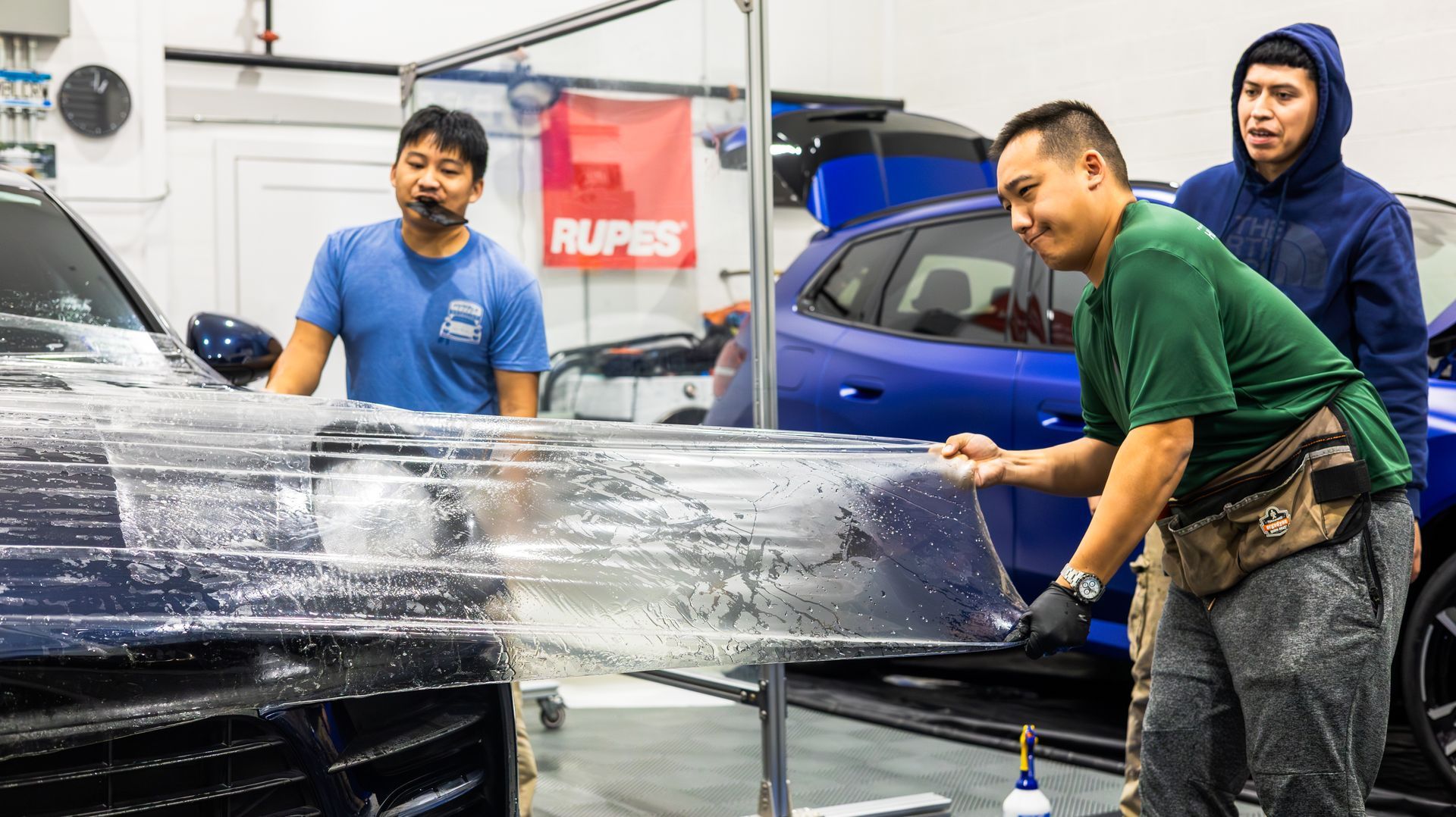
We use 72-inch XL film to bulk install the Macan hood as one continuous piece. No seams. No relief cuts down the middle. Just a single, clean sheet of protection across the entire panel.
Pulling Toward the Doors
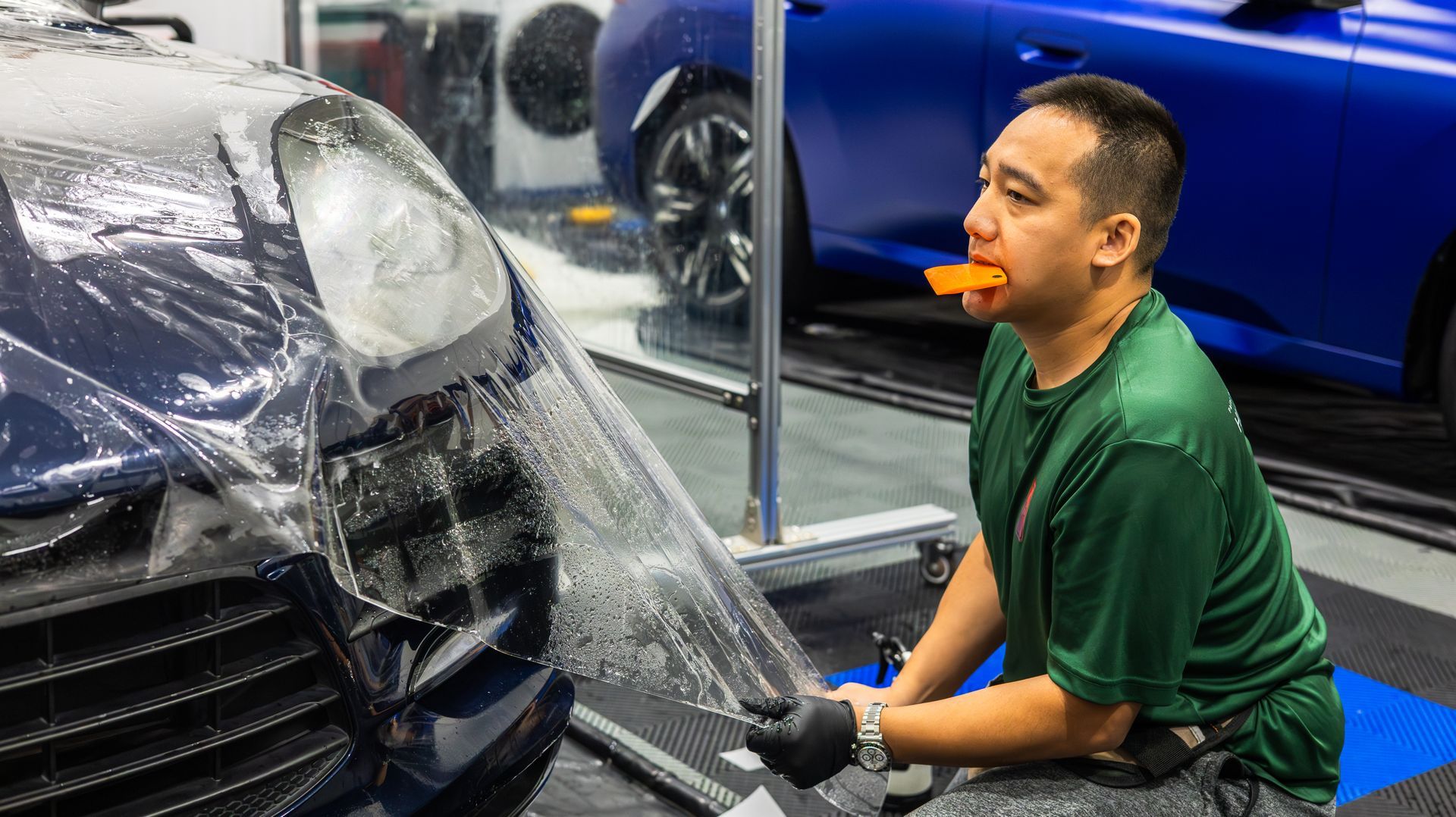
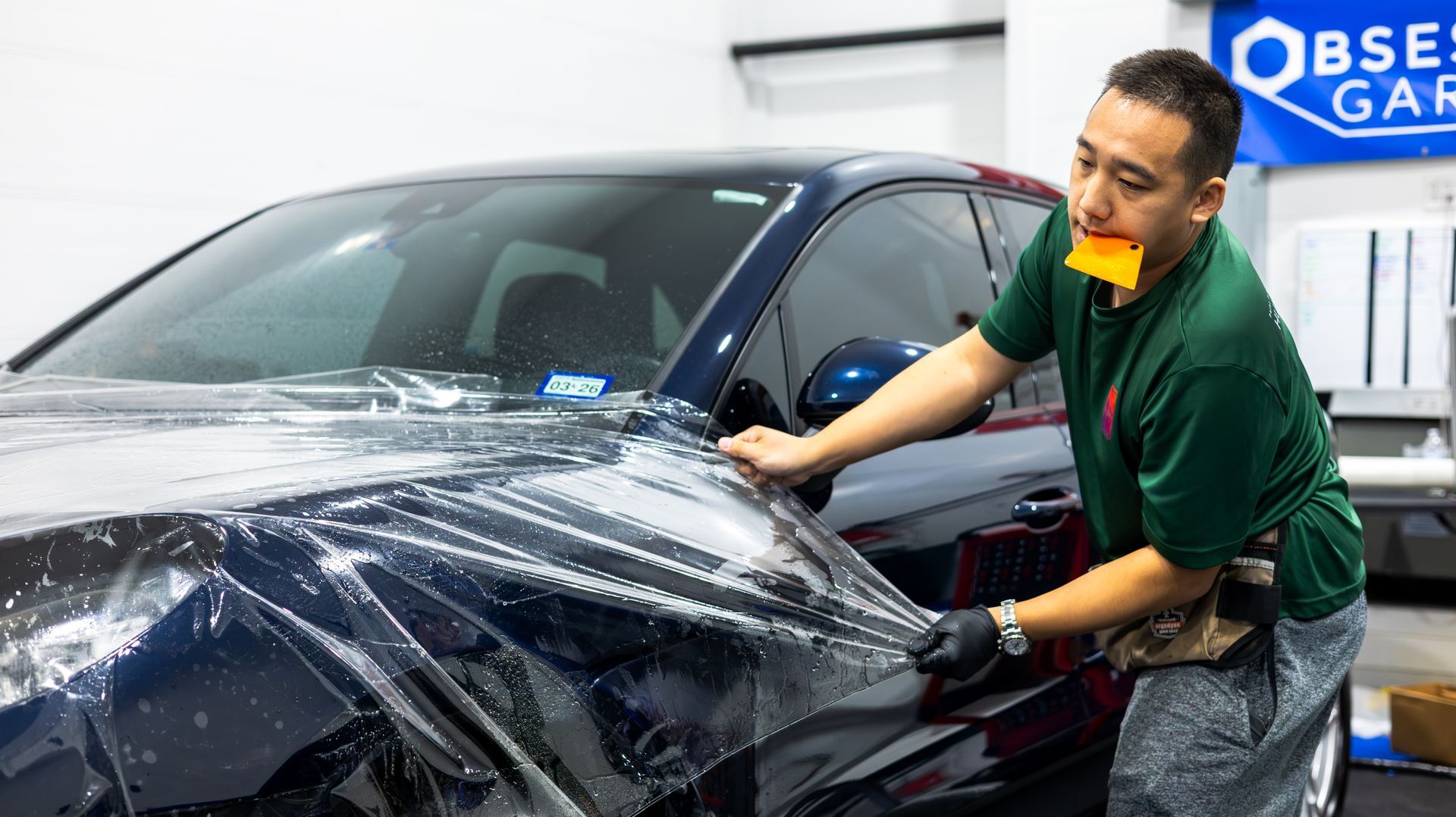
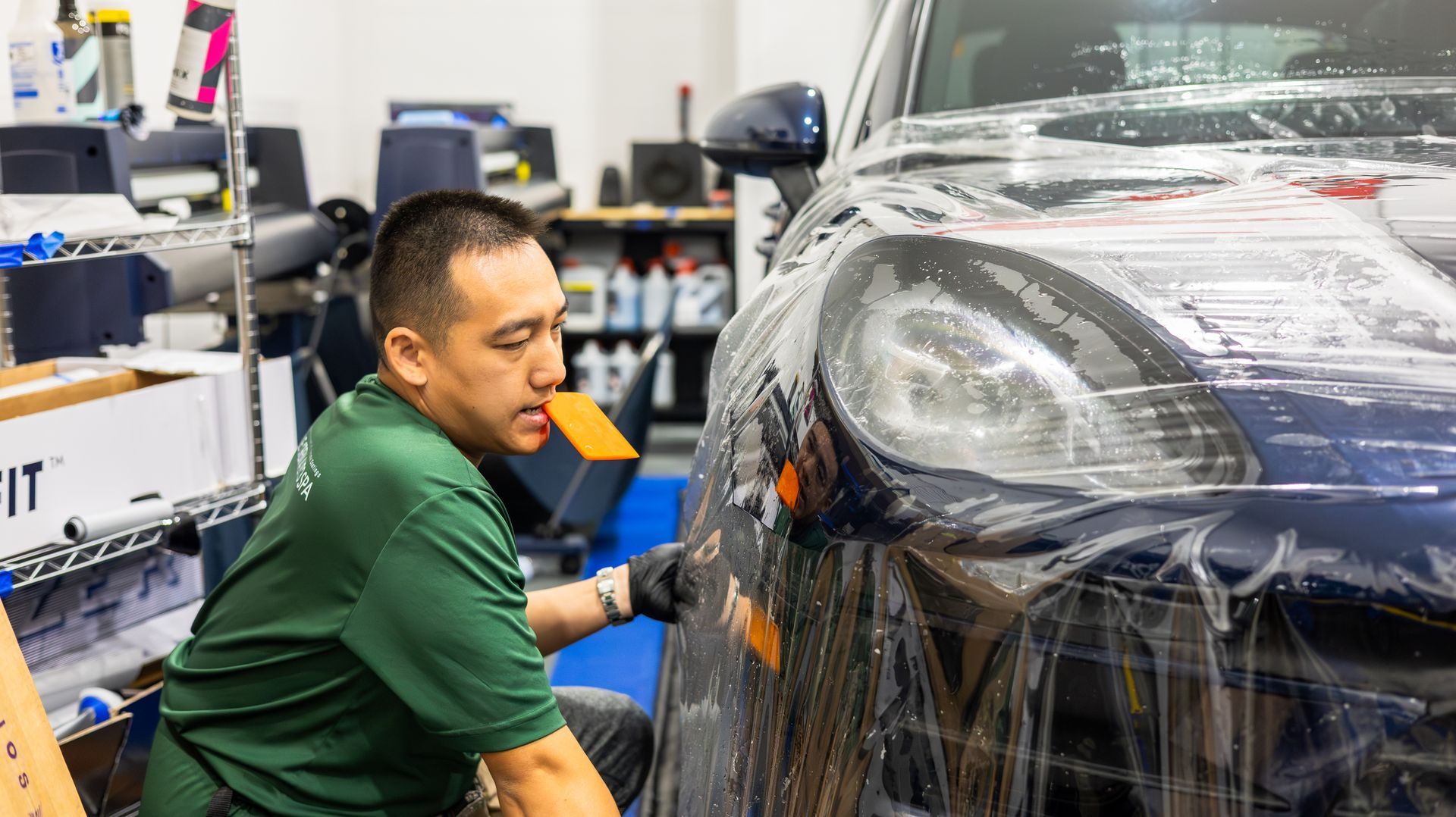
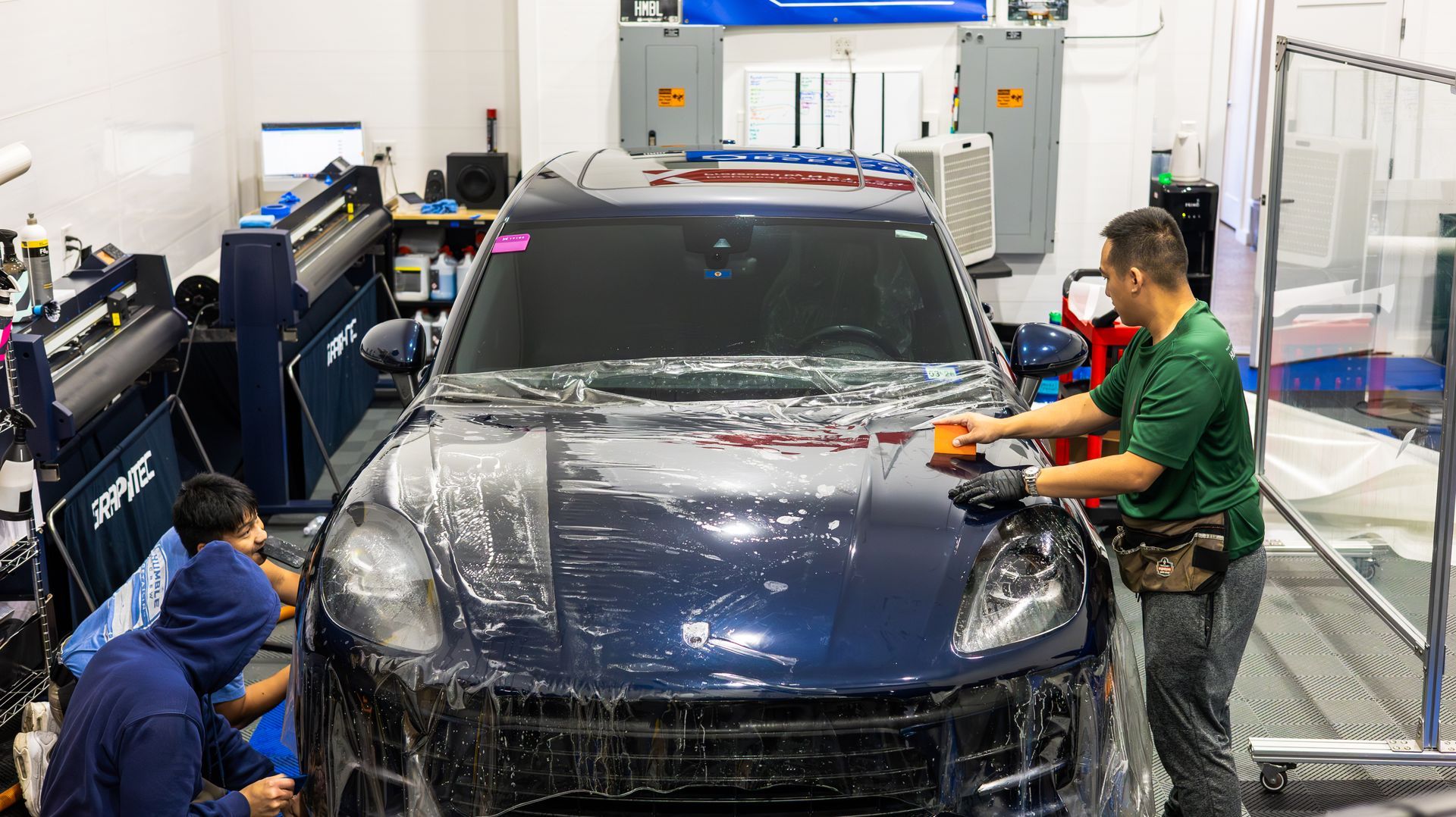
Most installers attack a hood by working from the center outward. On a Macan, that's a recipe for disaster — the wrap-around fender section will fight you the entire way. Our approach is to pull the film aggressively toward the doors, using the natural geometry of the panel to our advantage. This redistributes the excess material outward and lets us tuck cleanly at the fender-to-door gap, which is where the Macan hood terminates.
The trick is even distribution of the excess material as you go. If you pile up too much film in one zone, you get fingers (puckered ridges of stretched film) that are nearly impossible to relax out without heat-stretching to the point of damaging the film. We feather the stretch progressively across the entire panel so that every square inch of film is doing its share of the work.
Why This Matters Long-Term
Aggressive but balanced stretch means the film will stay put. Uneven stretch creates internal stress in the film, and stressed film is the first to lift — usually starting at a corner six to twelve months after the install. We've seen Macans come into our Plano shop from other regional installers with lifted hood corners after less than a year. That's almost always a stretch distribution problem from the original install.
Step 3: Hand Trimming and Tucking — the Last 5%
Even with perfect prep and a perfect stretch, the install isn't done until the trimming is dialed.
Trimmed by Hand, 5 mm From the Perimeter
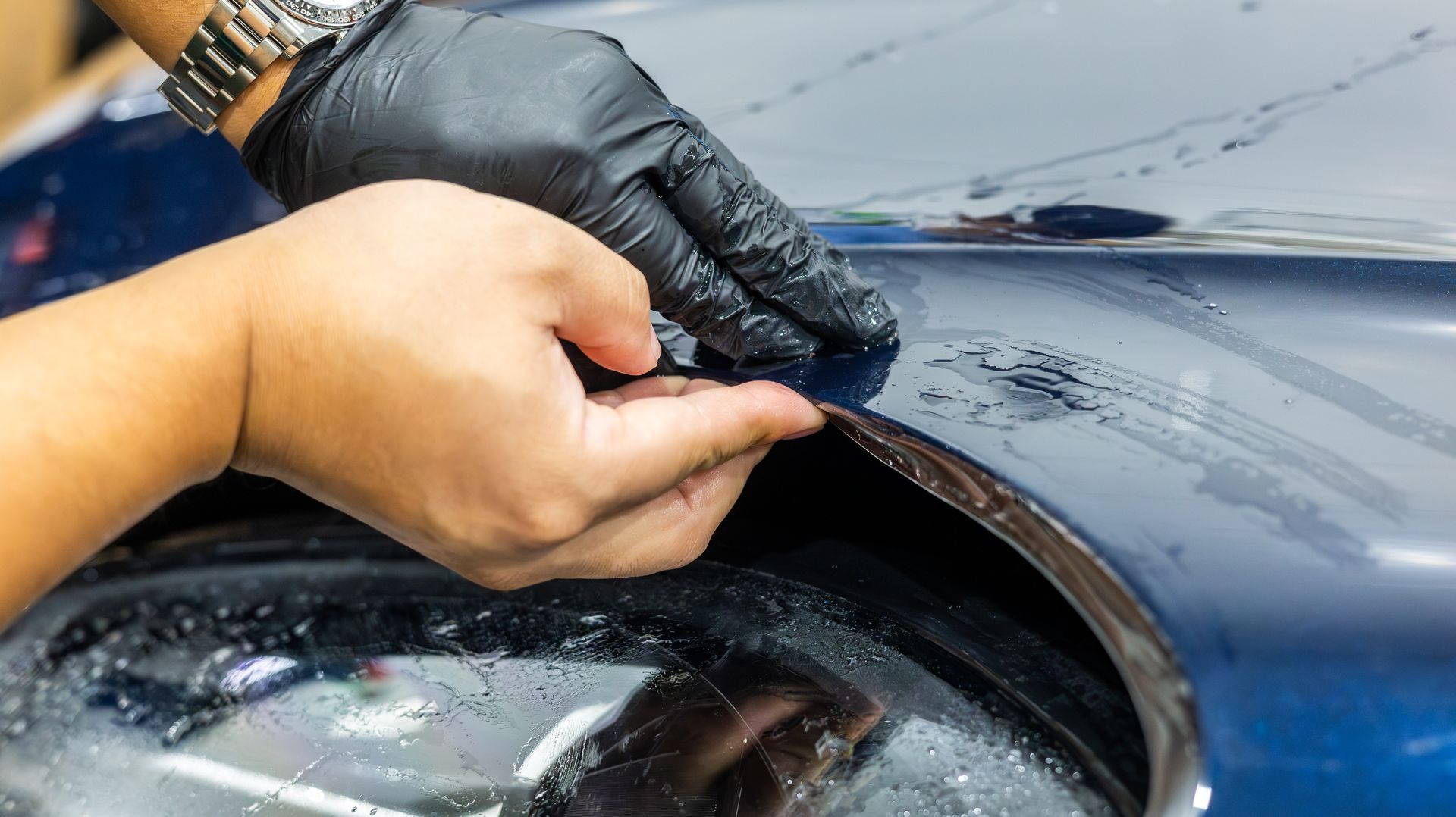
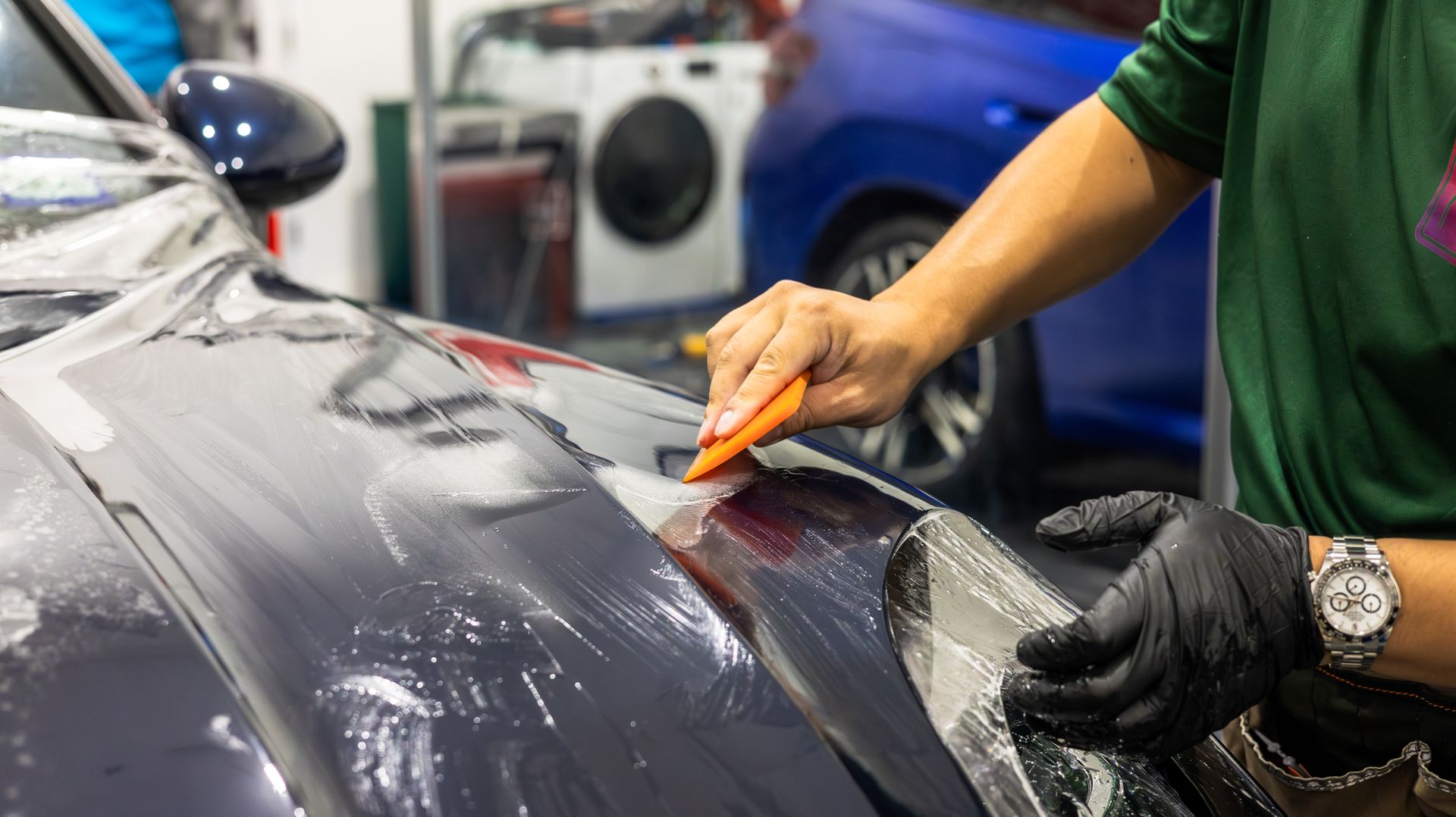
We don't pre-cut Macan hood templates with a plotter. Every edge gets trimmed by hand, approximately 5 mm inside the panel perimeter. That extra 5 mm is what allows us to tuck the film under the panel edge instead of leaving it exposed.
Nature's Symphony
Faces of Humanity
Why Tucked Film Always Wins
There are three reasons tucked film is non-negotiable on a high-end install:
- It looks better. No visible cut line, no seam, no faint outline catching the light at certain angles. The film disappears into the panel.
- It's more durable. An exposed edge is the first thing that lifts when the car hits a car wash, a pressure washer, or a Texas summer. Tucked edges have nowhere to catch and nothing to grab.
- It's a cleaner install overall. Even at delivery, the difference between a tucked install and a flush-cut install is night and day. One looks like factory protection. The other looks like an aftermarket sticker.
Headlight Trim Tucking
We don't stop at the panel perimeter. On the Macan, we also trim and tuck along the inner part of the headlight trim. This is a detail that almost no one will notice consciously — but the install will look subtly more "right" because of it. The film disappears into the headlight gap rather than sitting visibly on top of it.
The Rest of the Car Is the Easy Part
Honestly? Once the hood is done, the rest of the Macan is a relatively straightforward install. Bumpers, fenders, doors, mirrors, rocker panels — all standard PPF work for our team. But the hood is where the install lives or dies. If the hood is right, the car is right.
What This Means for Porsche Owners in Plano, TX
If you own a Porsche Macan — or any Porsche, for that matter — and you're shopping for paint protection film in Plano, Frisco, Allen, McKinney, or anywhere else in the DFW metroplex, here's what you should be asking your installer:
- Will you remove the front crest before installing? (If they hesitate, find another shop.)
- Are you using XL 72-inch film for the hood, or 60-inch with relief cuts?
- Do you hand-trim and tuck the perimeter, or flush-cut along the edge?
- What's your process for managing adhesive tack on the wrap-around fender contours?
These four questions will tell you everything you need to know about whether the installer has actually done the work to learn this car, or whether they're treating it like just another hood.
About Humble Crew Auto Spa
We're a Plano-based paint protection film and auto detailing shop that takes Porsche, BMW, Audi, Lexus, and Corvette work seriously. Our team has installed PPF on hundreds of cars across the DFW area, and we've built our reputation on doing the hard installs the right way — including the ones nobody else wants to touch.
If you're considering PPF for your Macan, 911, Cayenne, Taycan, or any other vehicle in your garage, we'd love to talk you through what makes sense for how you actually drive your car. Not every car needs a full front package. Not every car needs full body. The right answer depends on the car, the paint, your daily route, and how long you plan to keep the vehicle.
Stop by the shop in Plano, TX, or reach out for a quote. We're happy to walk you through the install process in person — including a closer look at why the Macan hood deserves the respect it gets from professional installers everywhere.