Protecting THE spec: Porsche 997 Turbo S Paint Correction, Ceramic Coating, and Leather Coating.
Ceramic Coating an insane spec'ed Porsche 997 Turbo S
Every once in a while a car rolls into the shop and the whole team stops what they're doing to look at it. This was one of those days.
A
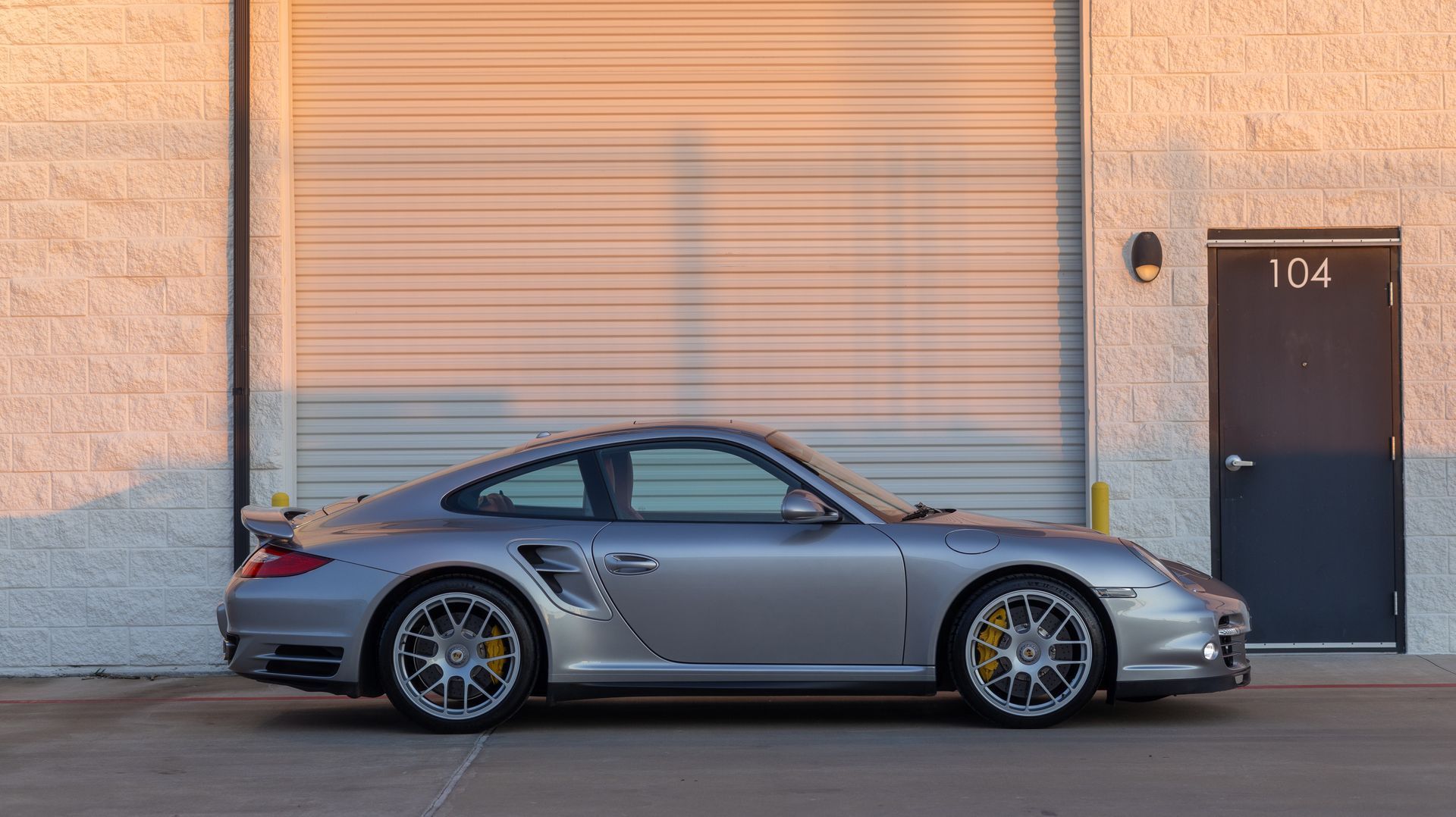
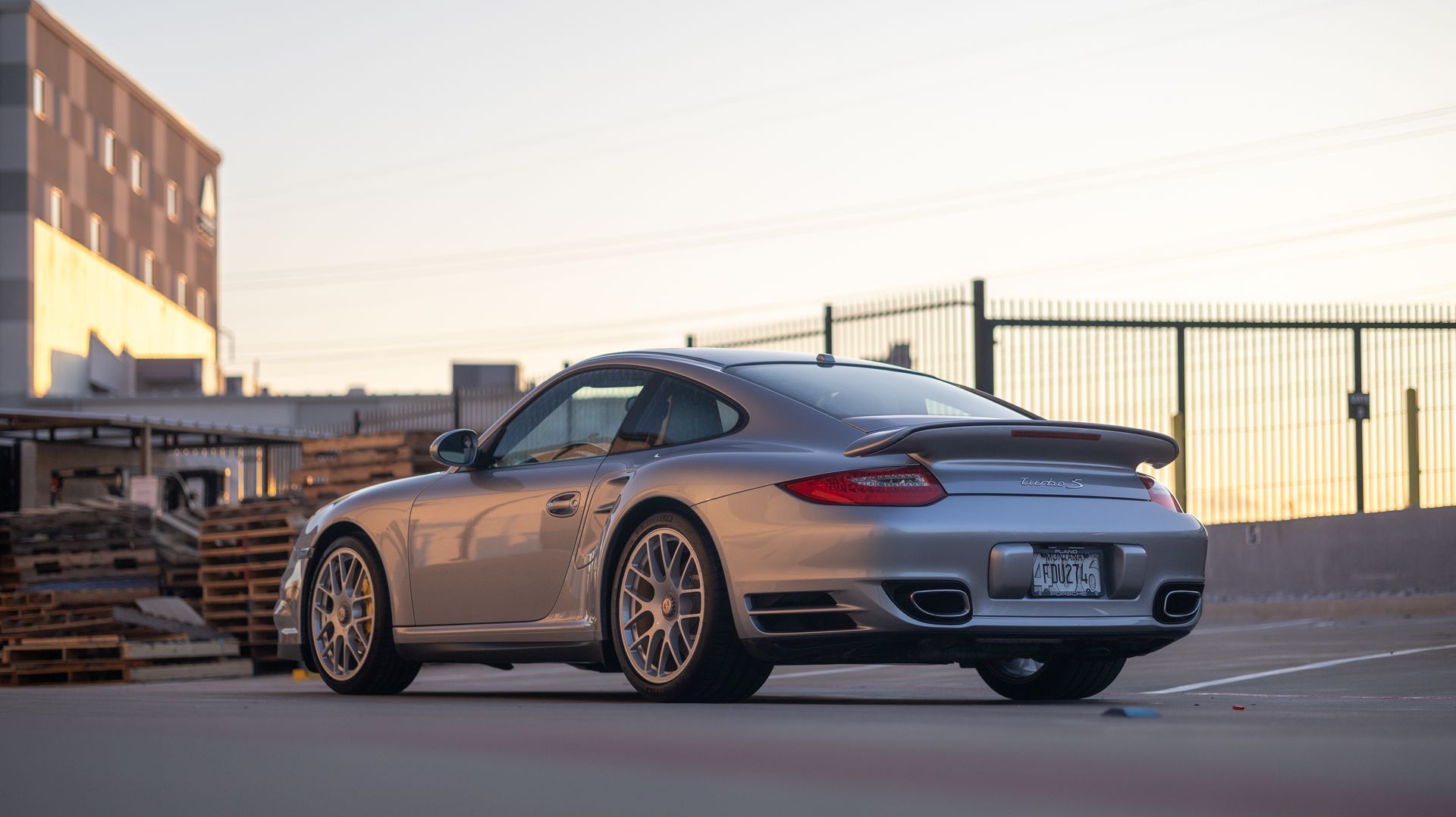
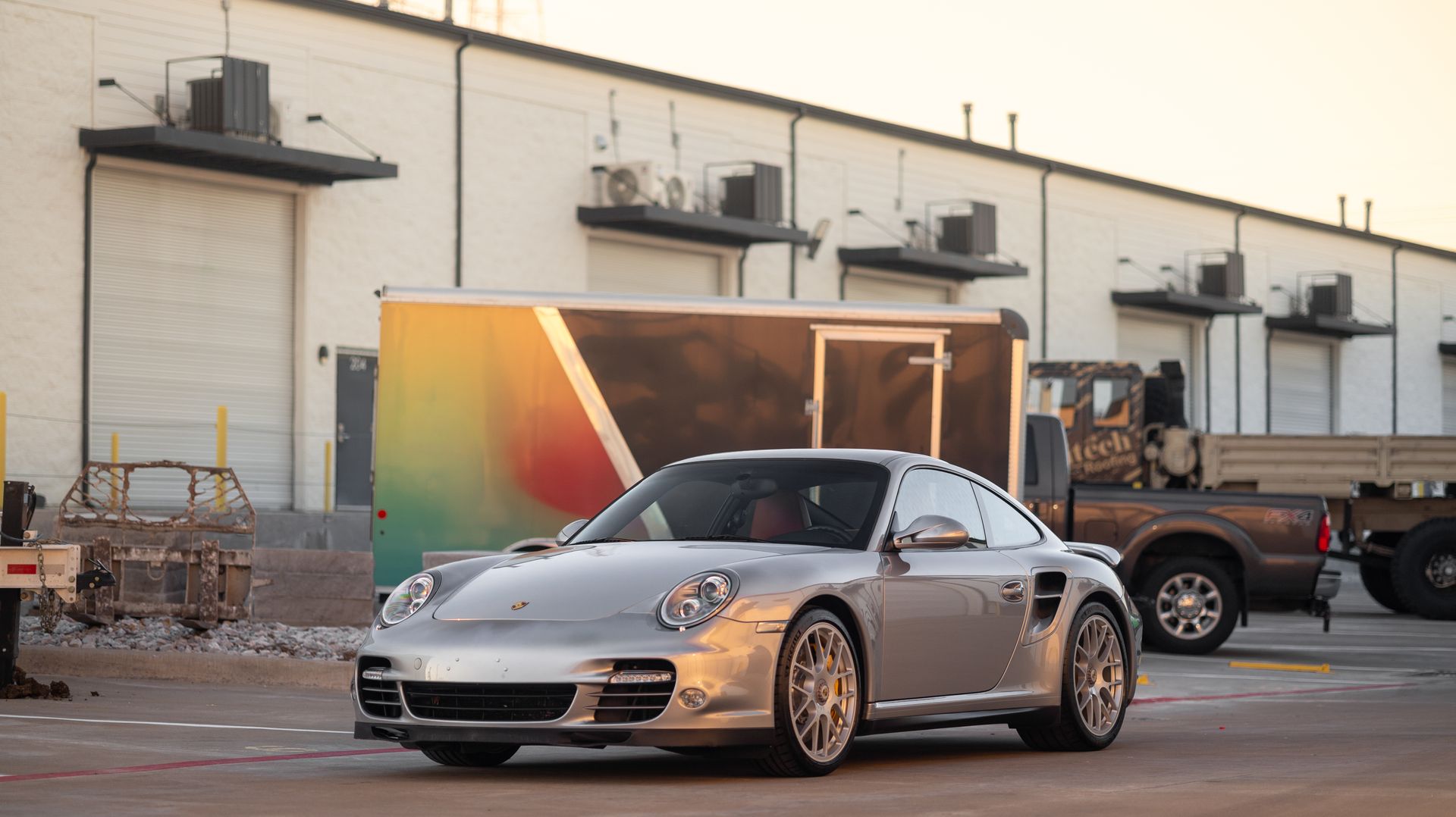
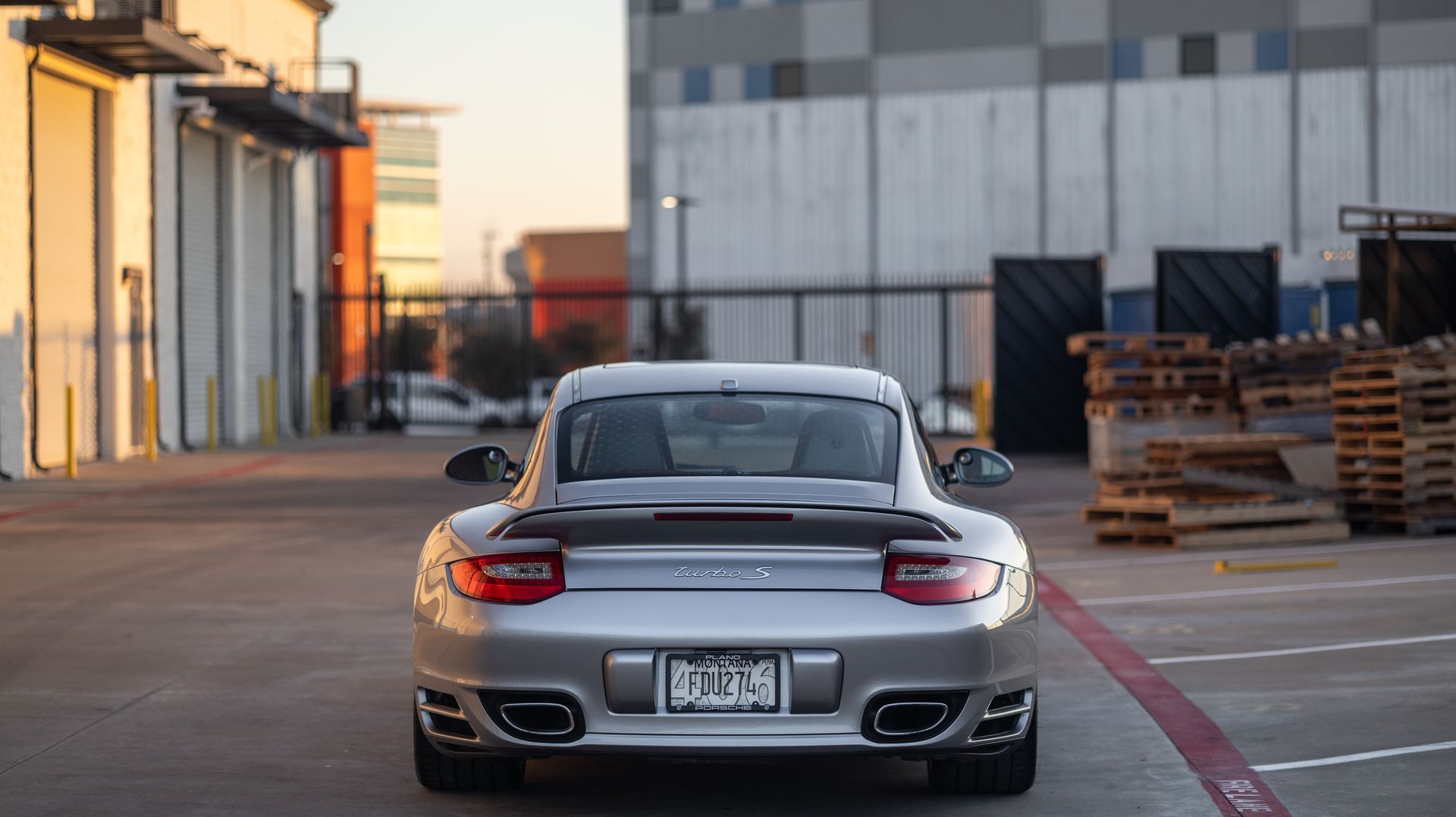
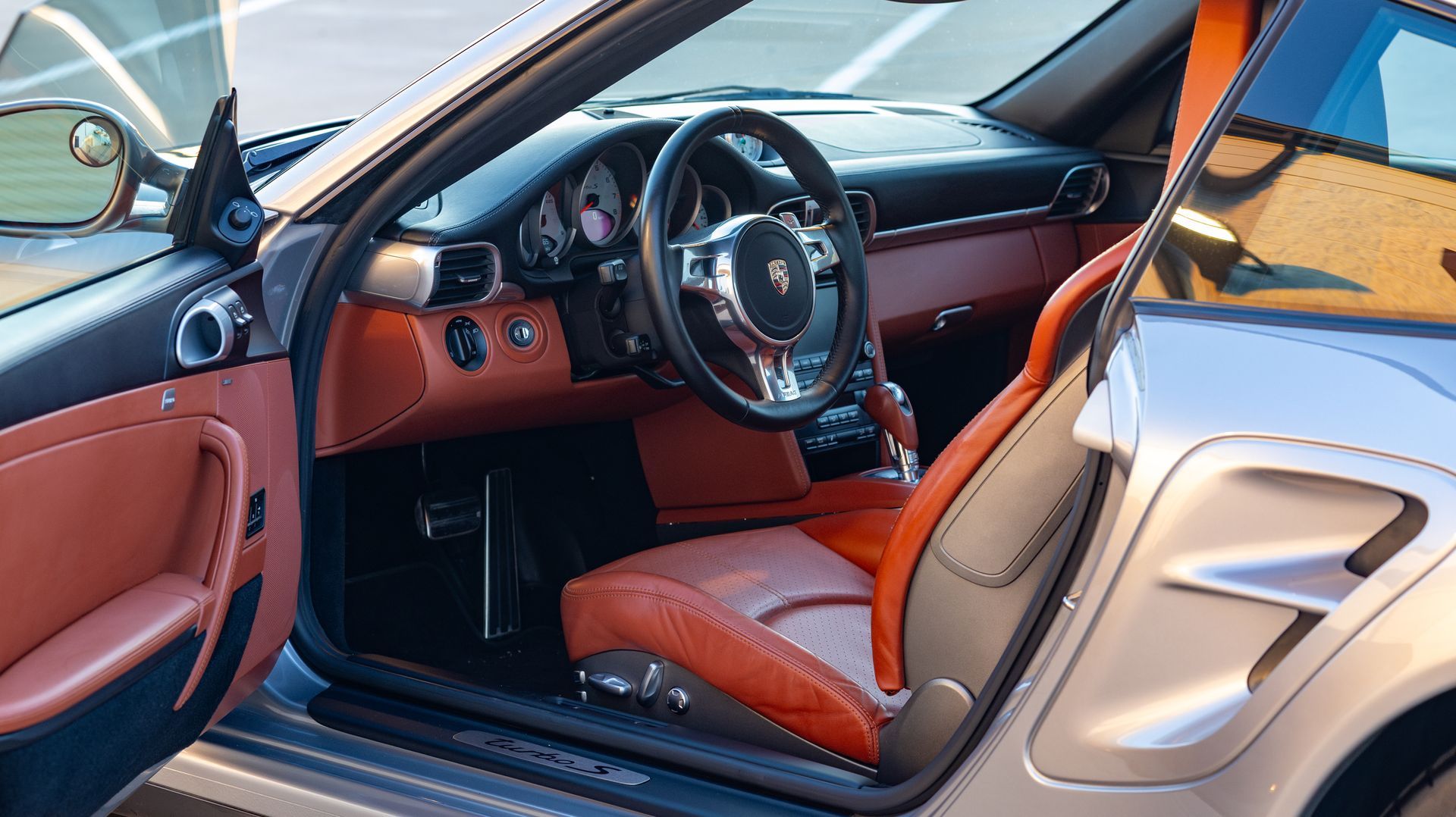
silver Porsche 997.2 Turbo S with a
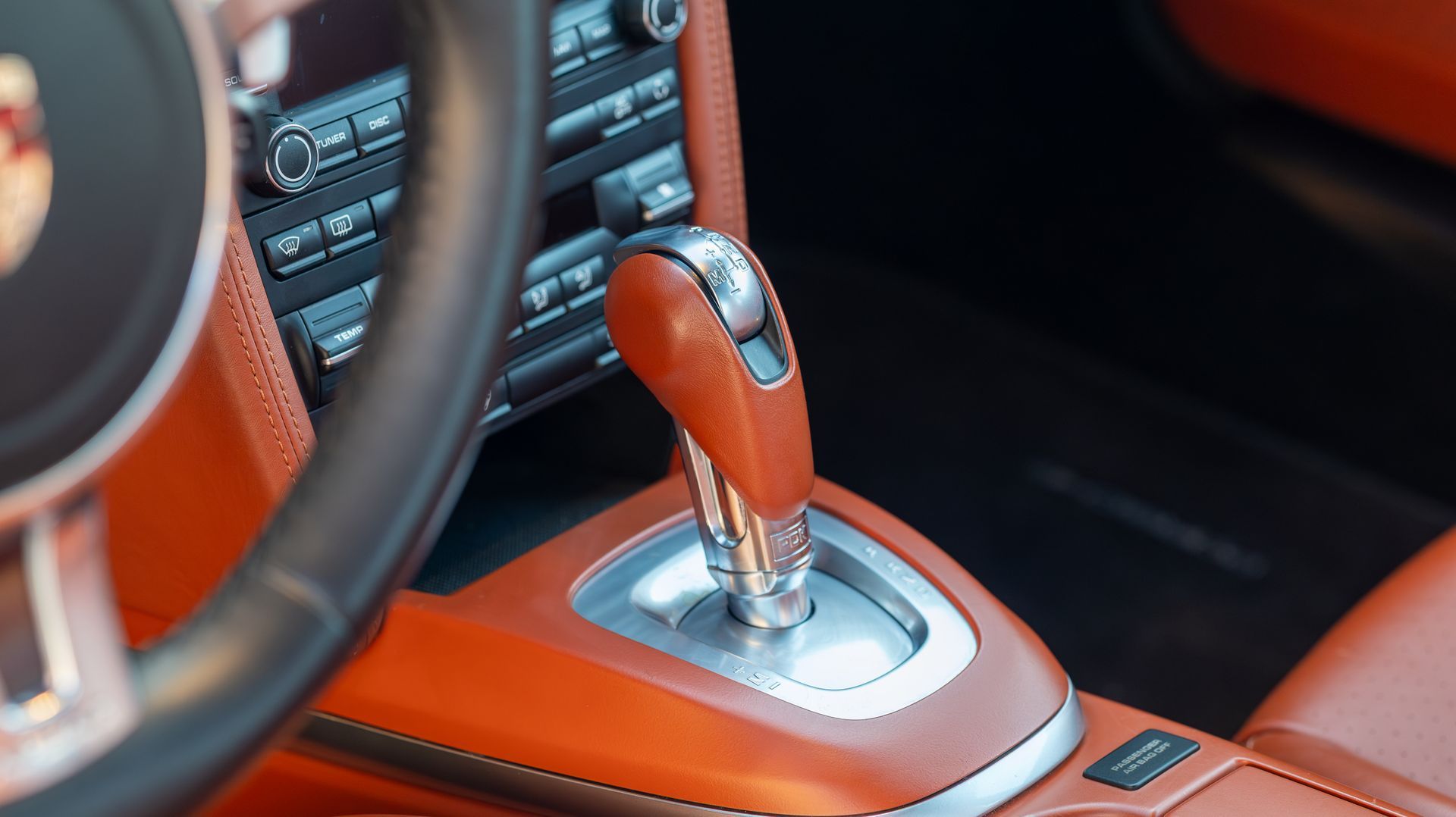
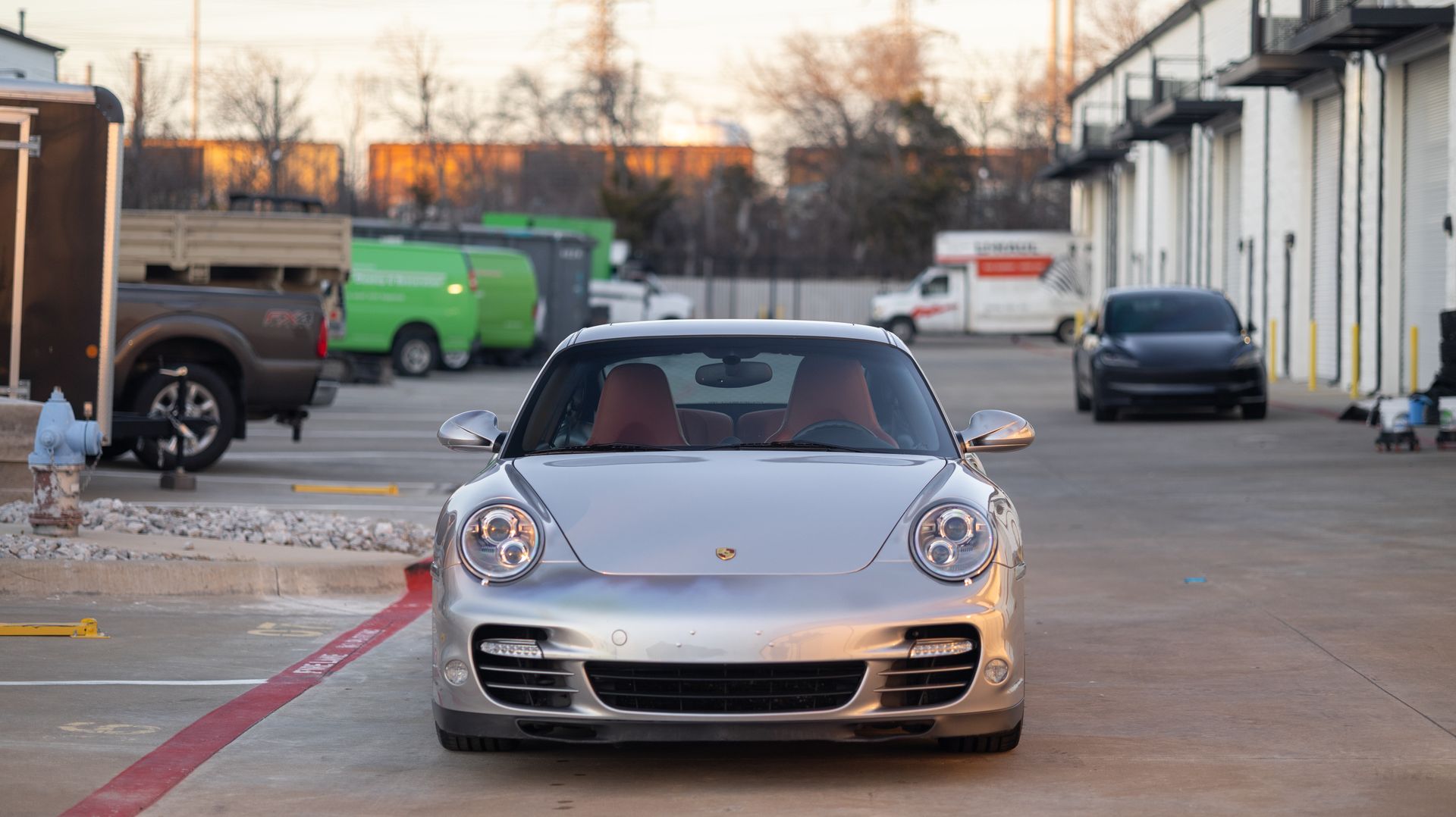
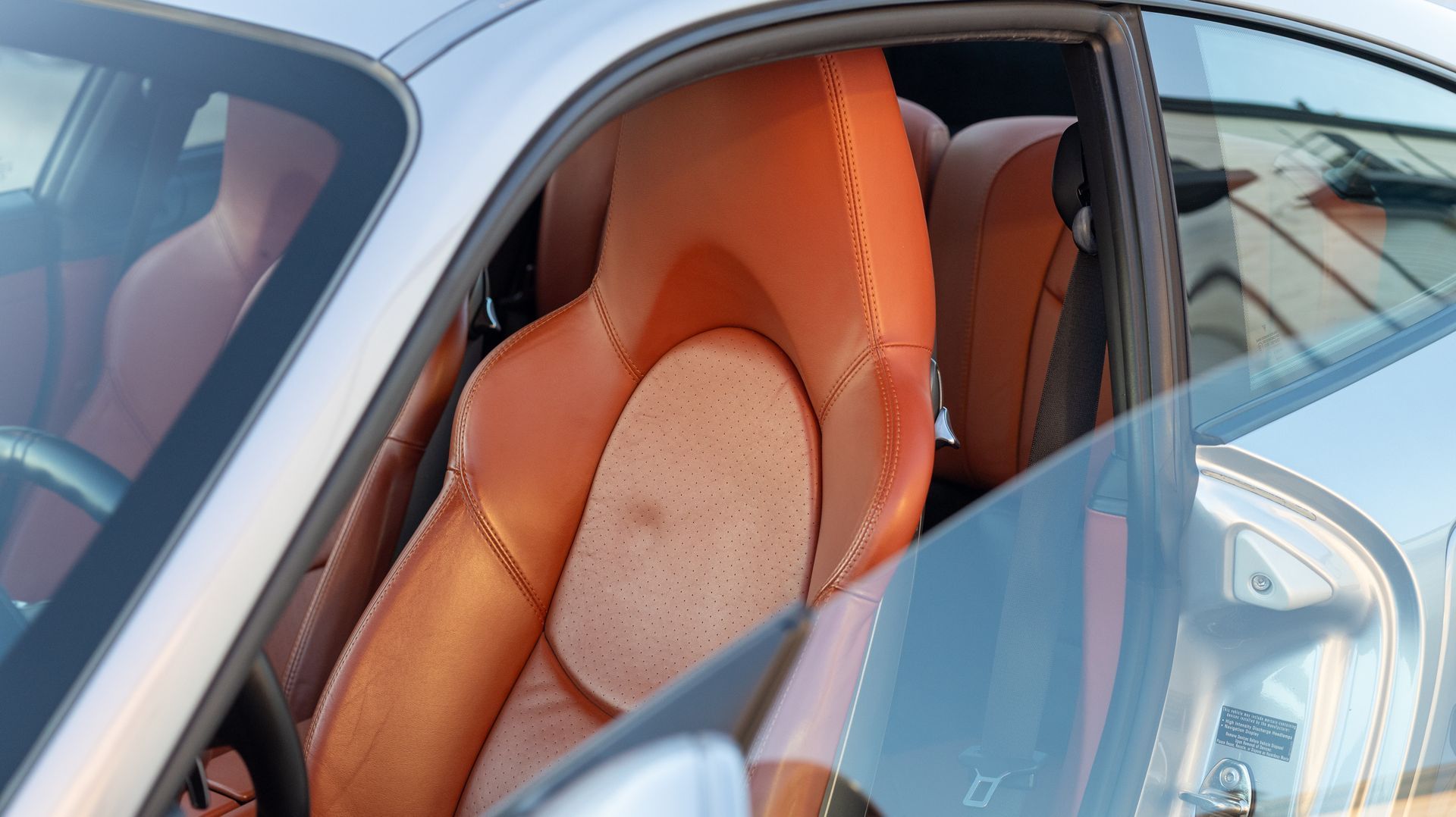
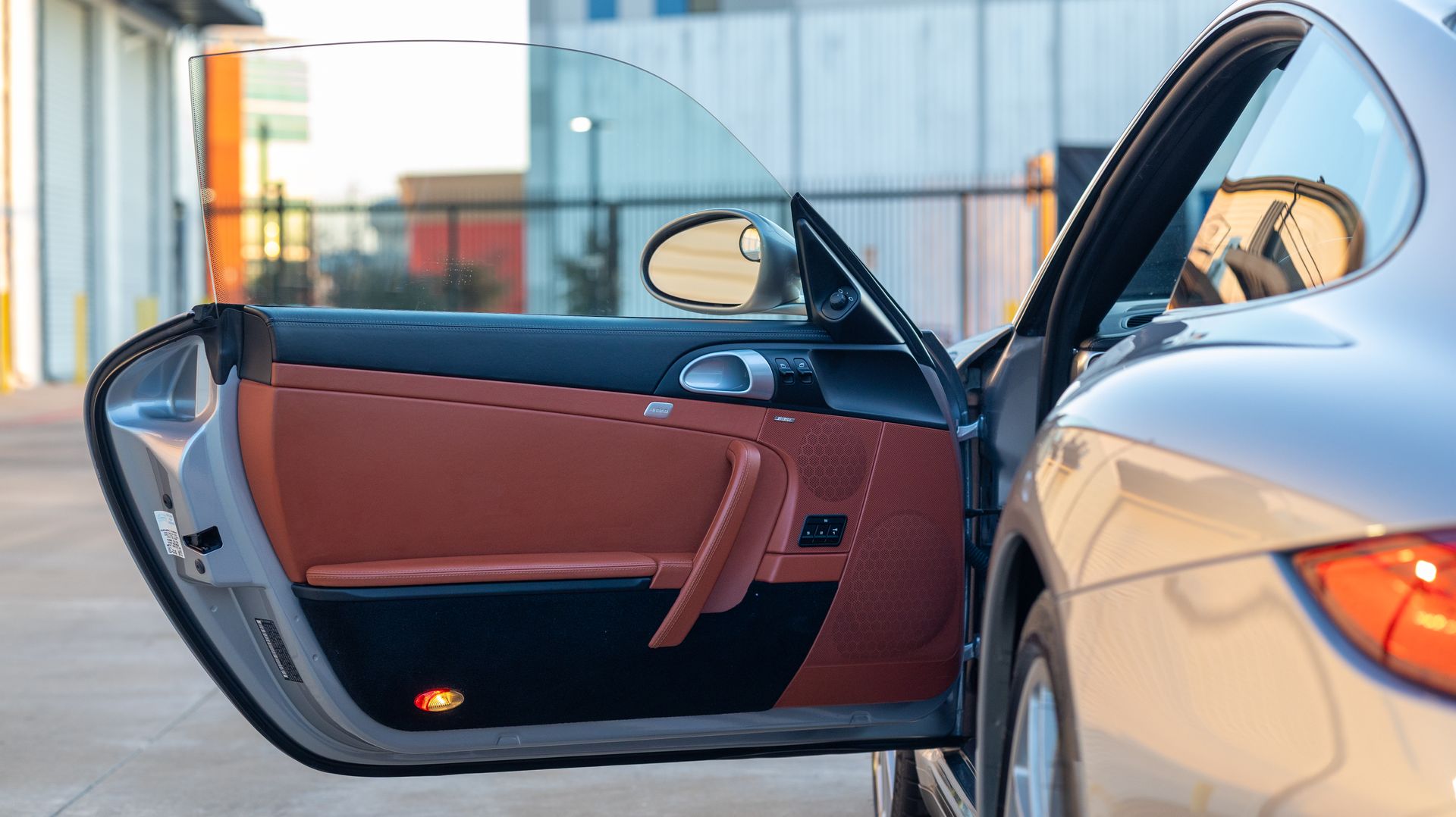
saddle brown leather interior,
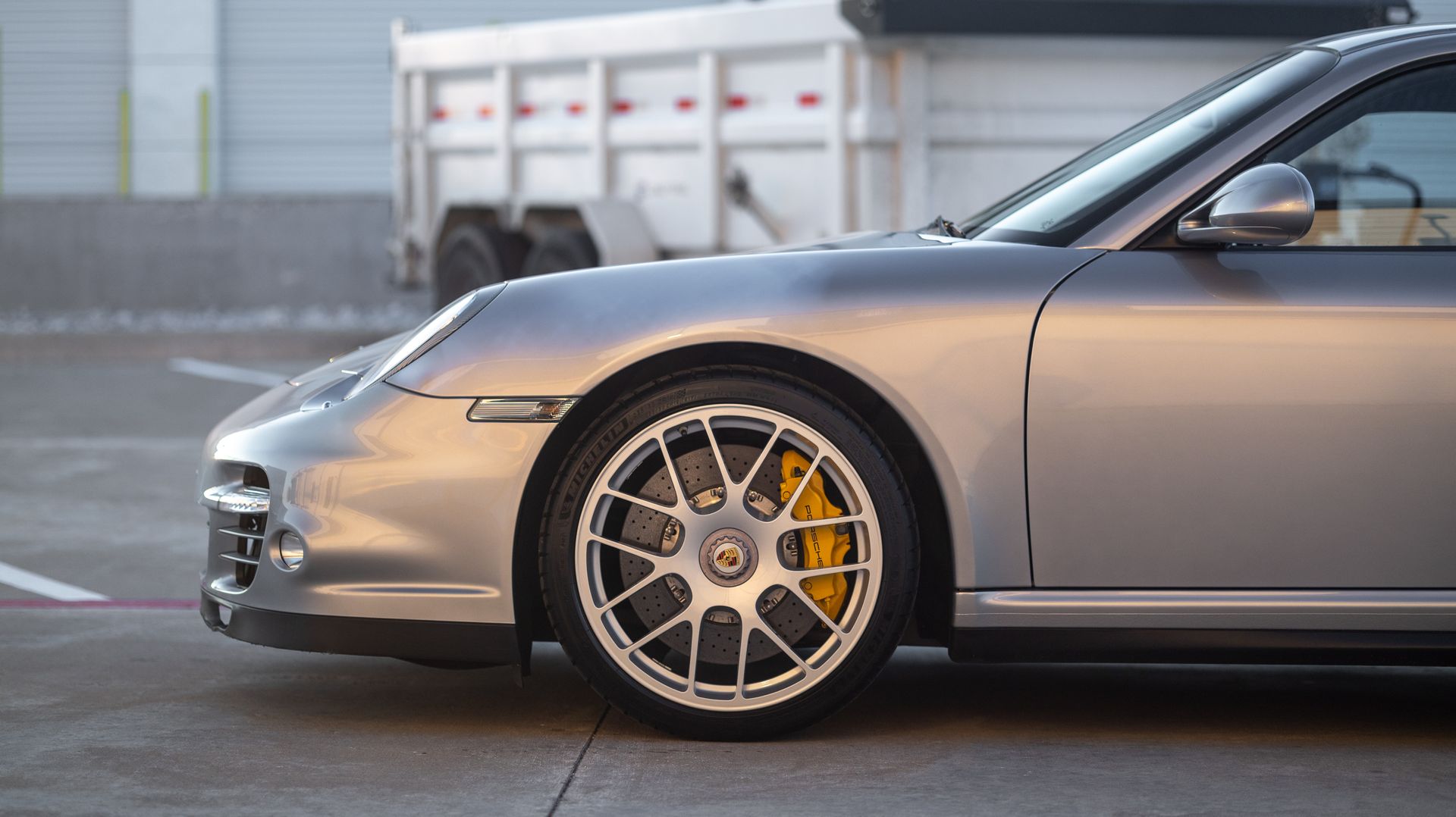
center-lock wheels, and
carbon ceramic brakes. For anyone who isn't deep in the Porsche world, that combination of options is rare — most 997 Turbo S models were ordered with black or grey leather, and the saddle brown was a much less common pick. Pair it with the silver exterior and the yellow ceramic brake calipers showing through the center-lock wheels, and you've got one of the cleanest factory specs Porsche put together in that era.
The 997.2 Turbo S is also quietly becoming a collector car. Production was limited, the 3.8L flat-six is a known engineering high point, and clean low-mileage examples have been climbing in value for the last several years. So when the owner brought it in and asked us to
preserve it — not just clean it — we knew exactly what that meant.
This blog walks through the full service: paint correction, ceramic coating on the exterior, and leather coating on the interior. If you own a Porsche or any car with a paint and interior worth protecting, and you're in Plano, TX or anywhere in the DFW metroplex, this is the level of work we bring to every car that comes through our shop.
Why "Preservation" Is the Right Word for This Car
Most detail shops talk about ceramic coating like it's just a way to make a car shinier. That's not wrong, but it's missing the bigger picture — especially on a car like this.
Coatings are about protection over time. Paint, leather, and trim are all subject to a slow degradation cycle from UV exposure, environmental contamination, and physical contact. On a daily driver that gets traded in every few years, that degradation is mostly cosmetic. On a car that's appreciating in value and being kept long-term, it's the difference between a vehicle that holds its showroom condition and one that needs serious restoration in 5–10 years.
Saddle brown leather, in particular, is the most preservation-sensitive interior option Porsche offered. Light-colored leather stains easily, fades in sunlight faster than darker colors, and shows wear sooner. Without protection, dye transfer from clothing alone can permanently mark it within a year or two of normal use.
So the goal of this service wasn't to make the car look new for a weekend. It was to lock in its current condition for the long haul.
Step 1: Decontamination Wash
Before any correction or coating work begins, the car has to be completely clean — and "clean" doesn't mean what most people think it means. A normal wash gets surface dirt off, but it doesn't touch the bonded contamination that builds up over time: rail dust, brake dust, tar, tree sap residue, and industrial fallout that embeds itself into the clear coat at a microscopic level.
We start with a
foam pre-soak to lift heavy debris off the panels without grinding it into the paint.
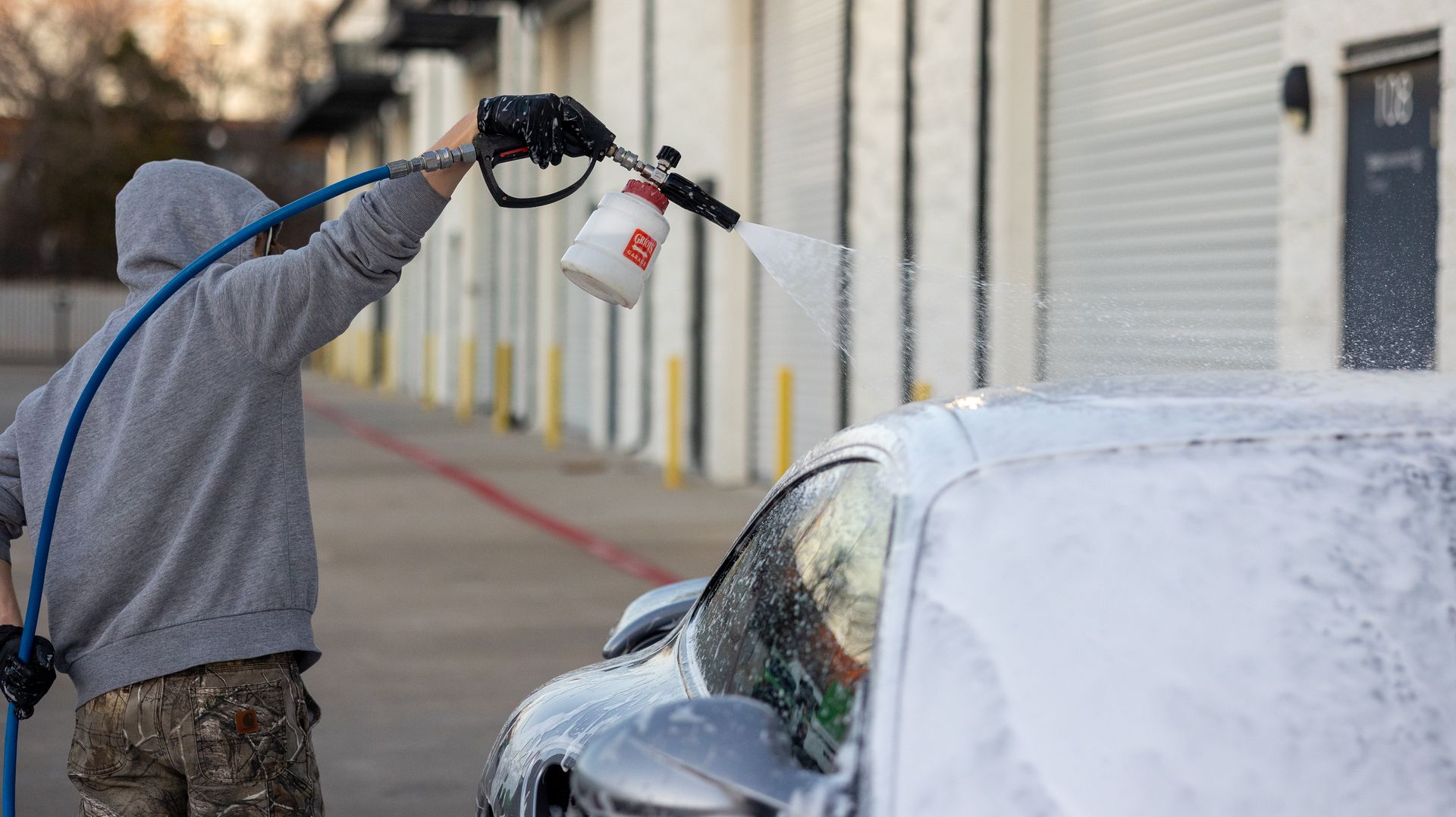
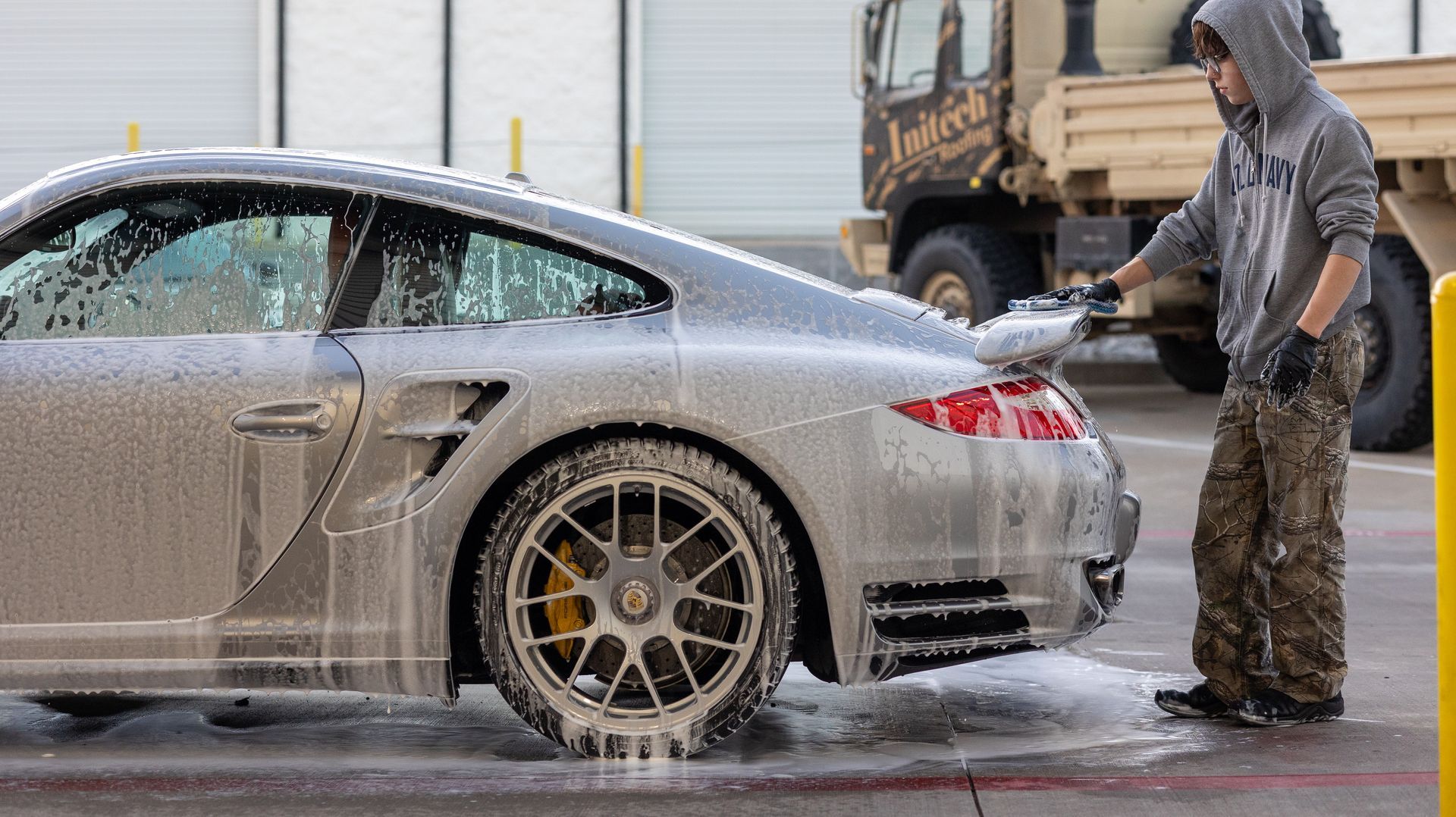
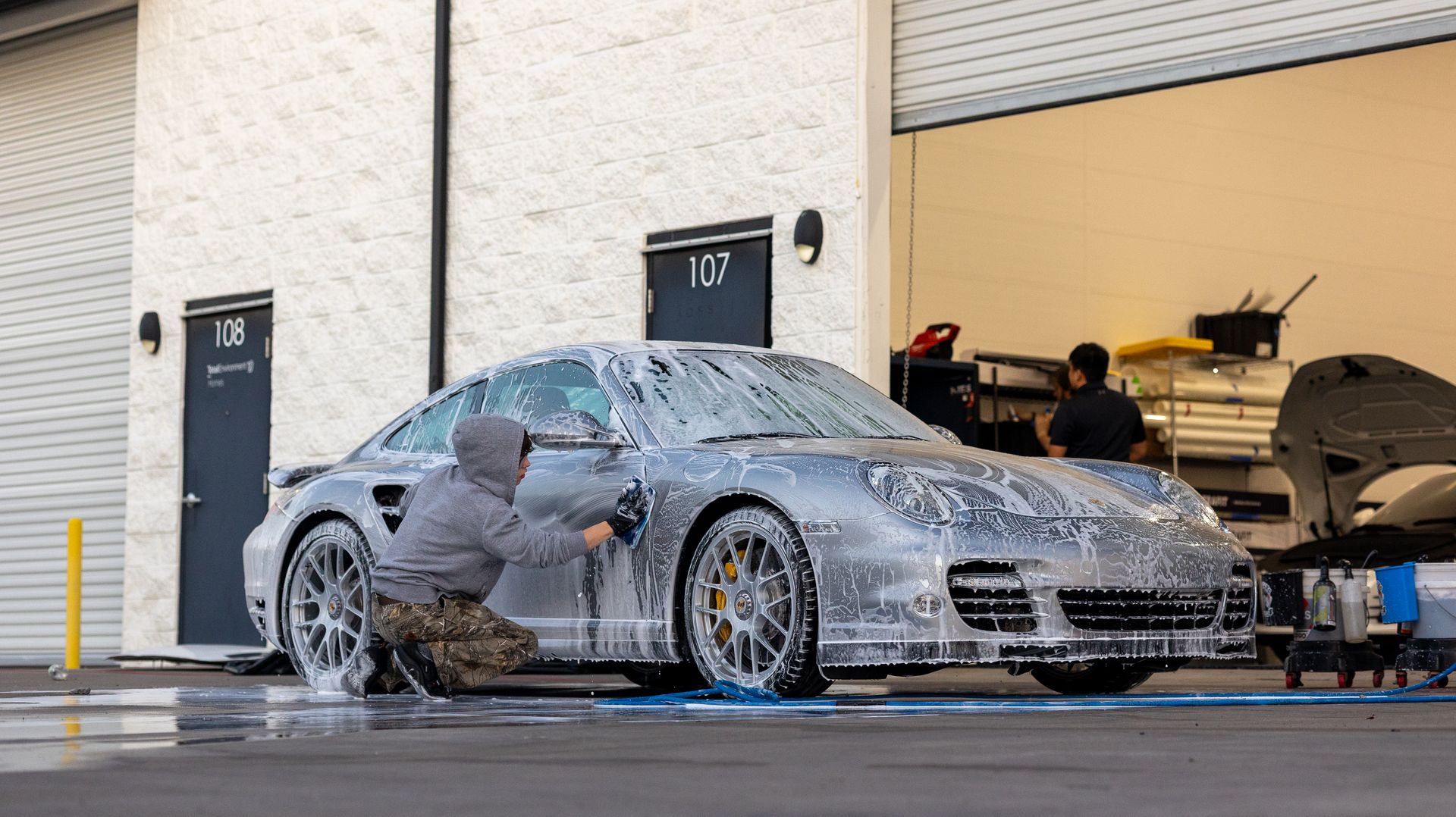
Then a careful two-bucket hand wash with pH-neutral soap. One bucket holds the wash mitt and shampoo solution, the other holds clean rinse water — this prevents the contamination we just lifted off the car from getting reintroduced to the paint on the next pass. It's a slower process than a single-bucket wash, but it's the only way to wash a car at this level without inducing more swirls than you started with.
After the wash, the car gets a clay bar and chemical decontamination treatment to pull out anything still bonded to the surface. This is the prep work that determines whether the paint correction will actually take or whether you're just polishing over a layer of garbage.
Step 2: Paint Correction
Silver is a deceptive color. From far away, it looks forgiving — defects don't stand out the way they do on red or black. But once you get under direct light, swirls, holograms, water spots, and micro-marring all show up clearly. The owner had been driving and washing this car for years, and like any well-loved Porsche, it had accumulated the kind of light defect pattern you'd expect.
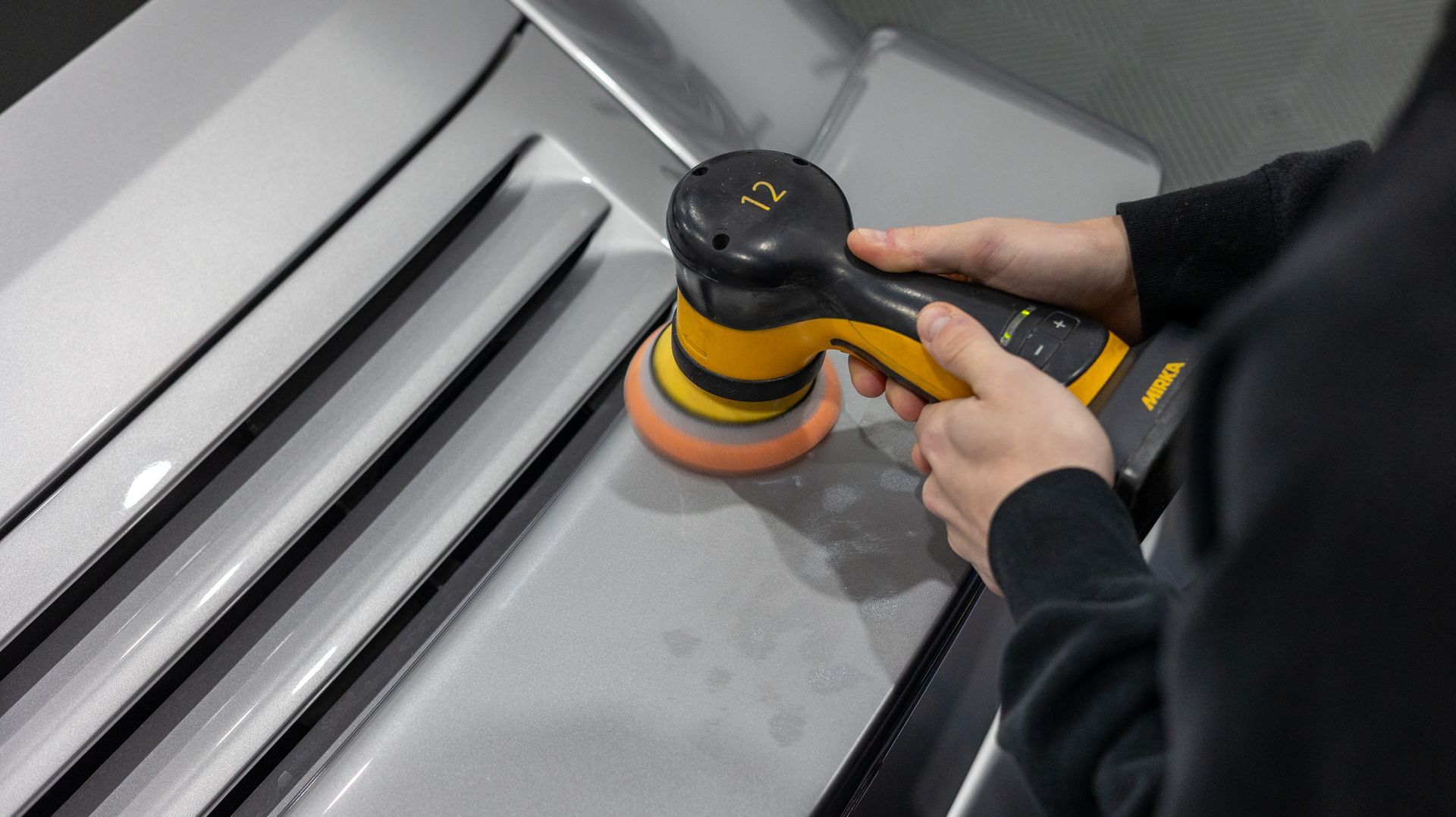
Paint correction is the process of using a machine polisher with a controlled abrasive compound to physically remove a microscopic layer of clear coat — just enough to level out the surface and eliminate the defects sitting in it. Done right, the paint comes back looking like it did when it left the factory. Done wrong, you can burn through clear coat or introduce more defects than you started with.
We use Mirka random orbital polishers with a graduated pad and compound system. We start with the most aggressive cut needed for the worst defects, then refine through progressively finer combinations until the finish is glossy, defect-free, and ready to coat.
Each panel gets multiple passes, and we check the work between every stage with high-intensity inspection lights to make sure we're getting clean cuts without leaving holograms or buffer trails. On a car like this, the correction step typically takes a full day or more depending on the condition of the paint.
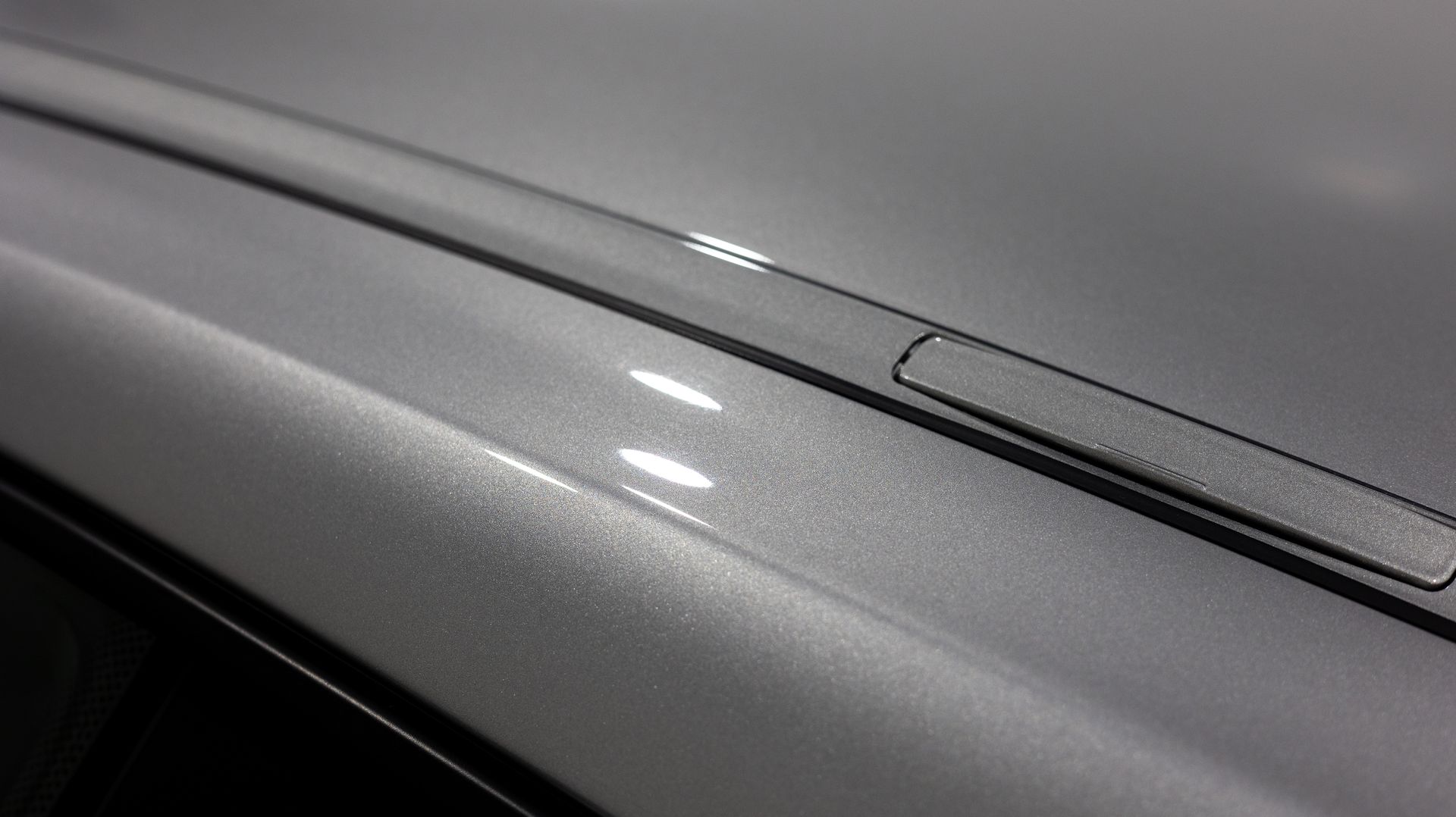
The end result is a surface that looks the way the metallic flake was meant to look — sharp, deep, and reflective.
This step is critical because a ceramic coating locks in whatever surface it bonds to. If you coat over swirls, you've just preserved the swirls under a hard layer. The correction has to come first.
Step 3: Ceramic Coating the Exterior
Once the paint is corrected and wiped down with a coating prep solution to remove any polishing oils, we move to the coating itself.
A ceramic coating is a liquid polymer that bonds chemically to the clear coat. Once cured, it forms a hard, transparent layer that does a few specific things:
The first is chemical resistance. Bird droppings, tree sap, bug splatter, and industrial fallout are all acidic. On uncoated paint, those contaminants etch into the clear coat over time, leaving permanent marks that even paint correction can't fully remove if they've been there too long. A ceramic coating gives you a buffer — the contamination sits on top of the coating instead of biting into the paint, and you have time to wash it off before damage occurs.
The second is hydrophobic behavior. Water beads up and rolls off a coated surface instead of sheeting and pooling. That means fewer water spots, faster drying, and less mineral residue left behind by sprinklers, rain, or hard water.
The third is UV protection. Sun exposure slowly oxidizes paint, dulls metallic flake, and fades the depth of color. The coating absorbs and reflects a portion of that UV before it reaches the clear coat.
The fourth, which most people don't think about, is wash ease. Coated paint is slick. Dirt and contamination don't bond to it the same way they bond to bare clear coat, so washes go faster and the risk of inducing new swirls drops significantly.
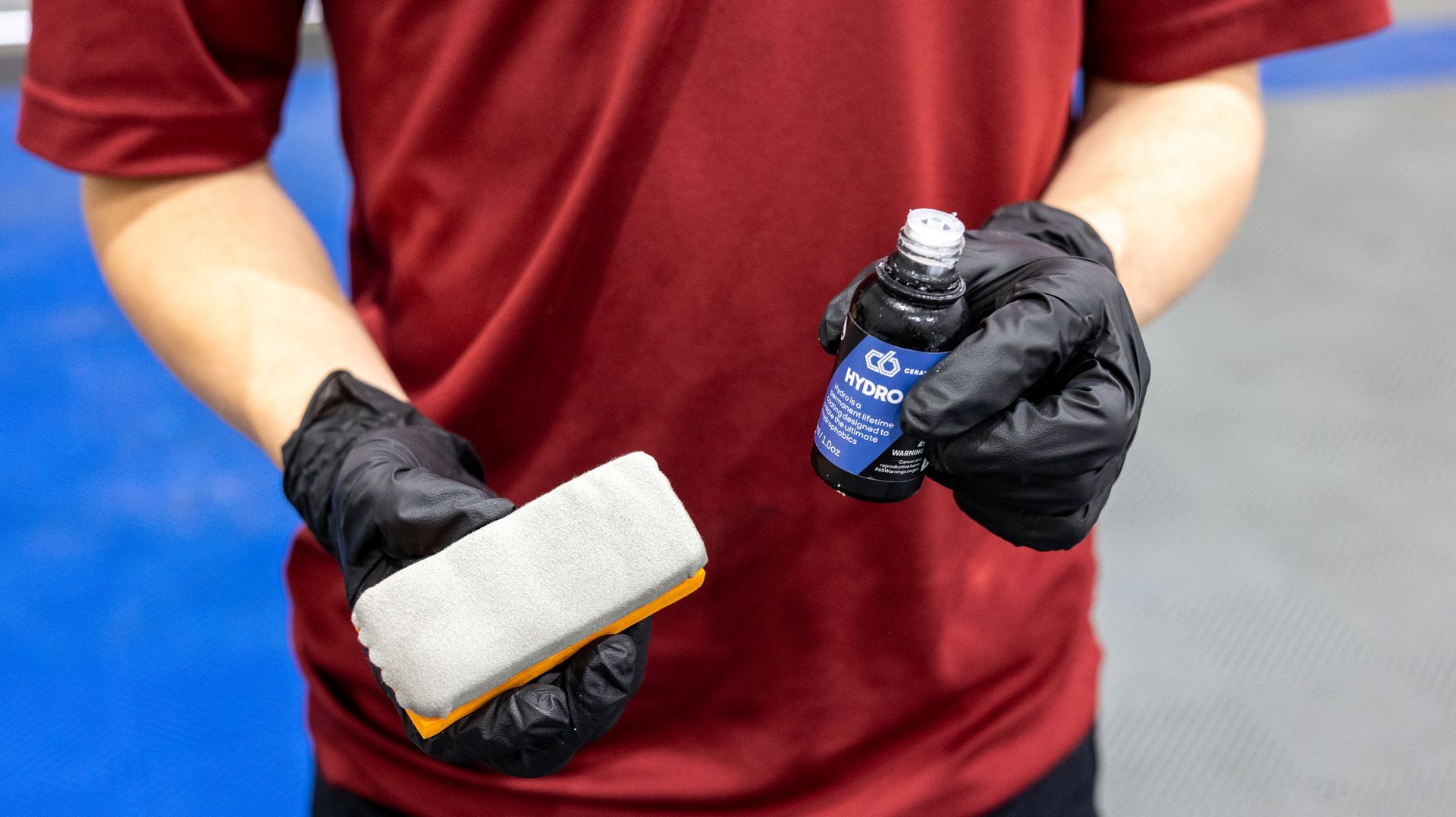
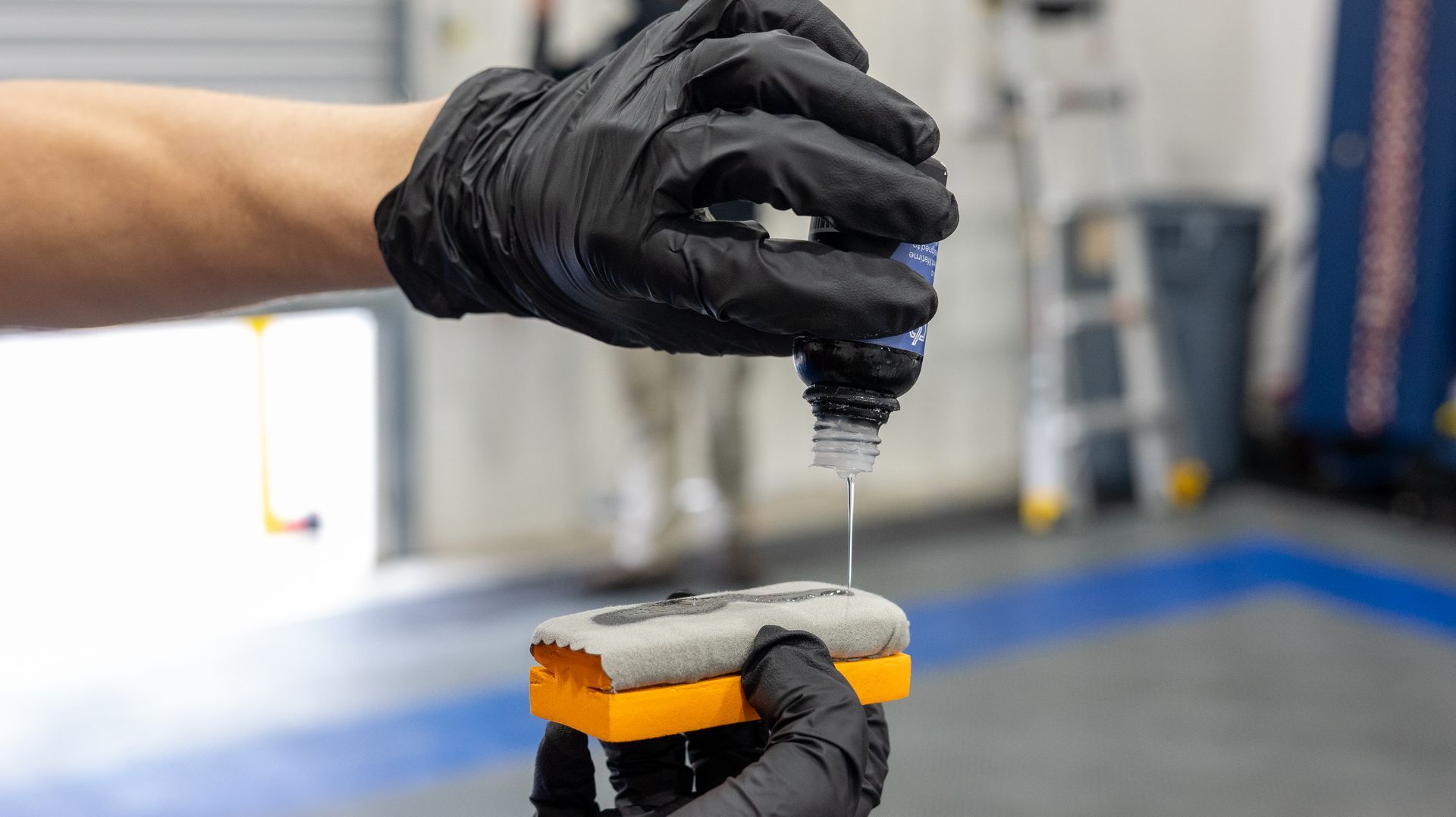
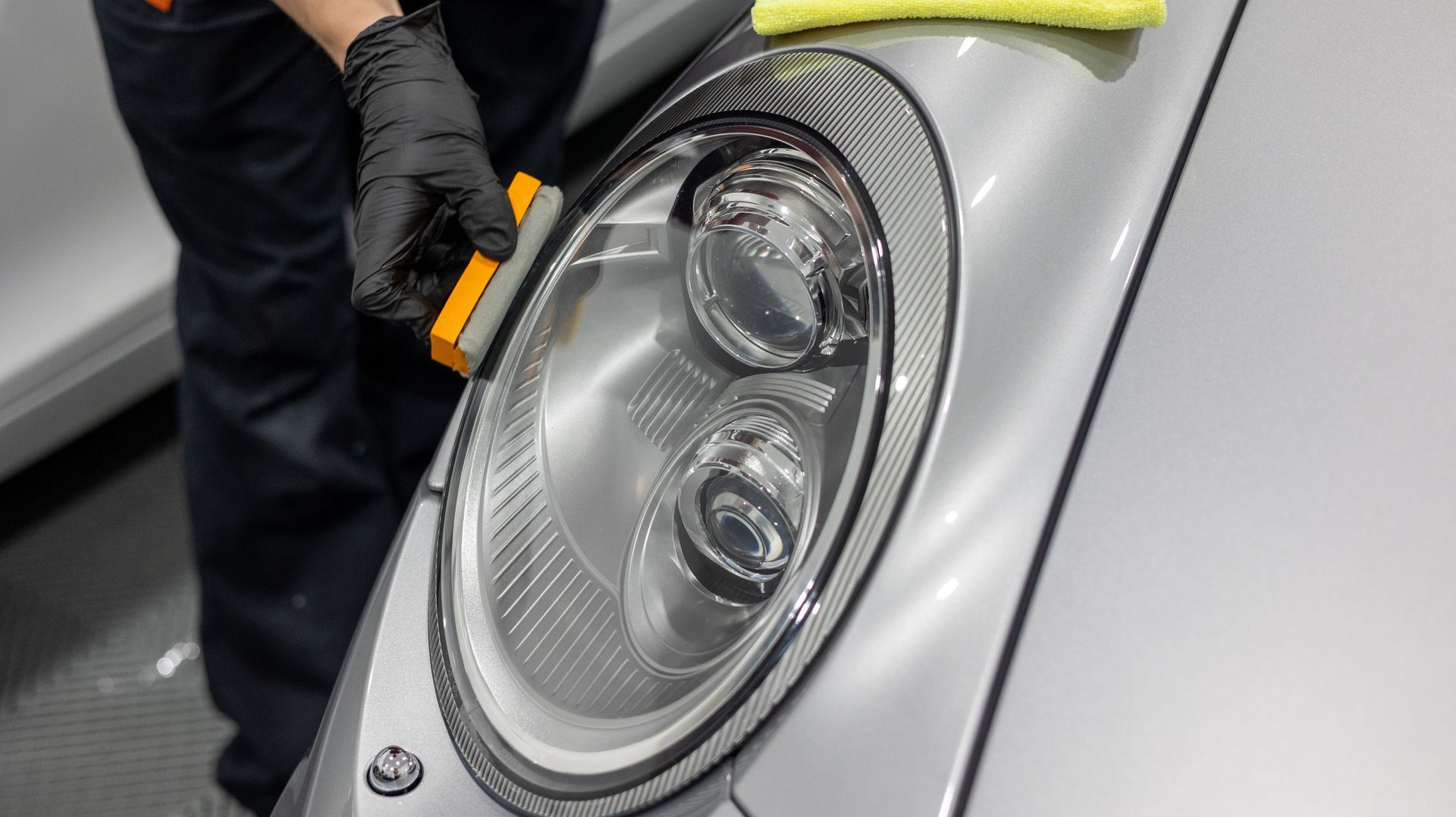
The product gets applied panel by panel using a foam applicator. We work in small sections, let it flash for the proper dwell time based on temperature and humidity, then level it with a clean microfiber. Skip the leveling step or get the timing wrong, and you end up with high spots — streaks of cured coating sitting on the surface that have to be polished off and reapplied.
Step 4: Leather Interior Coating — The Most Important Step on This Car
Here's where this car got special treatment.
The saddle brown leather interior in this 997 is, in our opinion, one of the prettiest factory options Porsche ever offered. It's also the most fragile. Light-colored leather has three problems that darker leather doesn't:
Dye transfer. Sit in this car wearing a pair of dark jeans on a hot Texas afternoon and you can transfer indigo into the leather permanently. The dye penetrates the pores and there's no easy way to get it back out.
Visible staining. Coffee, ink, sunscreen, hand lotion — anything that wouldn't show up on black leather will show up immediately on saddle brown.
UV fading. Sunlight hitting the leather every day slowly bleaches the color, especially on the seat bolsters and the top of the dashboard. Over years, the leather becomes uneven in color and starts to crack.
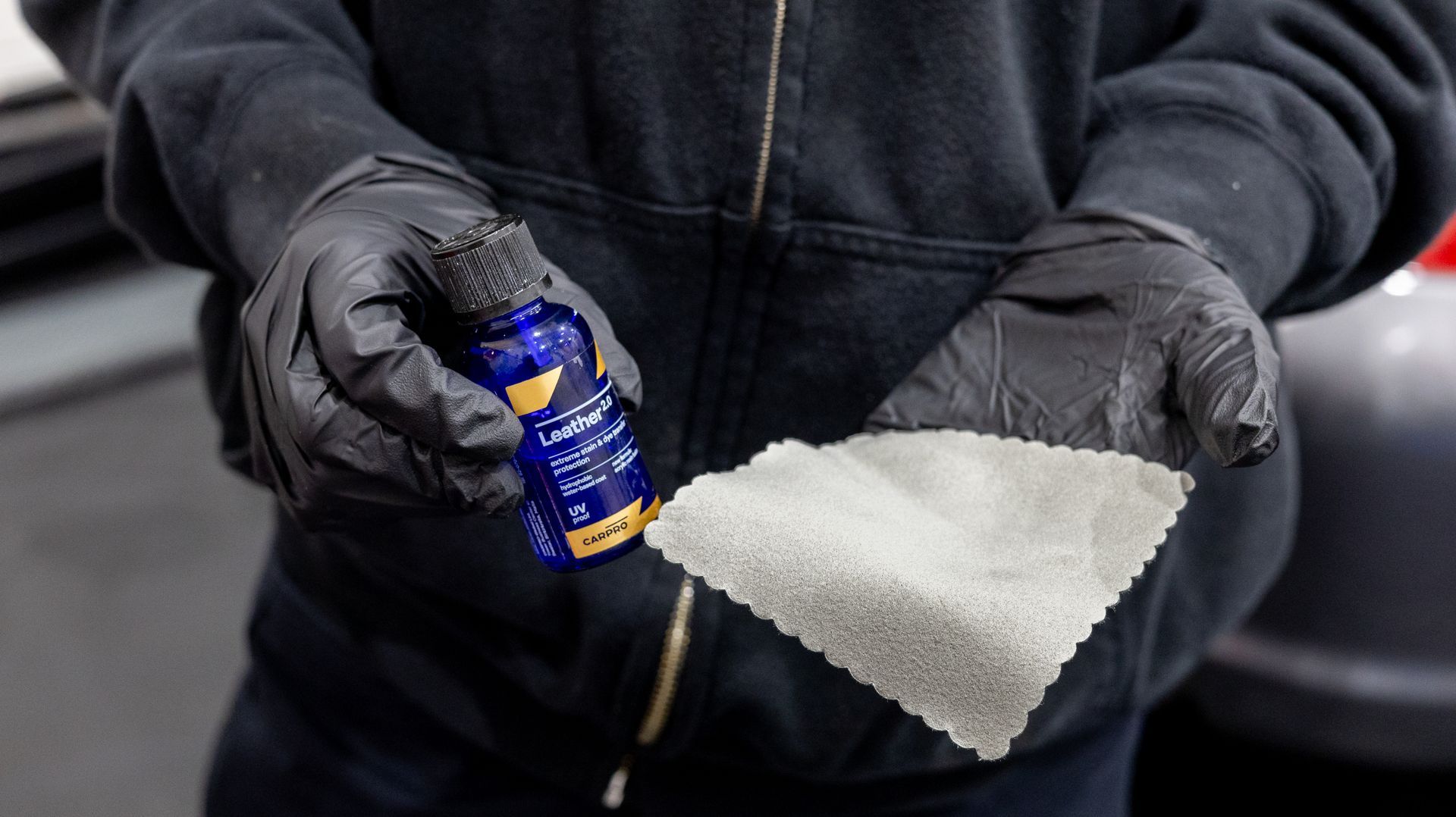
A leather coating addresses all three. The coating we use is a polymer specifically formulated for leather and vinyl surfaces. Once it cures, it forms a breathable barrier on top of the leather that prevents dyes, oils, and stains from penetrating into the pores. It also adds UV resistance, which slows the fading and cracking process significantly.
Before we apply the coating, the leather has to be deep cleaned and conditioned. Any dirt or oils sitting on the surface will get sealed in by the coating, so prep is everything.
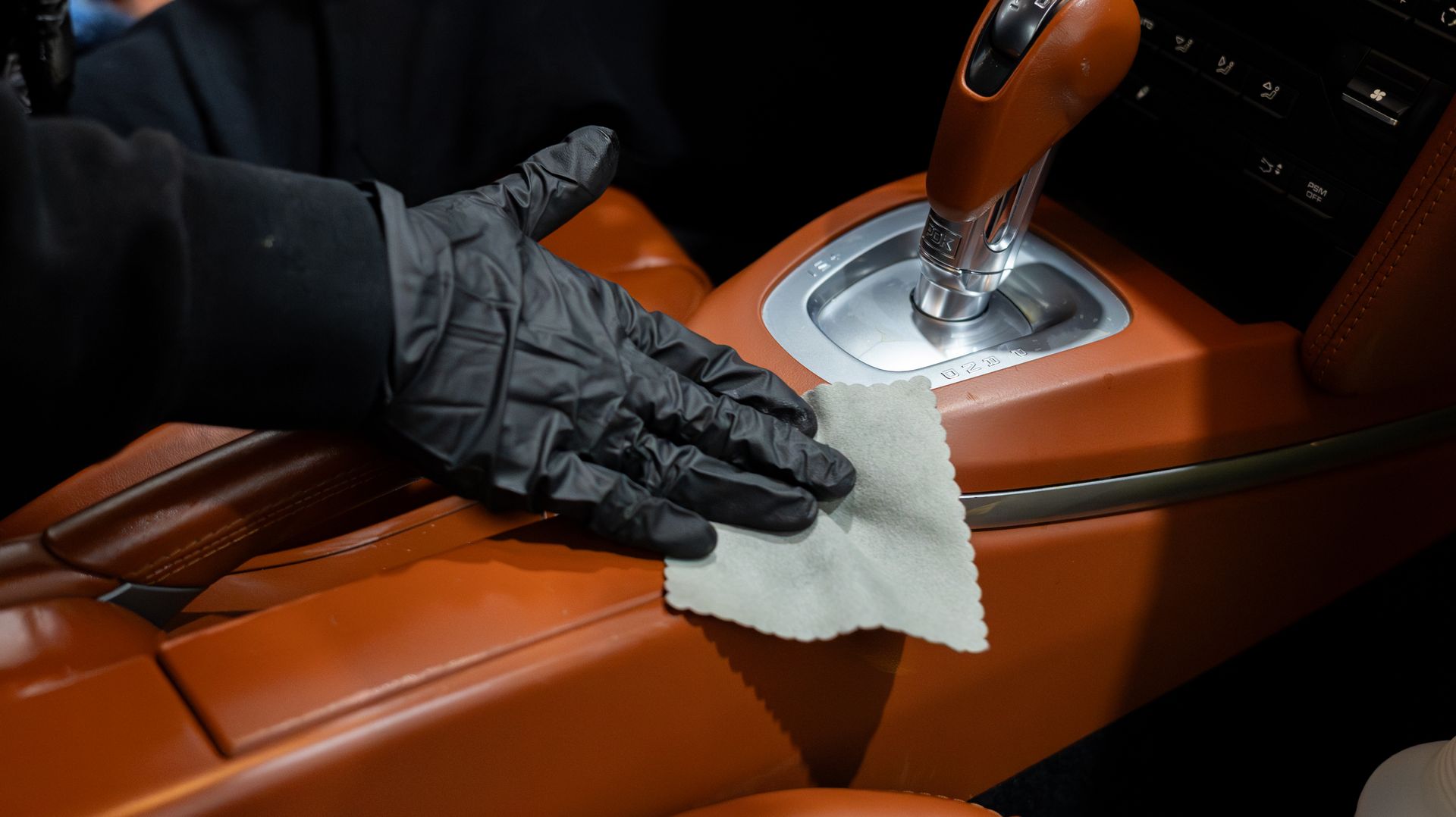
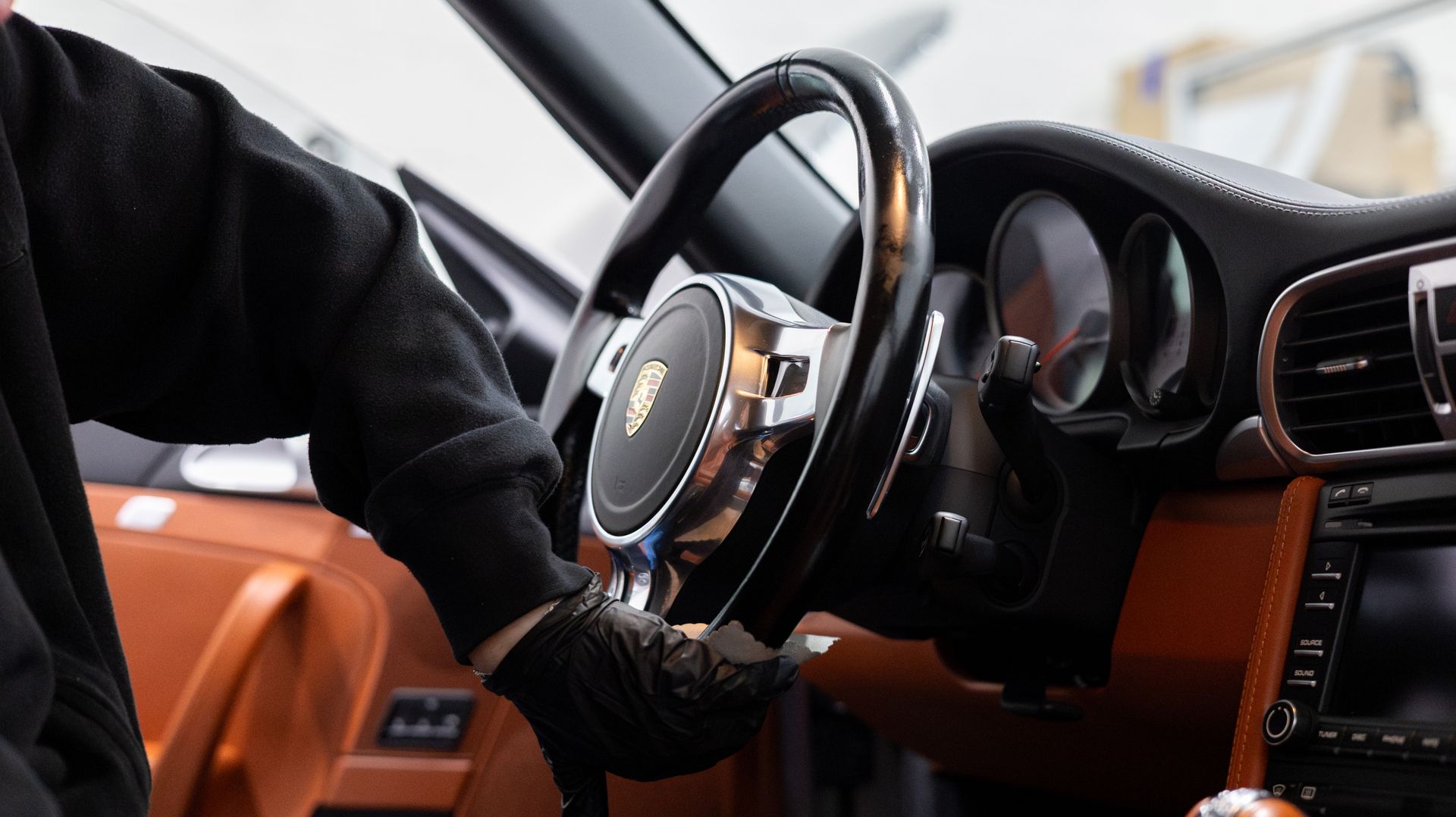
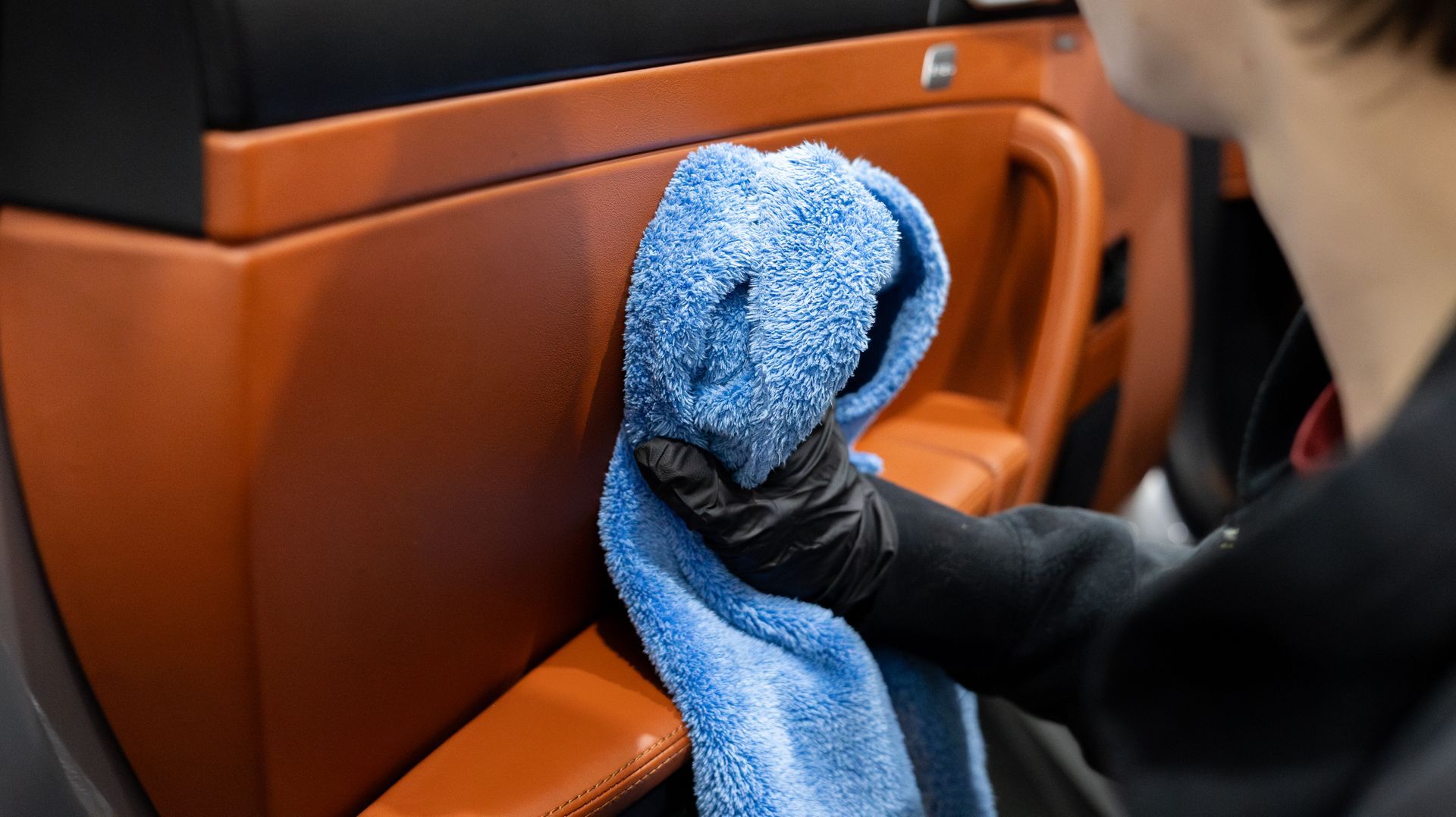
We start by vacuuming the entire interior — seats, carpets, headliner, between the seat cushions, around the seatbelt anchors. Then a leather-safe cleaner gets worked into every leather surface using a soft brush to lift embedded grime out of the pores. The leather gets wiped down with clean microfiber until no more dirt comes up.
After cleaning, the coating goes on with a microfiber applicator, working surface by surface. Steering wheel, dashboard, door panels, center console, seats, the back seat area — every leather surface in the cabin gets treated.
The steering wheel especially gets attention because it's the highest-contact surface in the cabin. Hand oils, sunscreen, and friction from gripping break down the leather faster than anywhere else. A coated steering wheel resists that wear pattern and stays looking new years longer than an uncoated one.
The coating cures overnight. Once it's fully set, the leather still feels and looks completely natural — but now it's protected.
Why This Combination of Services Made Sense for This Car
Each of these three services protects against a different type of damage:
The paint correction removes what was already there, getting the exterior back to a baseline condition worth preserving in the first place.
The ceramic coating protects the exterior from environmental damage going forward — chemical etching, UV fading, water spots, and the daily contamination Texas weather throws at every car.
The leather coating protects the interior from the staining, dye transfer, and UV fading that would otherwise turn this rare saddle brown interior into a restoration project within a few years.
Together, they don't just make the car look incredible right now — they preserve its condition for the long term. For an appreciating collector car, that's the entire point.
What This Means for Porsche Owners in Plano, TX
If you own a Porsche — 911, Cayman, Boxster, Taycan, Cayenne, or otherwise — and you're considering paint correction, ceramic coating, or interior protection, here are the questions worth thinking through before you call a shop:
Is the paint corrected first, or is the coating going on over existing defects? Skipping correction is the most common shortcut in the industry. It saves the shop hours of work and costs you a coating that locks in every swirl mark in your paint.
What's the prep process for the leather before coating? A coating applied over dirty or oily leather isn't protection — it's a sealed-in stain. The cleaning matters as much as the coating itself.
How long does the shop let the coating cure before returning the car? A ceramic coating that's been rushed out the door before fully crosslinking will not perform the way it's supposed to. We hold cars for the full cure cycle, every time.
If you've got a car worth preserving, we'd love to talk through what makes sense for it. Drop by the shop in Plano, give us a call, or send us a message — we're always happy to walk through options without any pressure.
About Humble Crew Auto Spa
We're a paint protection film, ceramic coating, and detailing shop based in Plano, TX. Porsche, BMW, Audi, Lexus, and Corvette work makes up a big part of what we do, and we've built our reputation on doing the prep right and not cutting corners on cure times. Whether you're protecting a daily driver, a weekend car, or an appreciating collector piece, we can walk you through what's actually worth doing and what isn't.
Humble Crew Auto Spa | Paint Protection Film, Ceramic Coating, Leather Coating, and Detailing | Plano, TX
Serving Plano, Frisco, Allen, McKinney, Richardson, Dallas, and the greater DFW metroplex.
#Porsche #Porsche911 #997TurboS #CeramicCoating #PaintCorrection #LeatherCoating #PlanoTX #DFWDetailing #HumbleCrewAutoSpa