
/ Guides · Humble Crew Auto Spa
How Long Does PPF Last in Texas?
Humble Crew Auto Spa·
Our Ultrafit paint protection film is warrantied against yellowing, cracking and peeling for ten years, and that guarantee covers both manufacturing defects and our own craftsmanship. That is the number on paper. What actually decides whether a film makes it to year ten is three things: the film, the install, and how the car gets washed.
What the ten-year warranty actually covers
Film fails in specific, recognizable ways. It goes yellow under UV, it cracks, or it starts peeling and lifting at the edges. Those three are exactly what the warranty names, and they are the failures that make a car look worse than if nothing had been done at all.
Two details in ours matter more than the headline number. First, it covers our craftsmanship as well as the manufacturer’s product — a lifting edge is usually an install problem, not a film problem, and a warranty that only covers the film leaves you holding that. Second, the work reports to your CARFAX, so the protection is on the vehicle’s record rather than being something you have to explain to a buyer.
Separate from the warranty, we also carry a one-time $600 credit toward a no-questions-asked replacement. If the film takes damage, we remove and replace it on that panel, up to $600, without arguing about how it happened.
What Texas does to film
UV is the enemy of longevity, and North Texas supplies plenty of it. Paint protection film is built for that — Ultrafit film endures scratches, rock chips, swirl marks, chemical damage and UV oxidation, which is the whole reason the paint underneath still looks like it rolled off the lot. But “endures” is not “ignores”, and the top surface of the film is the part taking that load.
This is why we recommend a ceramic coating over the film even though the film is already very UV and stain resistant. The coating adds a second barrier of chemical and UV resistance on top, and it makes the film exceptionally easy to keep clean. Our Complete Package pairs the two, with full-car coverage starting at $2,990.
Self-healing has a limit, and the limit is the car wash
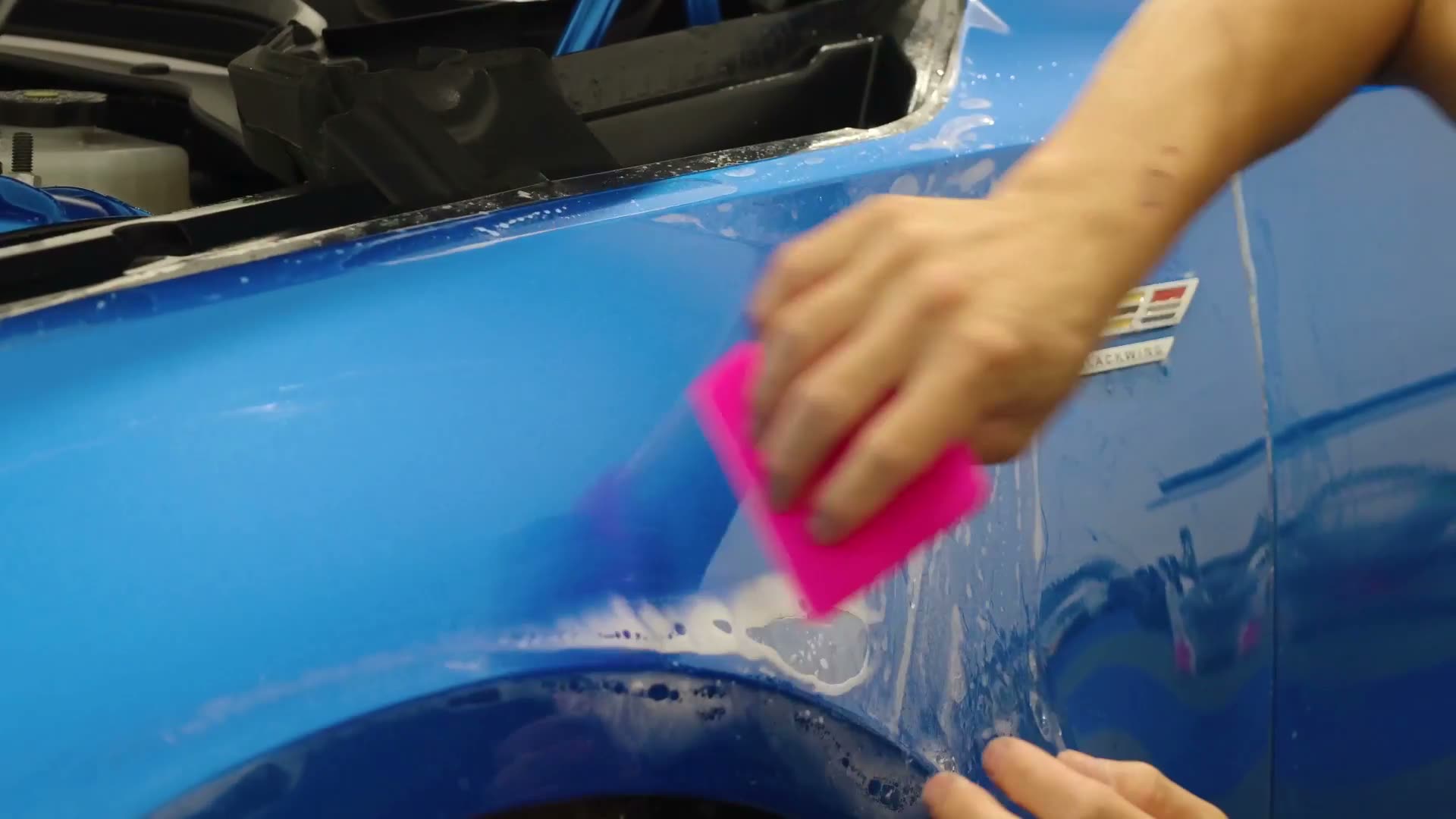
Ultrafit’s “memory” technology lets the film completely heal minor swirl marks and scratches: park the vehicle outside in direct sunlight and they close up. It is the feature that sells modern film, and it is also the one most often wasted.
Automatic brush — or “soft touch” — car washes are never safe for paint, protected or not. They introduce scratches and swirls, and they stress the self-healing ability of the film, which cannot heal long-term, repeated, continuous damage. Run a car through a brush tunnel every week and you are asking the film to recover from the same injury faster than it can, and eventually it stops recovering.
A hand wash using the two-bucket method is what the film is designed around. A touchless wash will do just fine to get you by, and there are a few here in DFW if you look around. Those two habits are most of the difference between a film that is still invisible years later and one that goes hazy early.
Why the install decides the ending
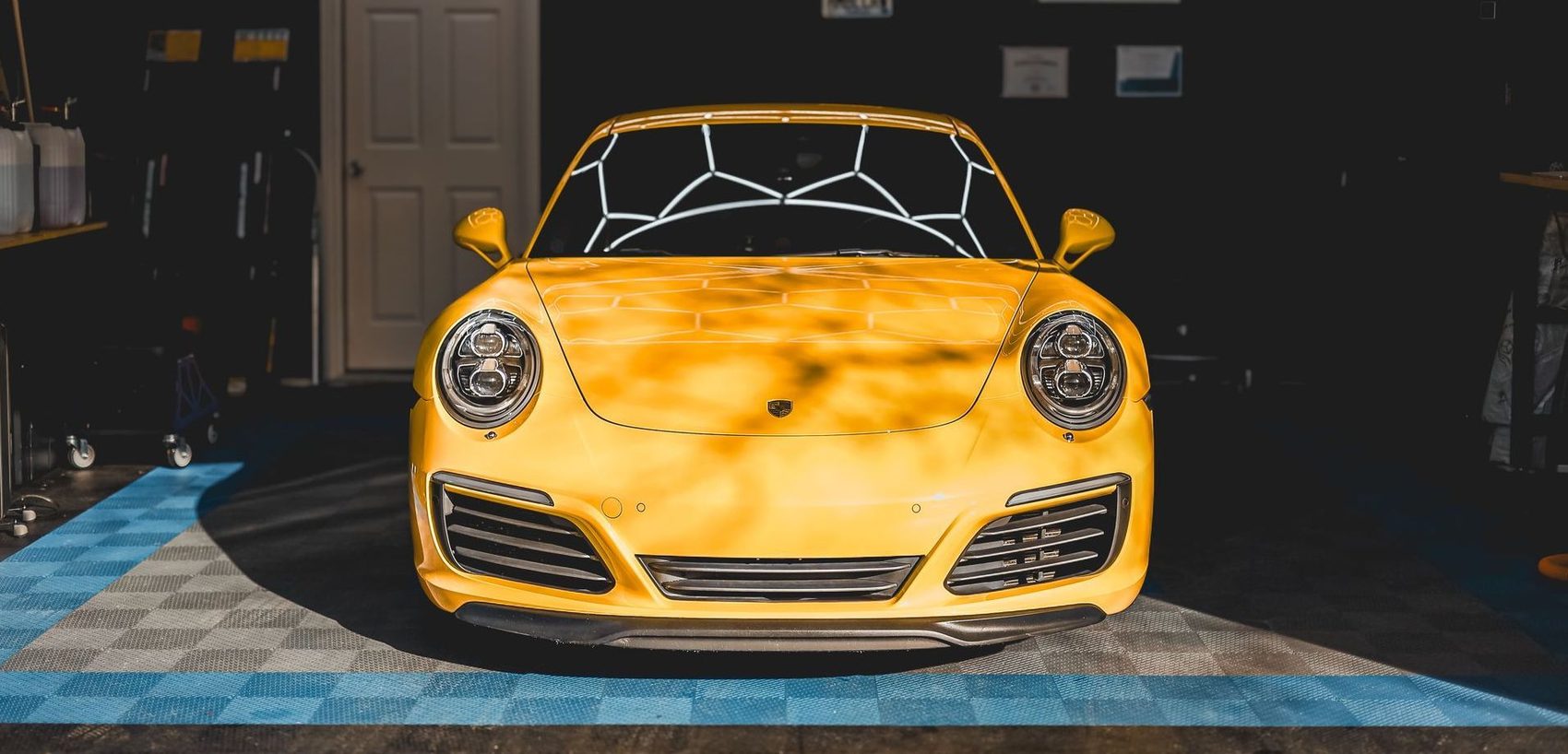
Our installs come tucked: we wrap the film around the perimeter of each panel rather than stopping at the edge. The obvious benefit is cosmetic — with no exposed film the installation looks seamless, and you cannot find where it starts. The benefit that matters years later is that without exposed edges the film is far less likely to catch and lift, which gives you better durability over time.
Lifting is usually how a film install starts to fail. An edge catches on a pressure washer, a sleeve, a door seal or a brush, and once it starts letting go, dirt gets under it and the panel has to be redone. An install that takes longer because badges, lights or mirror caps come off is an install that does not have that failure mode. Most paint protection film and ceramic coating jobs take two to four days for exactly this reason; we do not rush it, because proper prep and installation are what separate average work from long-lasting results.
Film is not rock chip proof, and that is the point
We say this on the shop floor and we will say it here: it is paint protection film, not paint perfection film. Our own cars wear it at the track where we take rocks at over 100 mph, and they do get peppered. The film acts as the barrier between the outside world and the paint, and when a panel has taken enough we replace the film on that panel. That beats paying for paint by a large margin, and the panel keeps its factory paint.
So the honest way to read “how long does PPF last” is this: the film on a high-impact panel may get replaced before the warranty runs out, and that is the system working, not failing. What you are buying is ten years of the paint underneath never being the thing that gets hit.
Getting the most out of it
- Coat it. A ceramic coating over the film adds UV and chemical resistance the film does not have, and makes it much easier to keep clean.
- Hand wash, two buckets. Touchless if you are short on time. Never a brush tunnel.
- Give it sun. Self-healing needs heat, so minor marks close up faster on a car parked outside on a warm day than one that lives in a garage.
- Do not let contamination sit. Bird droppings, bug guts and tree sap are chemical attacks, and the film is stain resistant rather than stain proof.
- Cover the panels that are actually getting hit. Full Front End starts at $1,999 and covers hood, front fenders, front bumper and mirror caps; Full Vehicle starts at $5,499.
Want this on your car?
Pick your service and your time, or call the shop and talk it through first.