Lexus LC500: Protecting the Best Grand Tourer
Lexus LC500: Protecting the Best Grand Tourer
The Car: Why the LC500 Deserves the Full Package
A Lexus LC500 in deep blue rolled into Humble Crew Auto Spa in Plano for what's quietly become one of our favorite packages to do: full paint correction, paint protection film on all the high-impact areas, and a Nxtzen ceramic coating to lock it all in. The LC is one of those cars where the paint does a lot of the heavy lifting. It's a stunning shape, but if the finish isn't right, you're missing half the design. So we treated it accordingly.
Here's how the whole job went, what we corrected, where the film went, and why I'd recommend this combination to anyone in Plano, Frisco, Allen, McKinney, Richardson, or anywhere in the wider DFW area who plans to keep their car long term.
The Lexus LC500 is a halo car. It launched in 2017 and Lexus has barely changed the recipe because they got the design right the first time. Naturally-aspirated 5.0L V8, ten-speed automatic, a body that looks like a concept car somebody actually built. The paint on this particular one — a deep metallic blue that shifts almost black in shade and lights up violet-blue in direct sun — is exactly the kind of finish that rewards careful detailing and punishes lazy ones.
The owner brought it in wanting two things: protect it from the daily reality of driving in DFW (rock chips on the tollway, sun, bird drops, automatic-wash damage from before they bought it), and bring the paint back to where it should look out the factory. PPF, paint correction, and ceramic coating in one visit is the cleanest way to deliver both.
Step One: Decontamination Wash
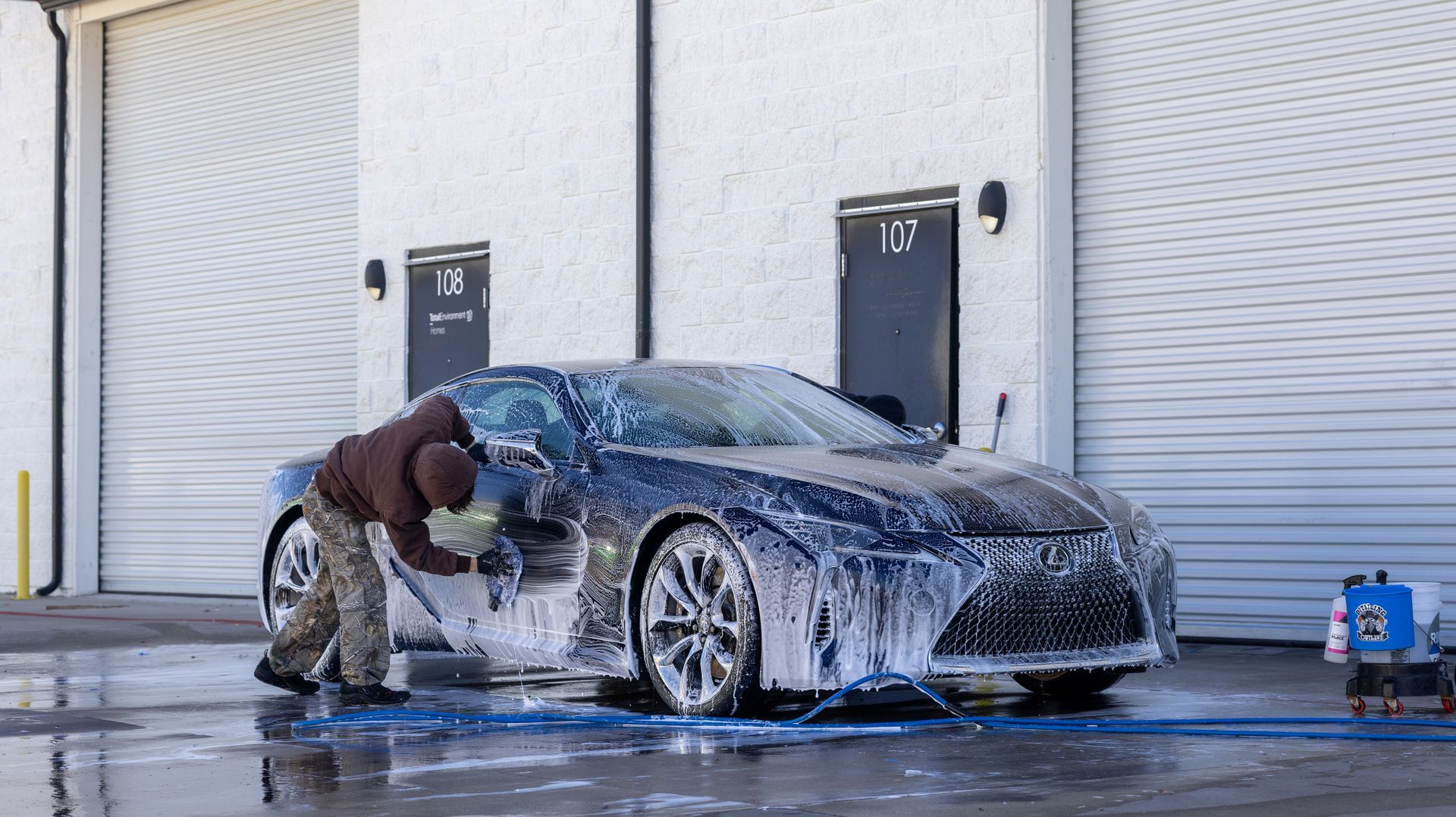
Before any polisher touches the paint, the car gets a full decon wash. That means a foam soak to lift loose dirt, a hand wash using the two-bucket method with grit guards, an iron remover to dissolve embedded brake dust and rail dust, and a clay treatment to pull out anything still bonded to the clear coat.
Skipping this step is how you grind contamination into the paint with a polishing pad. It happens more than people realize, and it's one of the biggest differences between a real paint correction shop and somebody running a buffer in a driveway.
Step Two: Paint Inspection Under the Lights
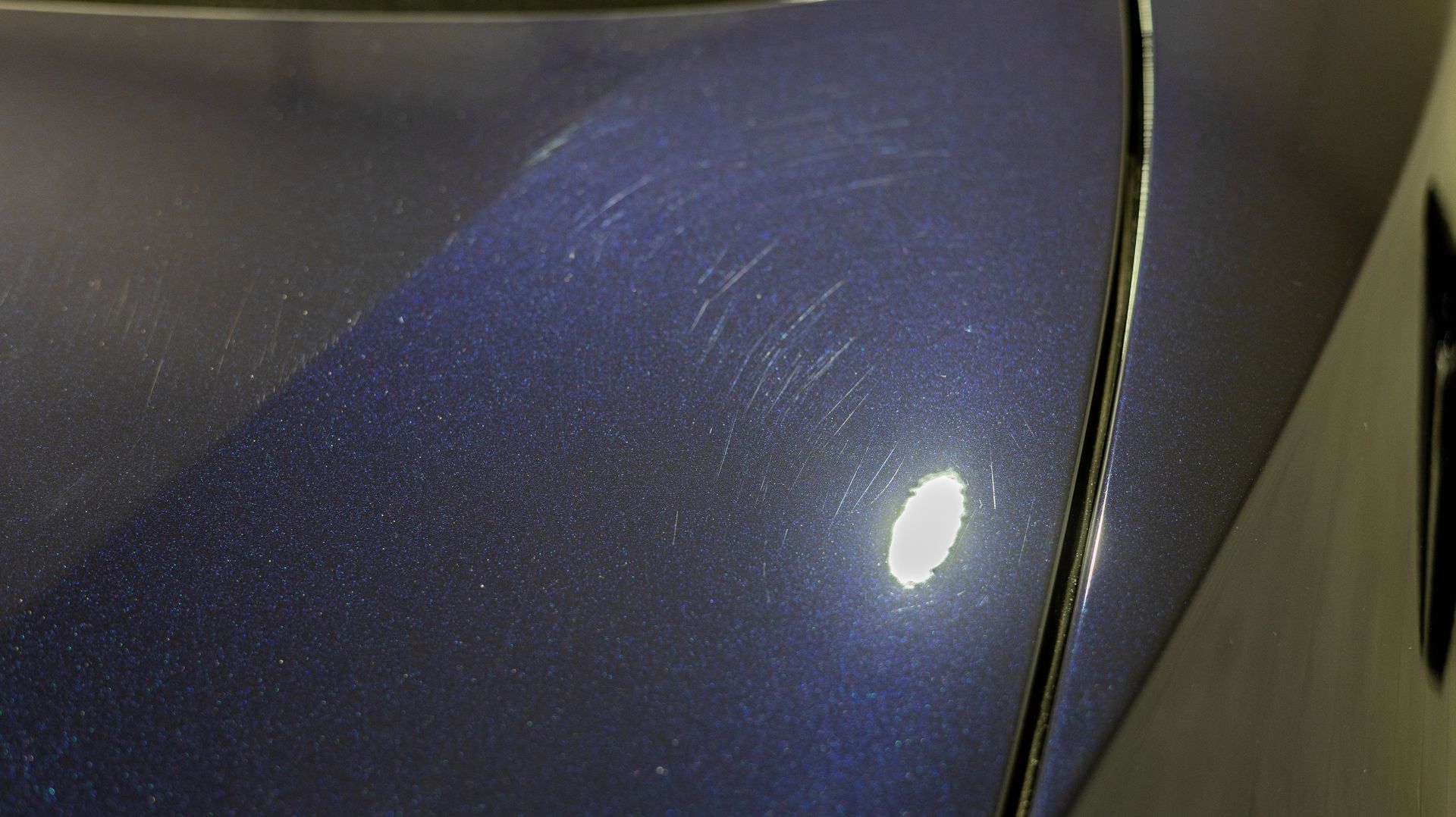
Once the car was dry, I pulled it into the bay and went over every panel with a swirl-finder light. This is where the truth comes out. Under normal daylight, the LC500's paint looked fine. Under the inspection light, you could see exactly what we were working with — fine swirl marks across the hood and fenders from previous washes, some random deeper scratches around the door handles, and a general haze on the horizontal panels that was killing the depth of the metallic.
This is normal. Pretty much every car that's been driven and washed is going to show this stuff under the right light. The question is what you do about it.
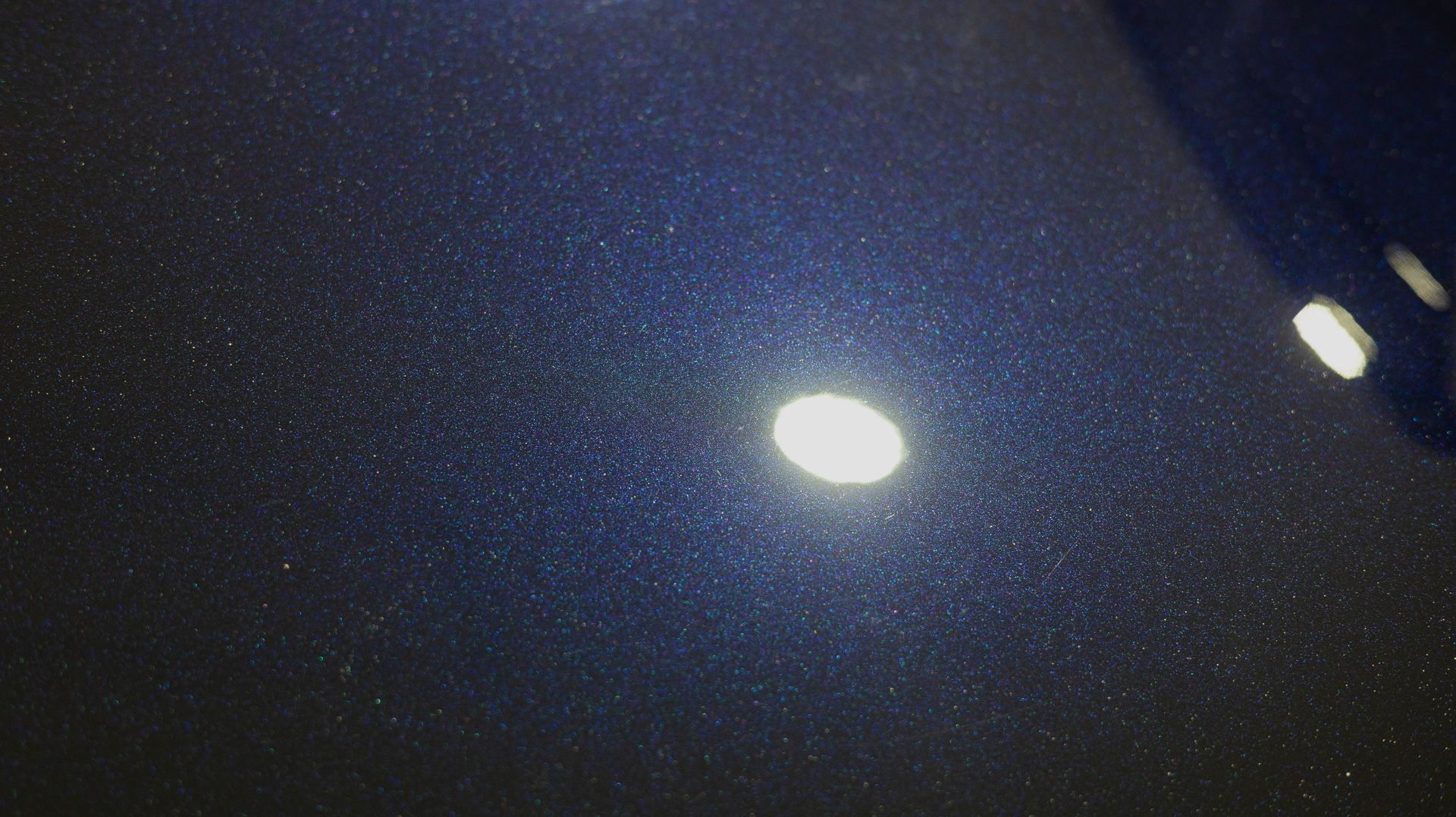
Step Three: Multi-Stage Paint Correction
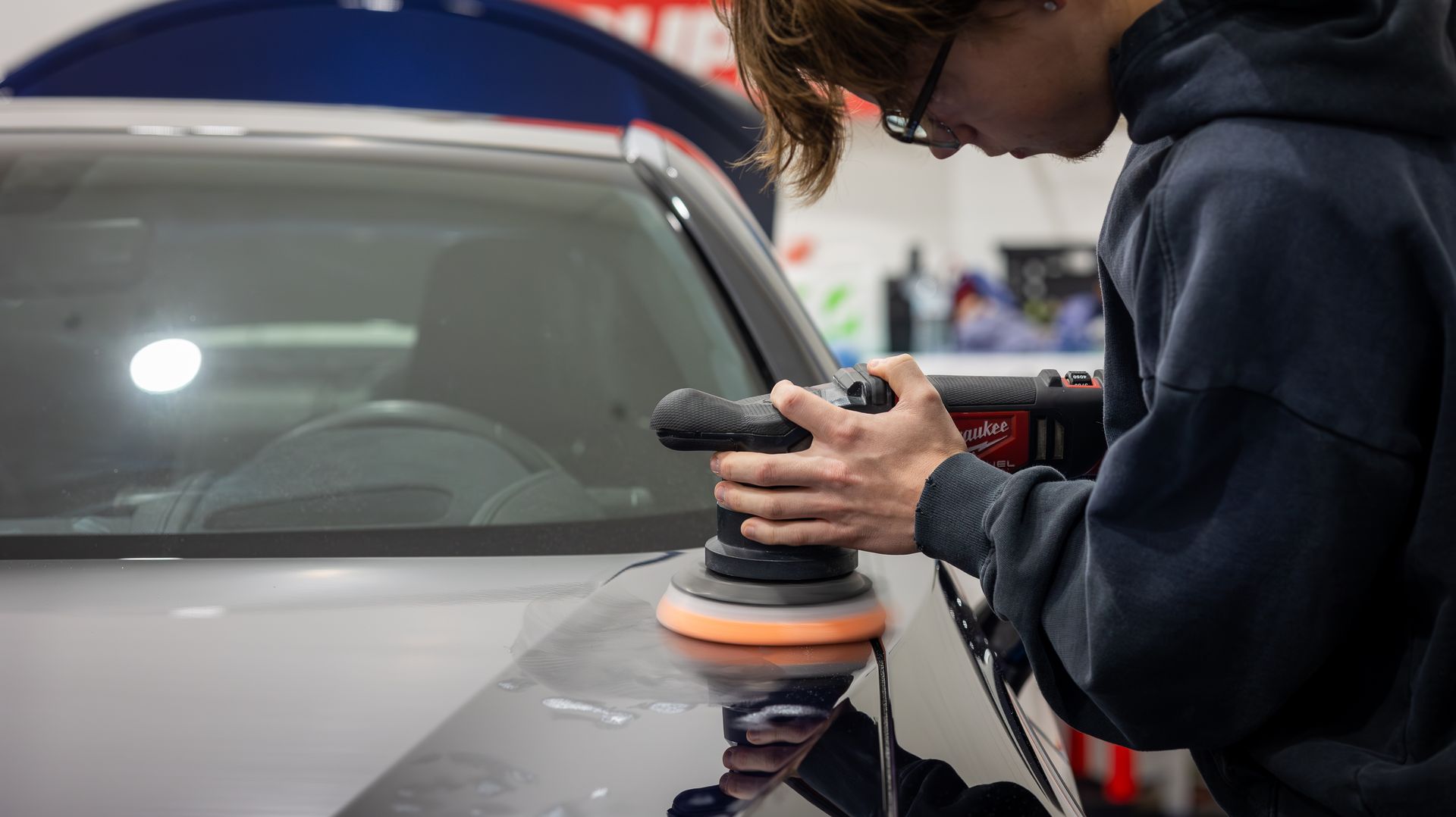
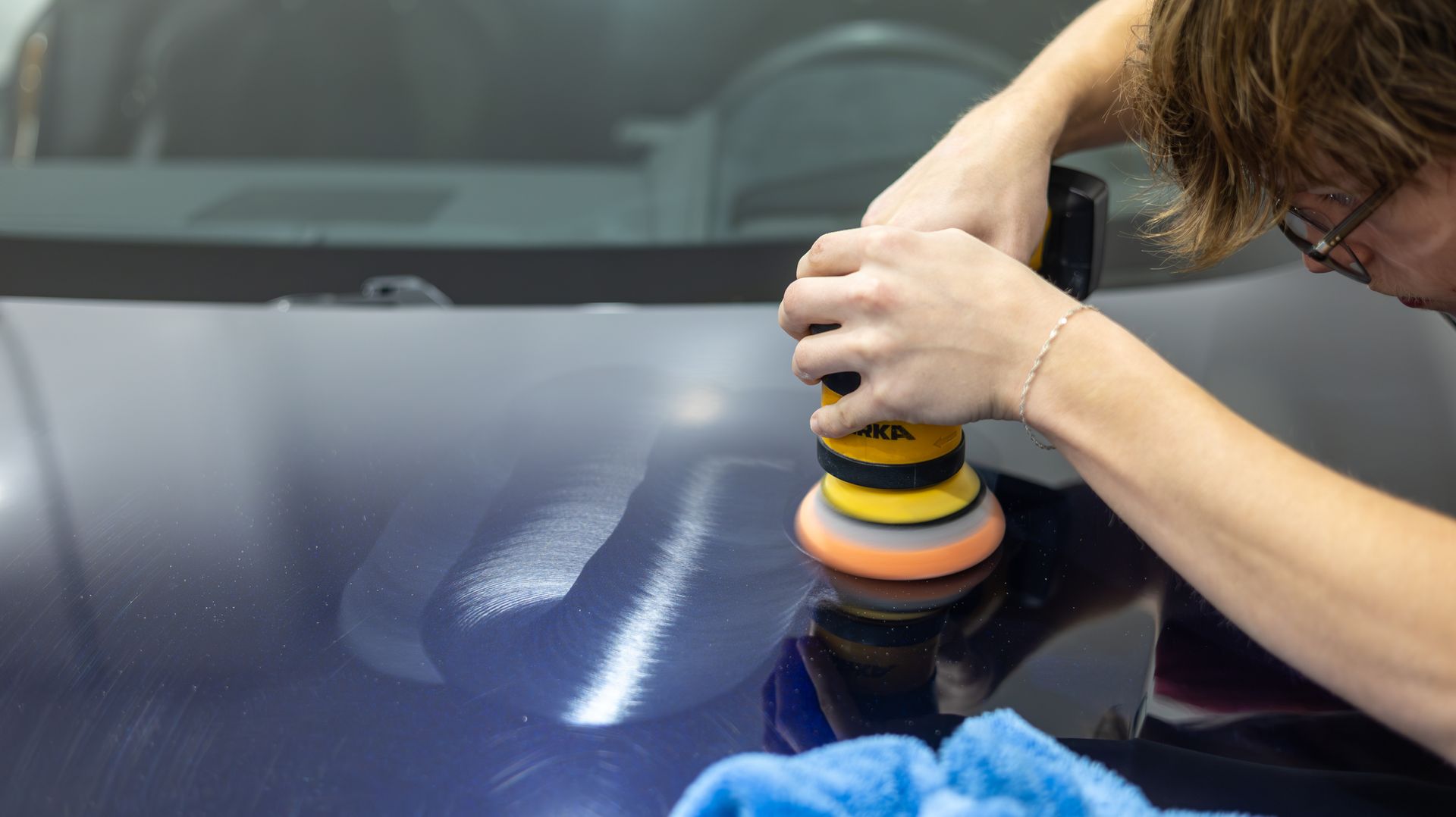
For this LC500, I ran a two-stage correction. First pass was a cutting compound on a microfiber pad with the Milwaukee rotary polisher to knock down the deeper defects on the hood and roof. Second pass was a finishing polish on a softer foam pad with a Mirka random orbital to refine the gloss and remove any haze left from the cut.
I worked panel by panel, wiping down with isopropyl alcohol between sections to make sure I was seeing the true corrected finish and not just polishing oils filling in scratches. Trunk lid, roof, hood, fenders, doors, quarter panels — everything got measured, corrected, and inspected before moving on.
The transformation on a dark metallic like this is dramatic. You go from a hazy, flat-looking surface to a finish where the flake actually pops and the reflections snap. That's what people are really paying for when they get paint correction in Plano or anywhere else — it's not just removing scratches, it's restoring the depth the paint had when it left the factory.
Step Four: PPF on All the High-Impact Areas
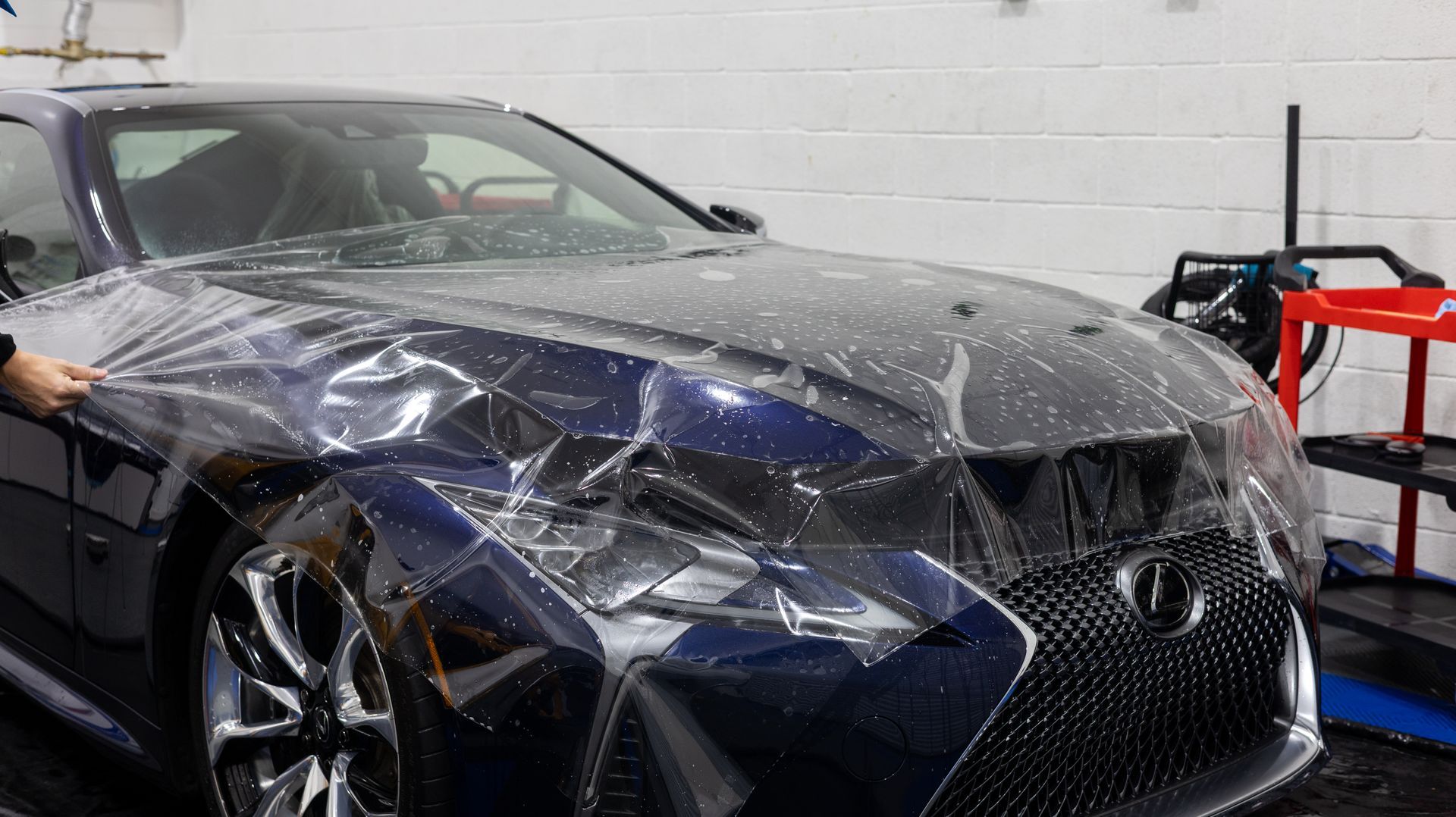
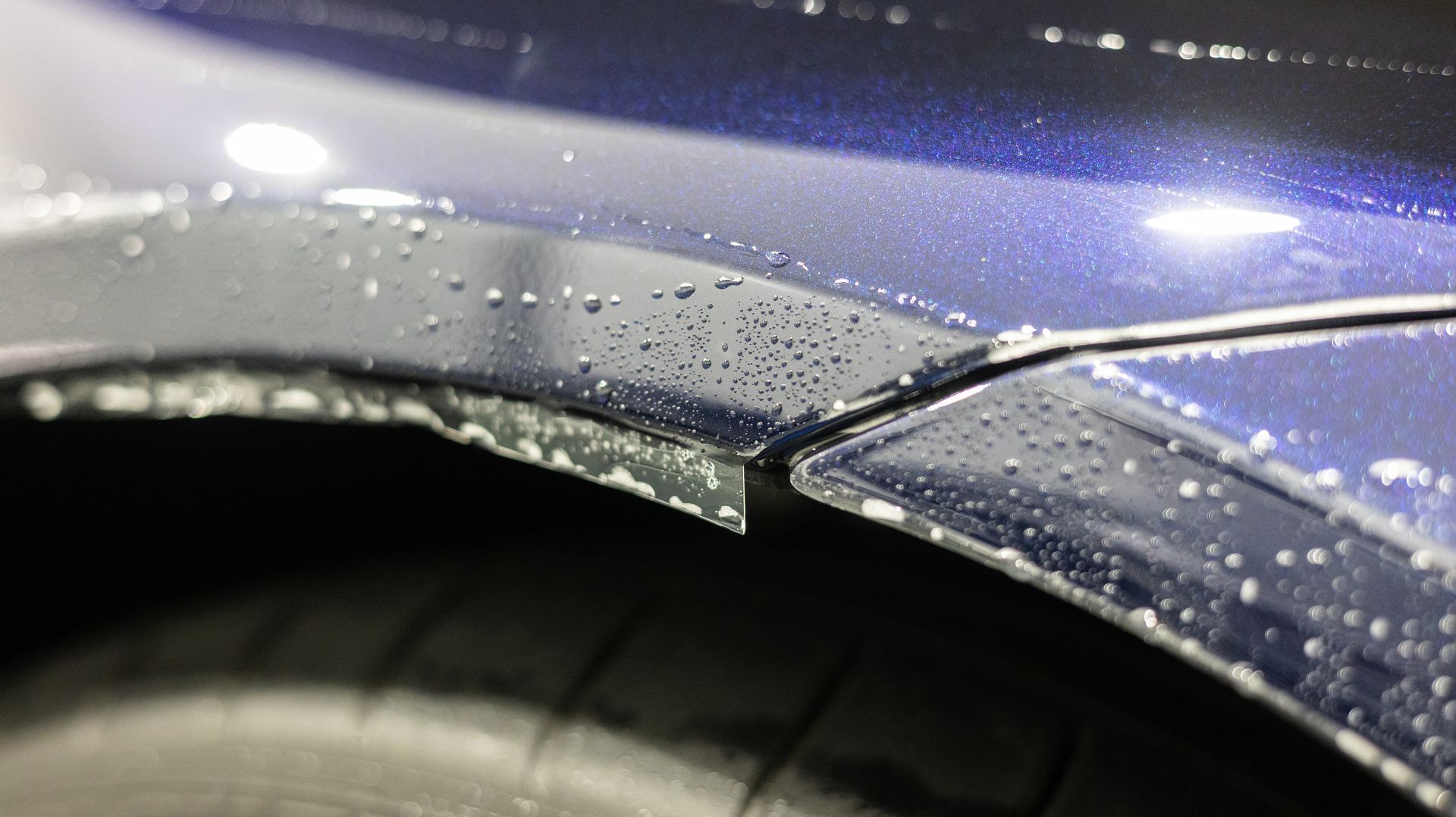
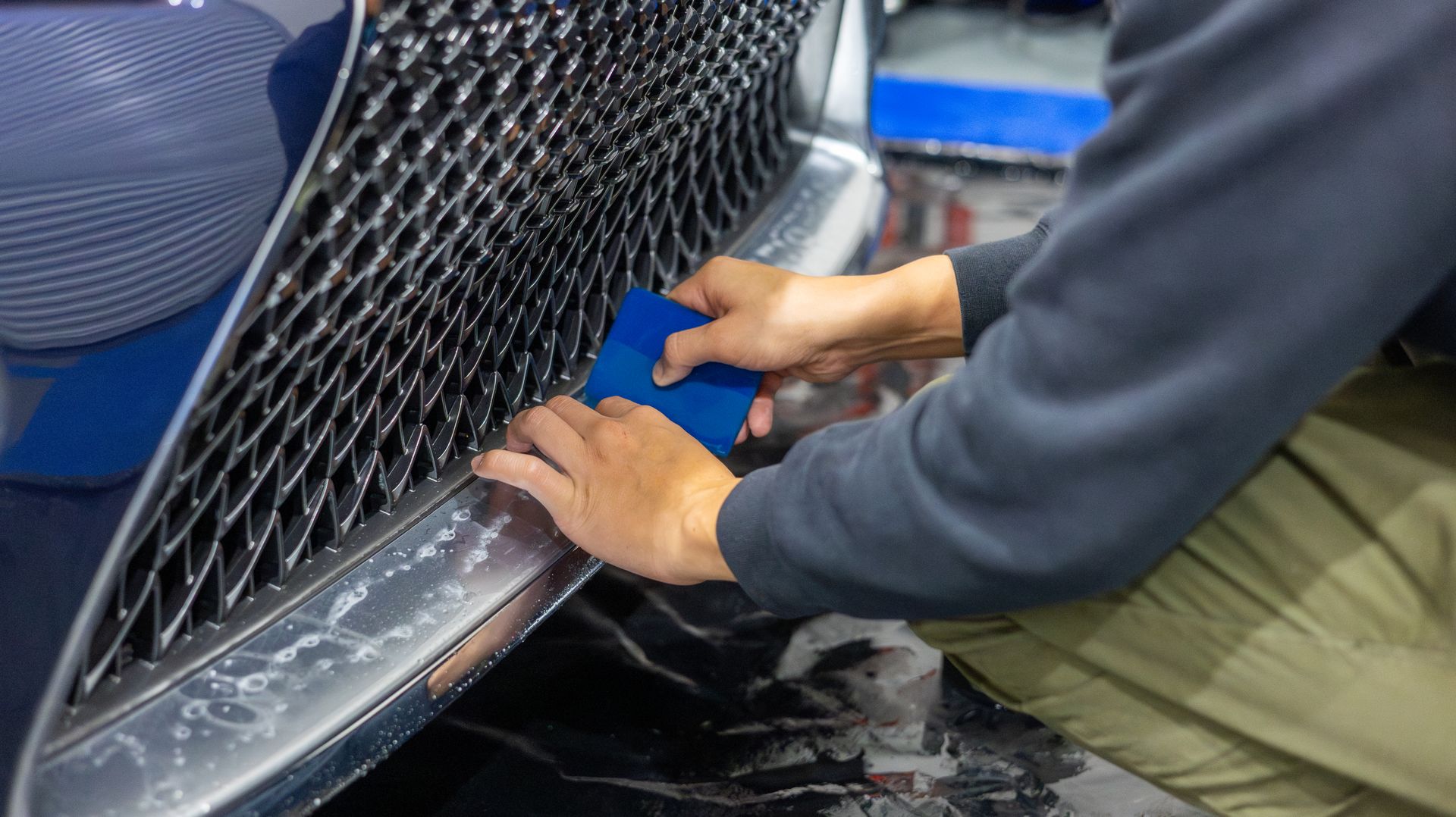
With the paint corrected, the next step was protecting it. Paint protection film is a clear, self-healing urethane that sits on top of the clear coat and takes the hits so the paint doesn't have to. Rock chips, bug etching, sand abrasion, light scratches — they all hit the film instead of the factory finish.
For this LC500, we wrapped:
- Full hood
- Full front fenders
- Front bumper
- Headlights
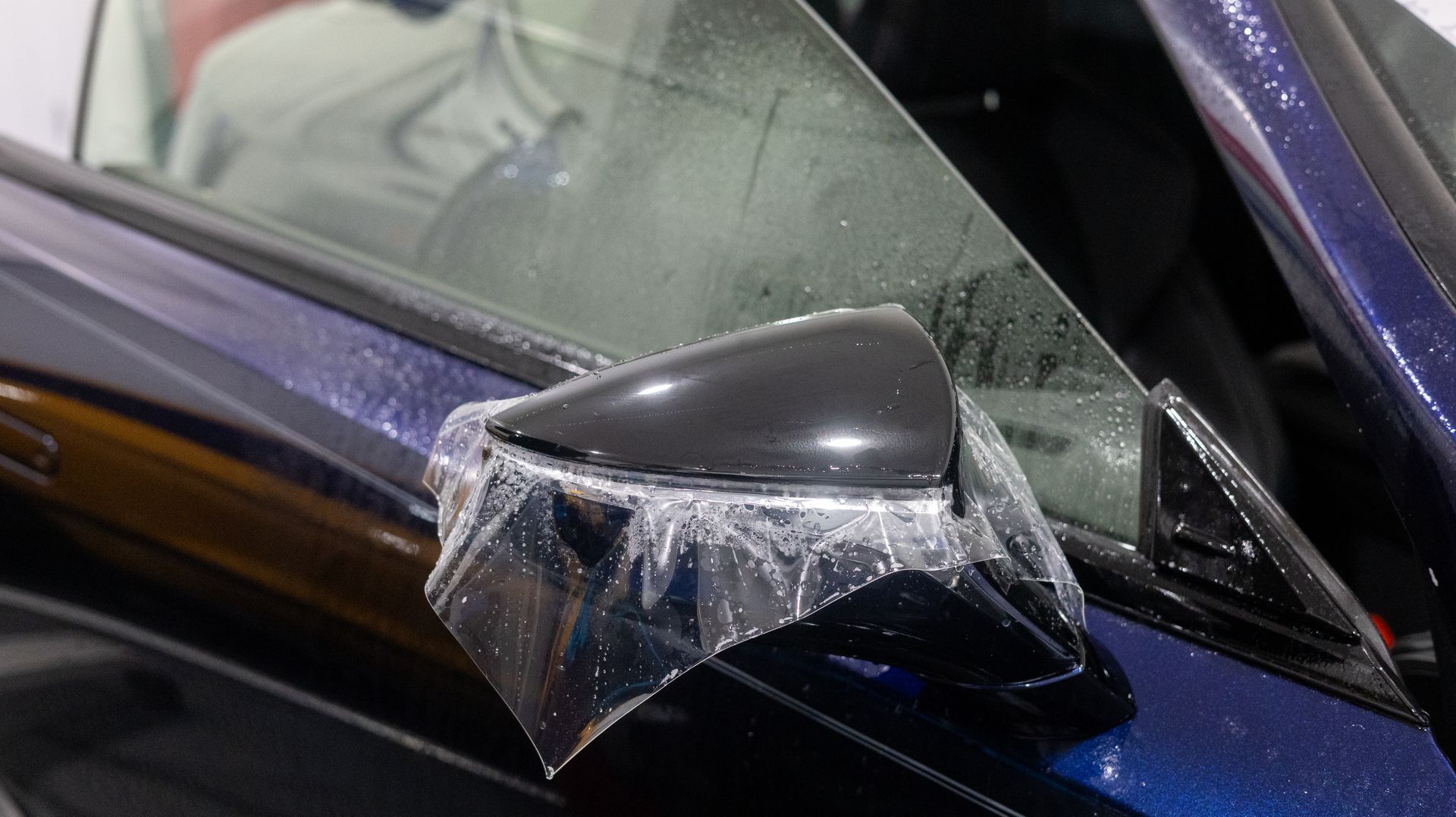
- Side mirrors
- A-pillars
- Rocker panels
That's a comprehensive front-end and lower-side package. The hood and fenders are critical on a low car like the LC because they catch everything coming off the road. Mirrors and A-pillars take a beating from bugs and debris at highway speed. Rockers get sandblasted by your own tires.
The film we use is self-healing — minor swirls and surface scratches disappear with heat from the sun or warm water. It's also non-yellowing and warrantied long term. Installed correctly with proper edge wrapping into panel gaps, you can't see it's there unless you know to look for it.
Step Five: Nxtzen Ceramic Coating
The final layer is Nxtzen ceramic coating, applied over both the PPF and the exposed paint. The coating adds a hard, hydrophobic layer that does a few things:
- Makes the car easier to wash. Dirt doesn't bond as aggressively, so contact washes are quicker and safer.
- Repels water aggressively. Rain beads and rolls off, taking dust with it.
- Adds gloss. The coating has its own optical depth that stacks on top of corrected paint.
- Protects against UV, bird droppings, water spots, and light chemical attacks.
A ceramic coating is not a force field — it doesn't replace PPF for impact protection — but it makes everything underneath last longer and look better. Pairing PPF with ceramic on top is the strongest one-time investment you can make in a car's finish.
Why This Combination Makes Sense
A lot of people in DFW ask me whether they should do PPF, ceramic coating, or paint correction. The honest answer for a car you plan to keep is all three, in this order:
- Paint correction first — you don't want to lock in swirl marks and defects under PPF or coating. Whatever's on the paint when you protect it is what stays there.
- PPF second — physical protection for the panels that actually take damage.
- Ceramic coating last — over PPF and over the bare paint on the rest of the car, for hydrophobic performance and easier maintenance.
Doing this on a new car or one in solid condition is the smartest detailing money you can spend. On a car like the LC500, where the design and the paint deserve to be seen at their best, it's almost a no-brainer.
Final Result
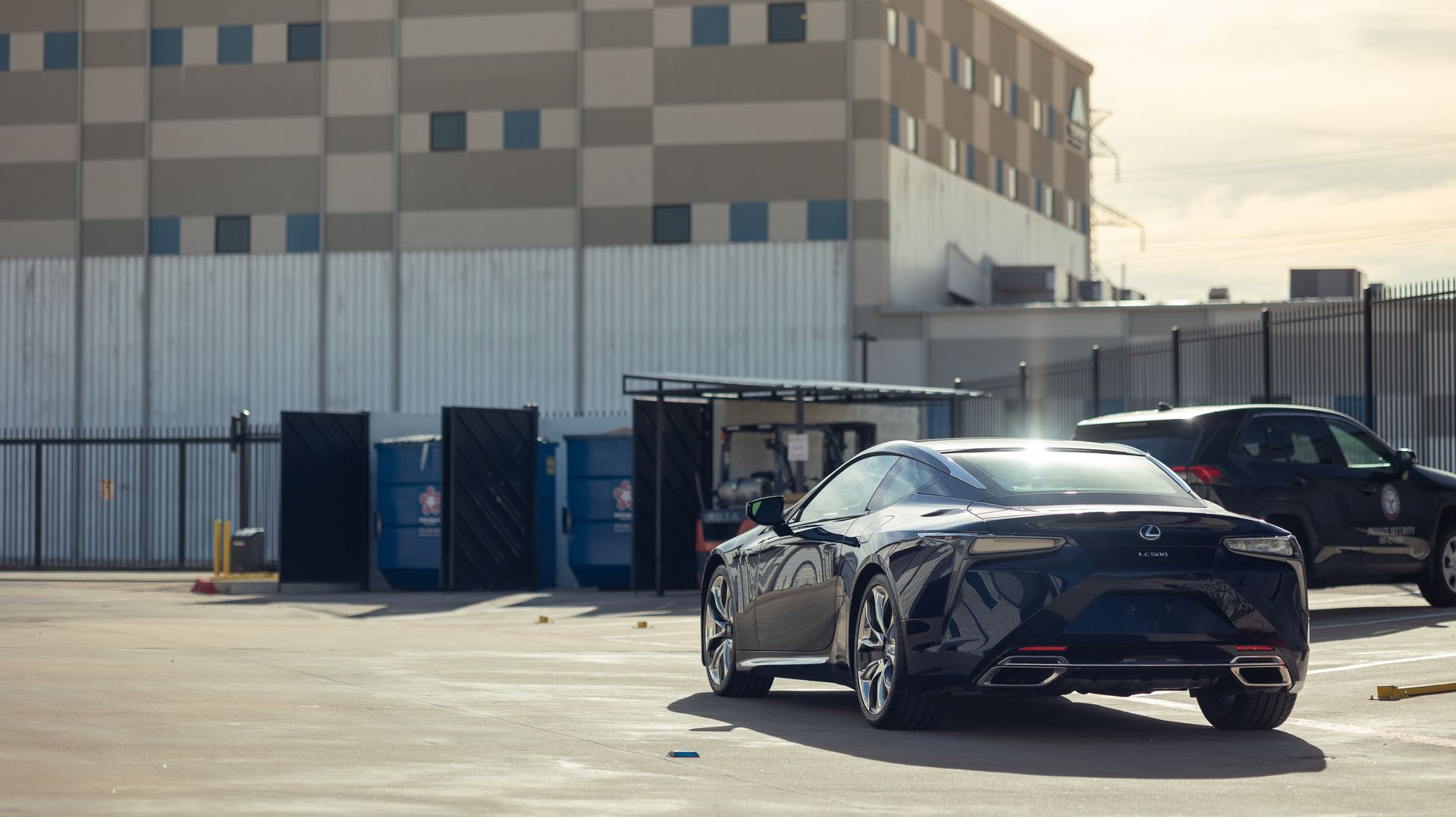
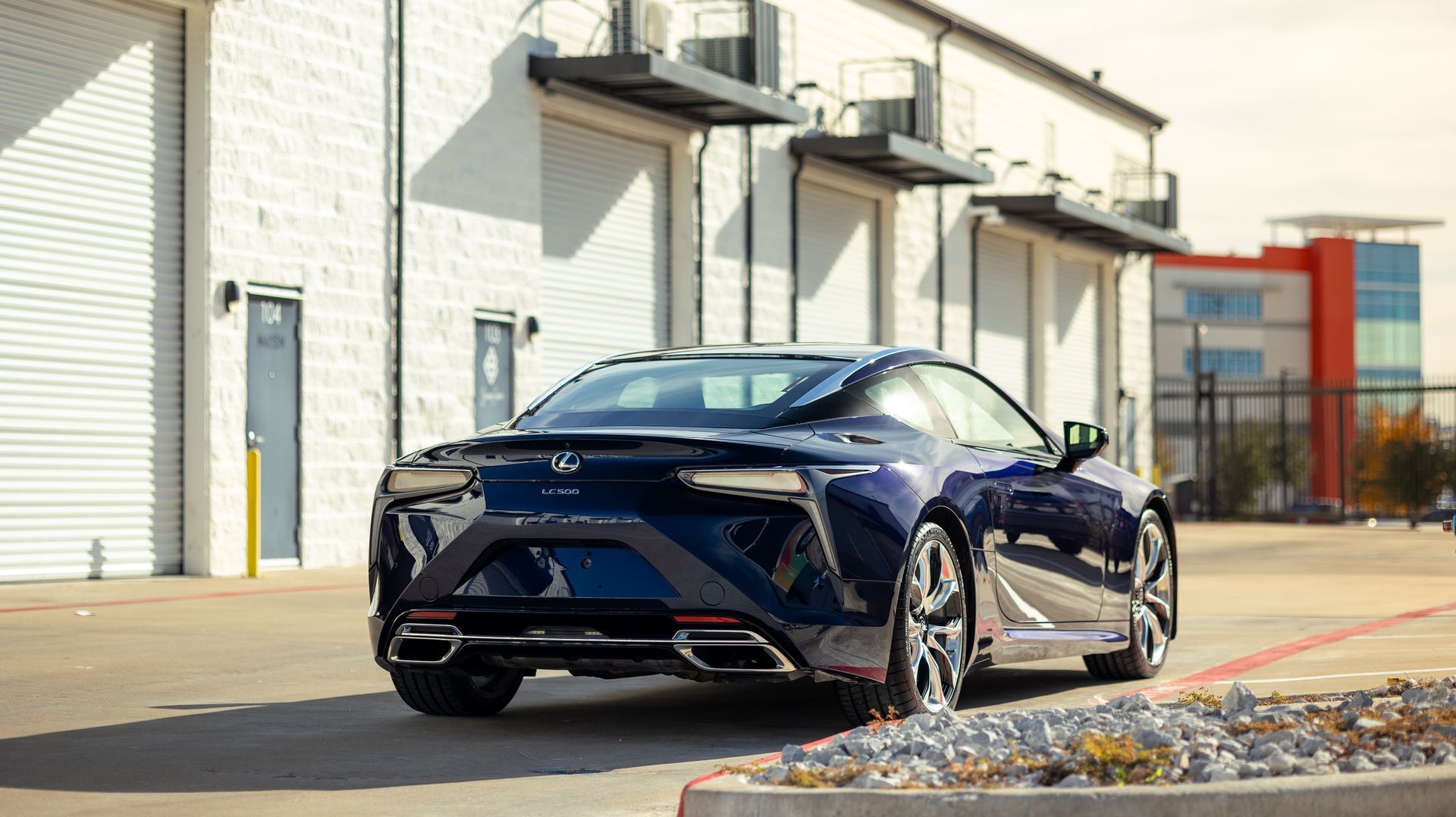
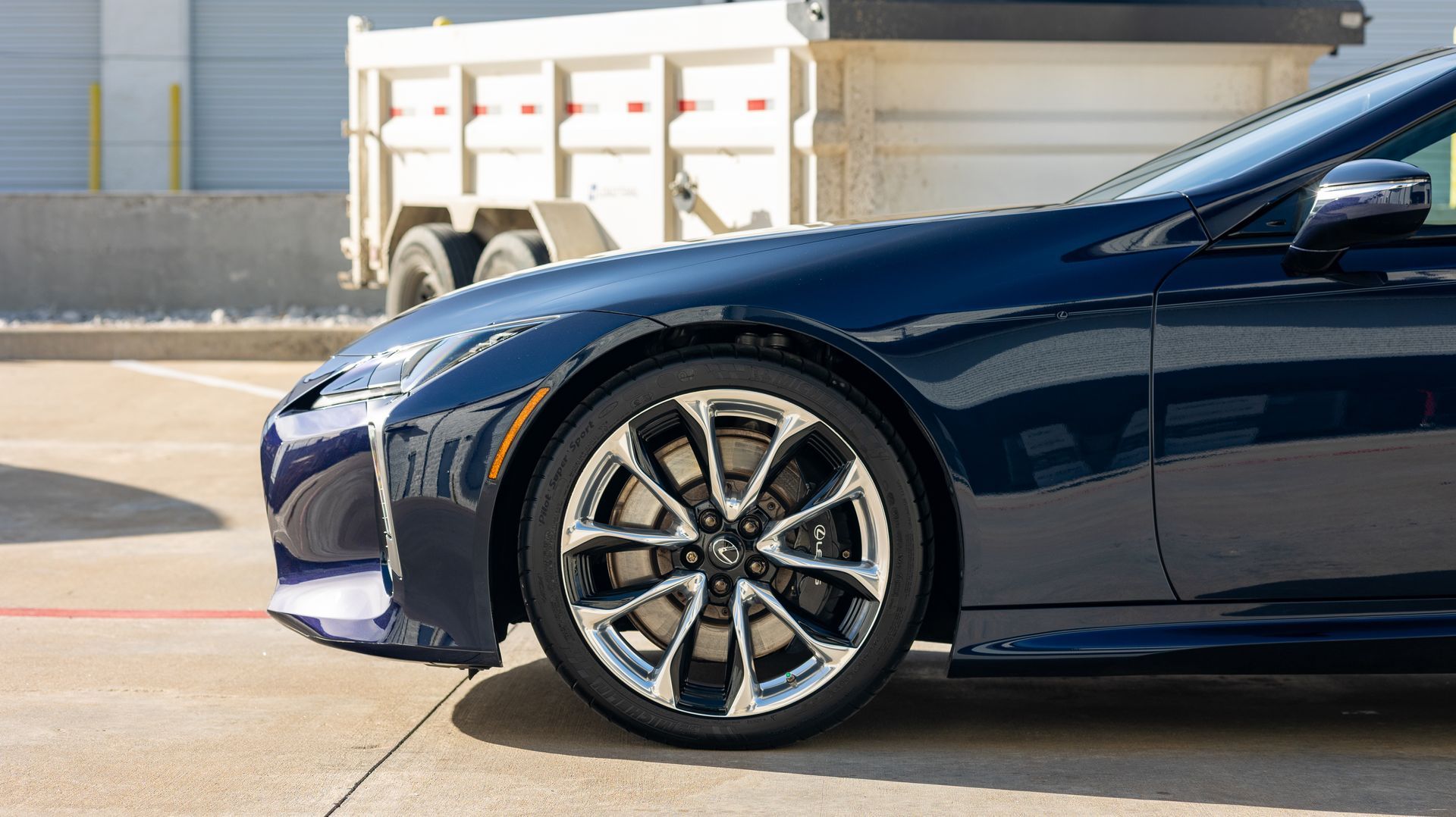
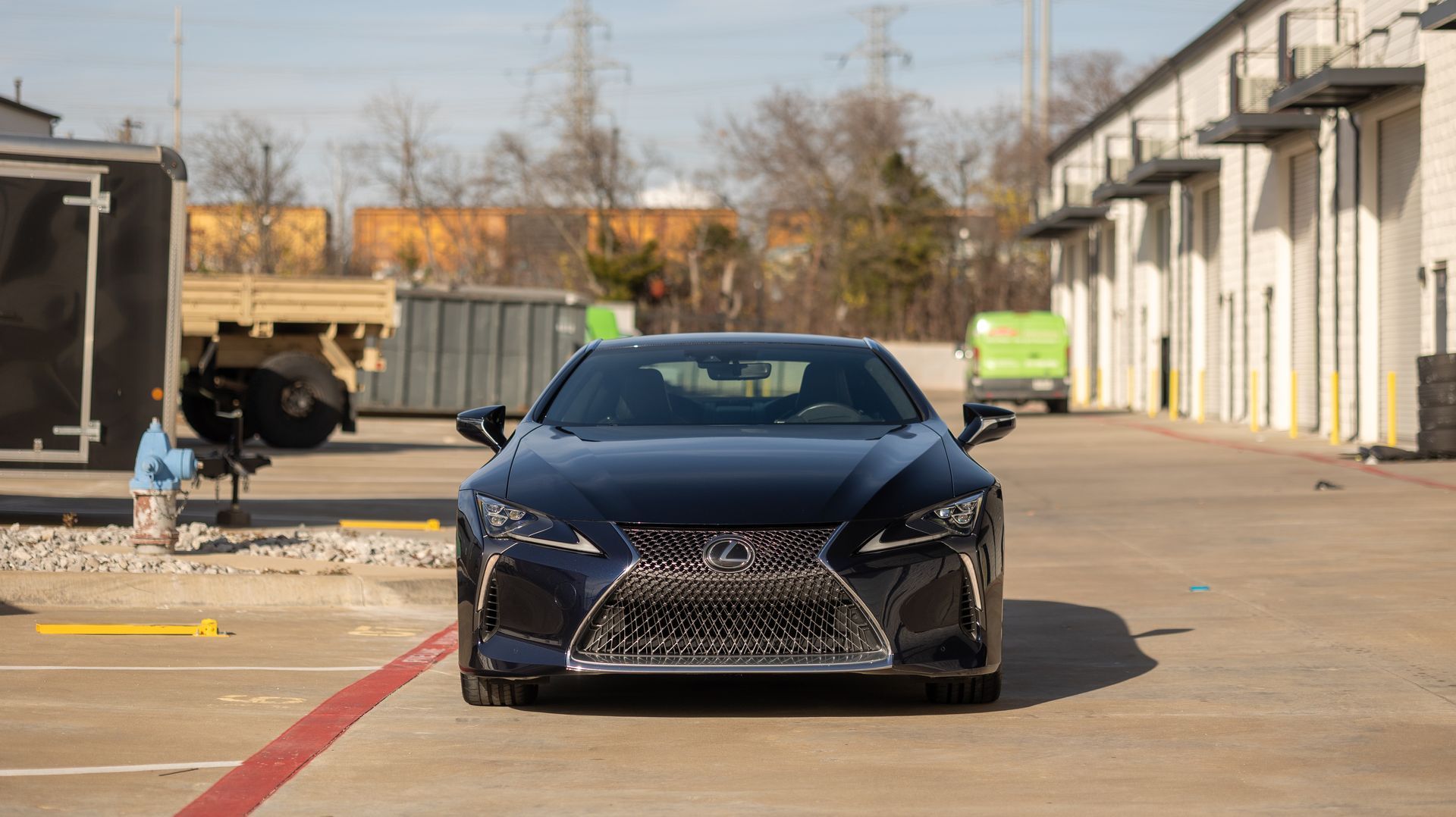
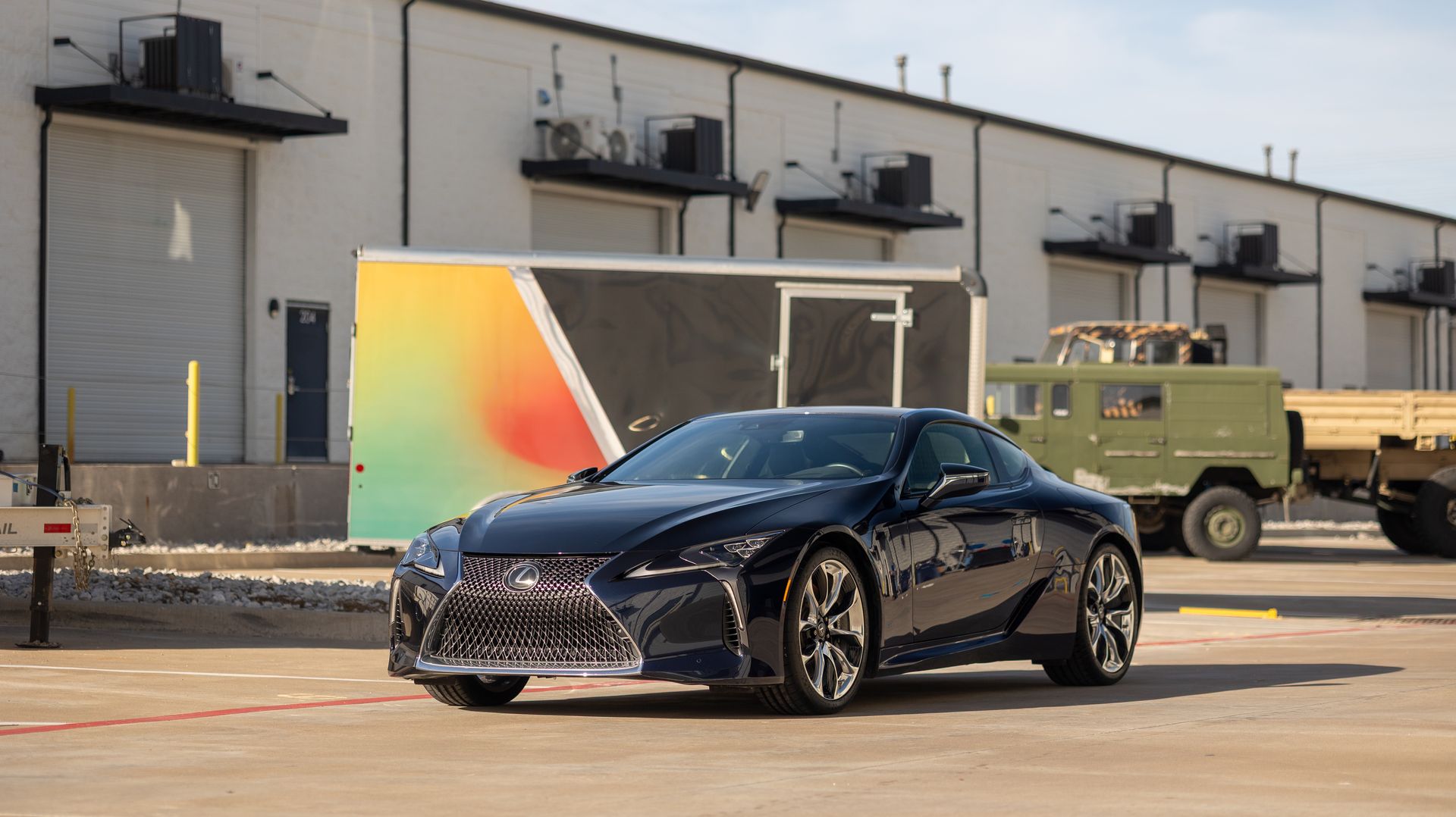
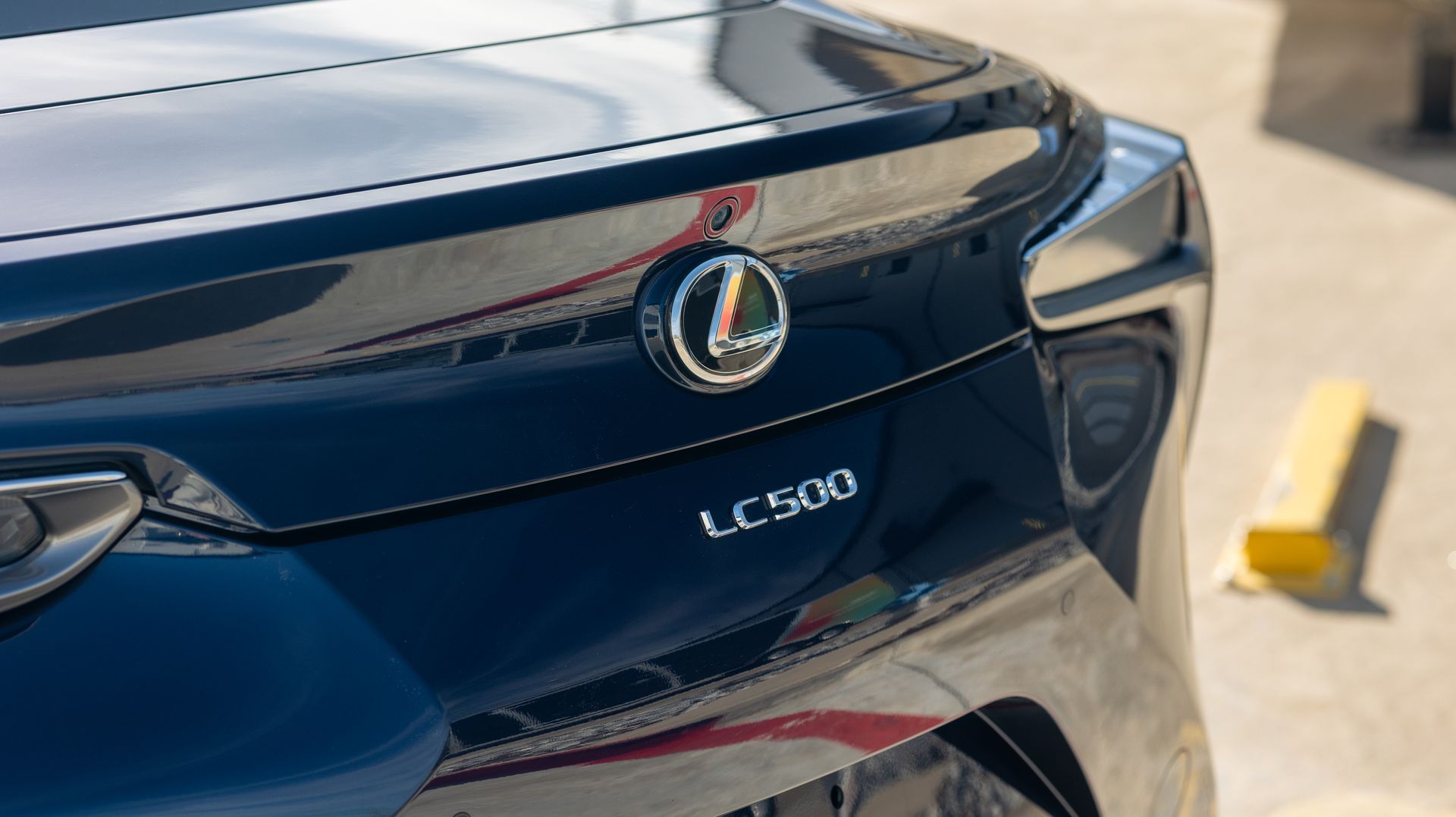
The LC500 left the shop looking better than it did the day it was delivered. The deep blue paint has that wet, three-dimensional quality you only get from a properly corrected and coated finish. The PPF is invisible from a normal viewing distance. And the owner now has a car that's going to stay looking like this for years instead of slowly degrading every time it gets washed.
This is the kind of work we live for at Humble Crew Auto Spa. If you're in Plano, Frisco, Allen, McKinney, Richardson, Dallas, or anywhere in the DFW metroplex and you want PPF, paint correction, or ceramic coating done right, get in touch. Whether it's a new Lexus LC500, a Porsche, a BMW, a daily Lexus or anything in between, we'll put together the right package for the car and how you actually use it.
Book Your Lexus LC500 PPF, Paint Correction, or Ceramic Coating in Plano
Send us a message, give us a call, or stop by the shop. We do consultations on every car so you know exactly what you're getting before any work starts. Serving Plano, Frisco, Allen, McKinney, Richardson, Dallas, and the wider DFW area.