
/ Journal · Humble Crew Auto Spa
New Toyota RAV4: Front End PPF and the Painted Grille Problem
Jesse Xiong·
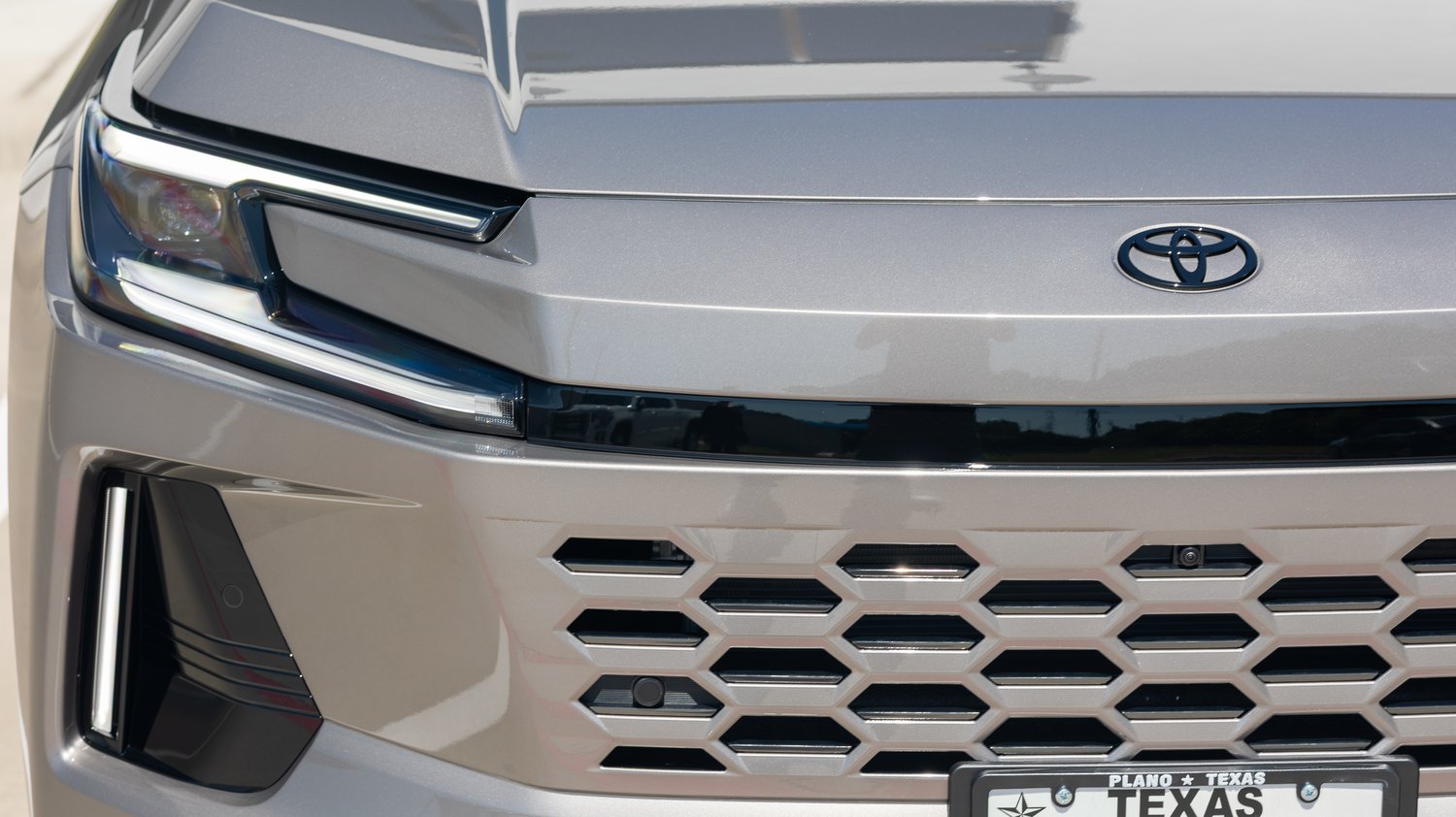
The New RAV4 Looks Great, and I Have One Complaint
The sixth generation RAV4 is a good looking SUV. Toyota squared it off, gave it the same sharp front end the rest of the lineup has been getting, and made every one of them a hybrid. This one is silver with a black roof and black wheels, and it's exactly the kind of vehicle that makes sense to protect. People buy a RAV4 to drive it every day and keep it for a very long time, and a front end full of rock chips at year three is no fun when you're planning on year twelve.
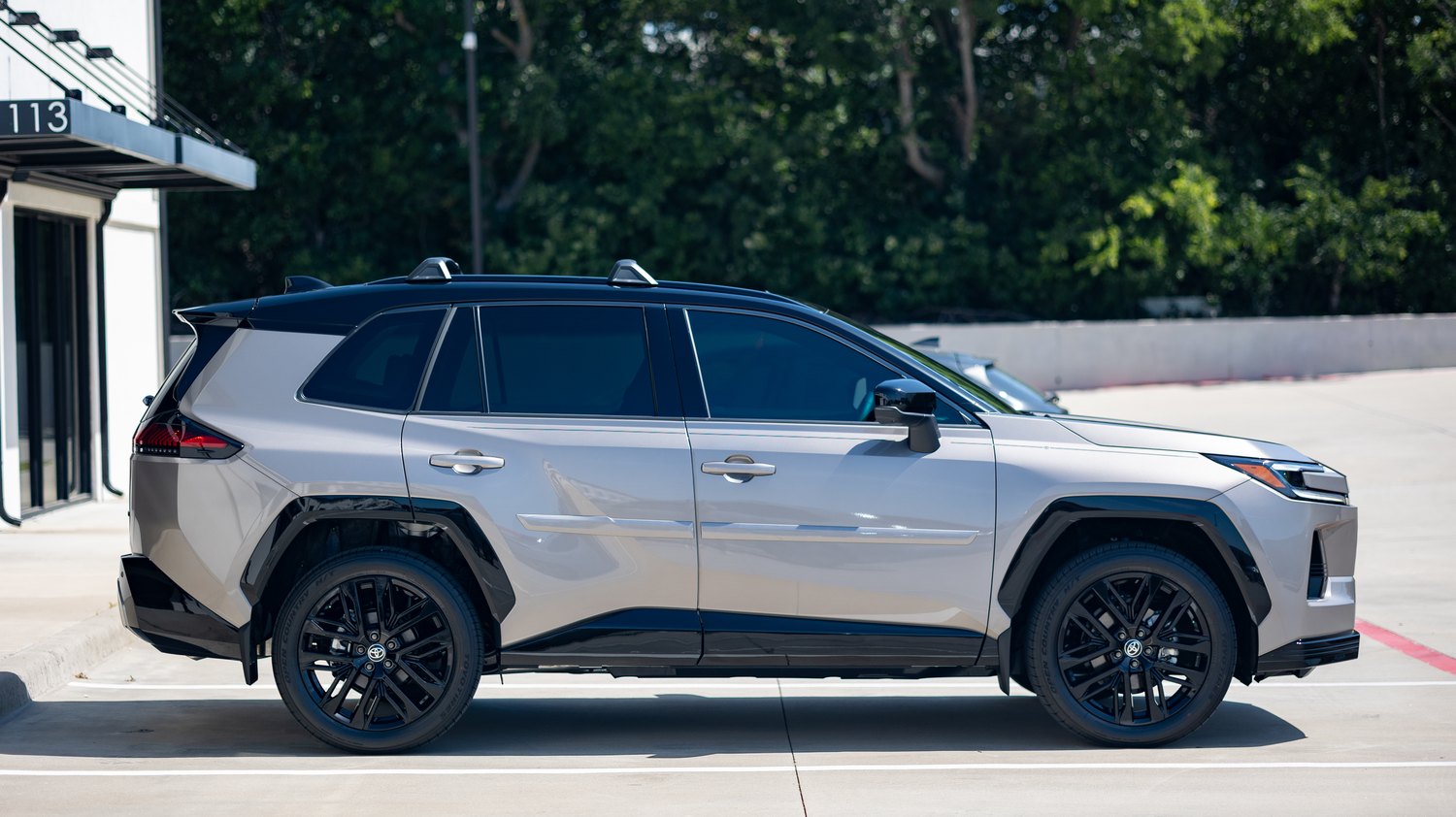
So the owner brought it in for paint protection film (PPF) on the front end. My complaint has nothing to do with how it drives or how it looks. It's the grille, and if you install film for a living, you already know where this is going.
Grilles Used to Be Easy
For most of the time I've been doing this, a grille was the one part of a front end we didn't have to think about. It was black plastic. Black plastic doesn't chip the way paint does, nobody sees a mark on it, and so the film simply stopped at its edge.
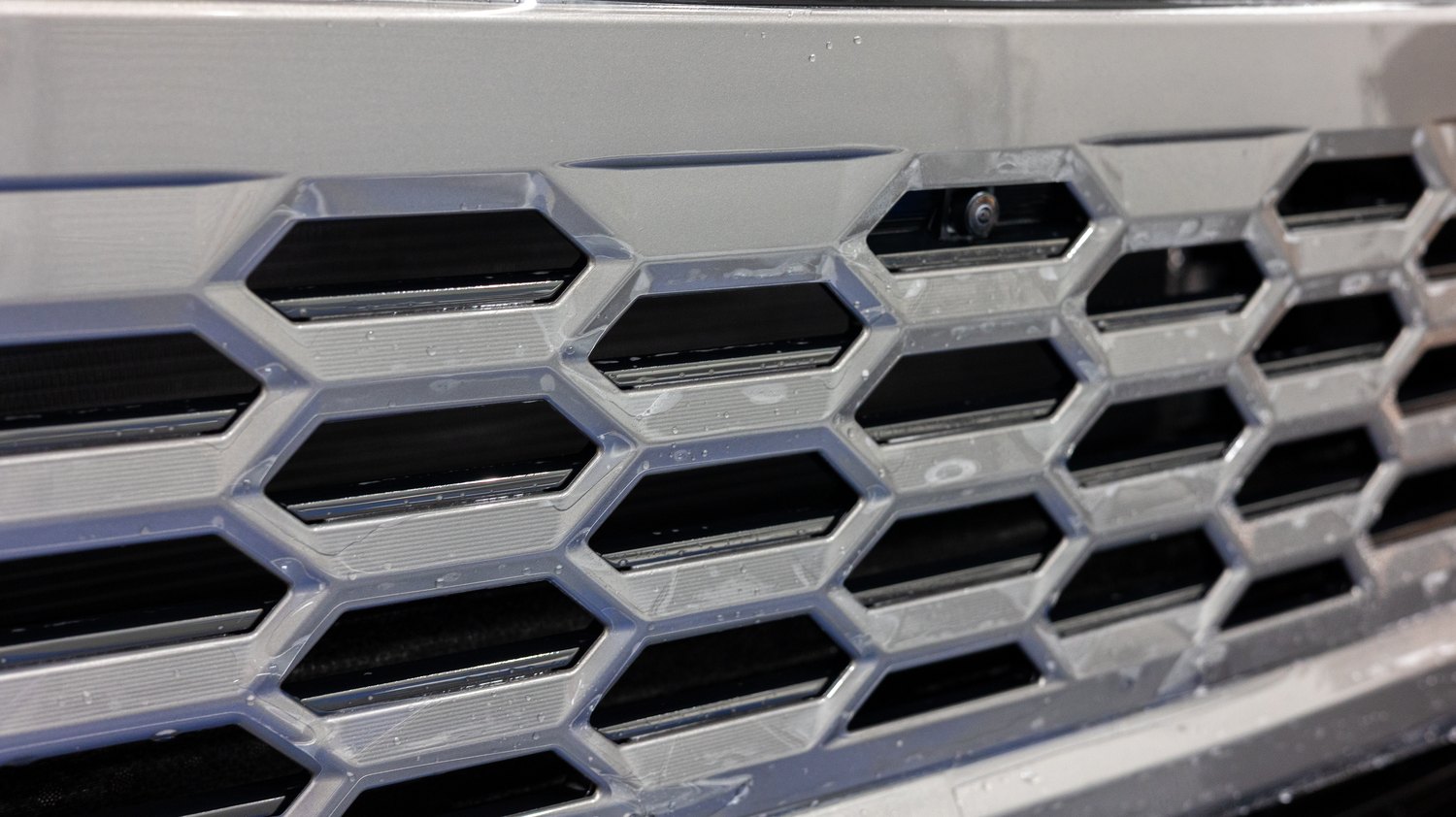
The new Toyotas changed that. On this RAV4, the grille is painted the same color as the body. It's a honeycomb pattern molded into the bumper, with dozens of openings, and every bit of the framework between those openings is painted silver. It also happens to sit at the very front of the vehicle, at exactly the height where gravel arrives.
So it's painted, it's the leading edge, and it's shaped like a waffle. Leaving it bare would mean leaving the most exposed paint on the car unprotected. Which means it gets wrapped.
One Piece of Film, Dozens of Holes
The way we do it is with a single piece of film that covers the entire grille, cut so that it has an opening for every opening in the honeycomb. Picture a mesh made out of clear film. That's what goes on.
I'll be honest with you. It's annoying. It's the most tedious part of the whole car by a wide margin.
The trouble is that every part of the mesh has to line up at the same time. On a hood, you have one big surface and four edges to worry about. On this grille, you have dozens of thin strips of film that each need to land on a thin strip of paint, and they're all connected to each other. If you pull one corner a little too far, every opening on that side shifts out of place. And because the strips are so narrow, the film wants to stretch and twist the moment you put any tension on it.
So it goes on slowly. We float the whole piece into position on slip solution, get it centered, and then work outward one cell at a time, pressing the liquid out from under each little strip and making sure its edges are down all the way around the opening. There's a camera sitting in the middle of this grille too, so the film has to be worked cleanly around that. It's small tools, fingertips and a lot of patience.
We do it as one piece because that's what looks right when it's done. A grille covered in separate little strips would have seams everywhere. One mesh has none. You can see the finished result in the close up, where the film is on and you'd have a hard time proving it.
The Rest of the Front End
After the grille, the rest of the job felt like a vacation.
If you're new to PPF, it's a tough, clear urethane film that goes over the paint and acts as a sacrificial layer. A rock that would have chipped the paint hits the film instead, and the film's top layer heals light scratches by itself in the heat.
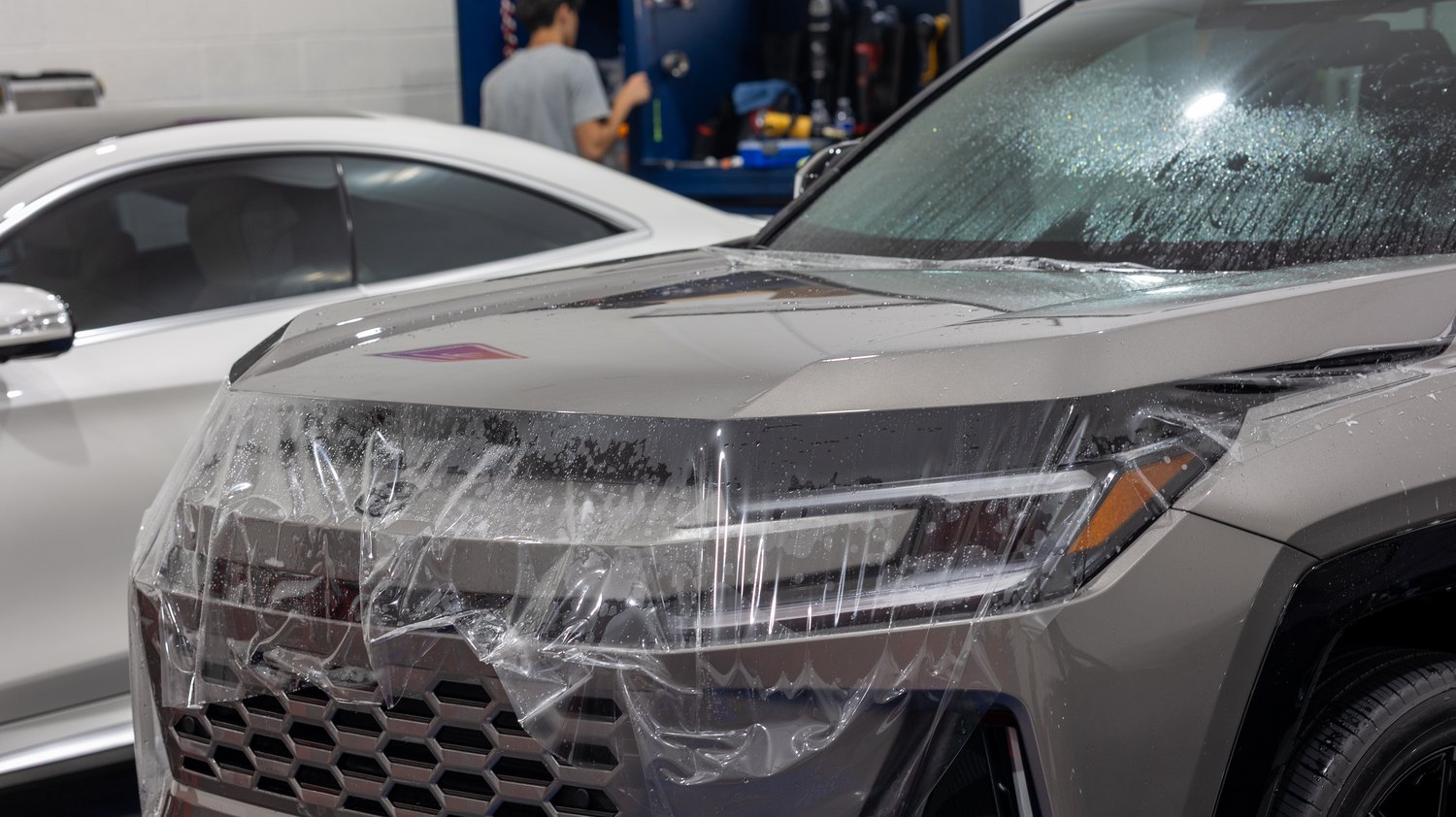
The bumper is still a complicated piece on this RAV4, with the vertical vents at each corner and the lights cut into it, so the film has to be worked into those recesses and squeegeed out carefully. You can see that in the photos, along with the film draped over the hood before it's set.
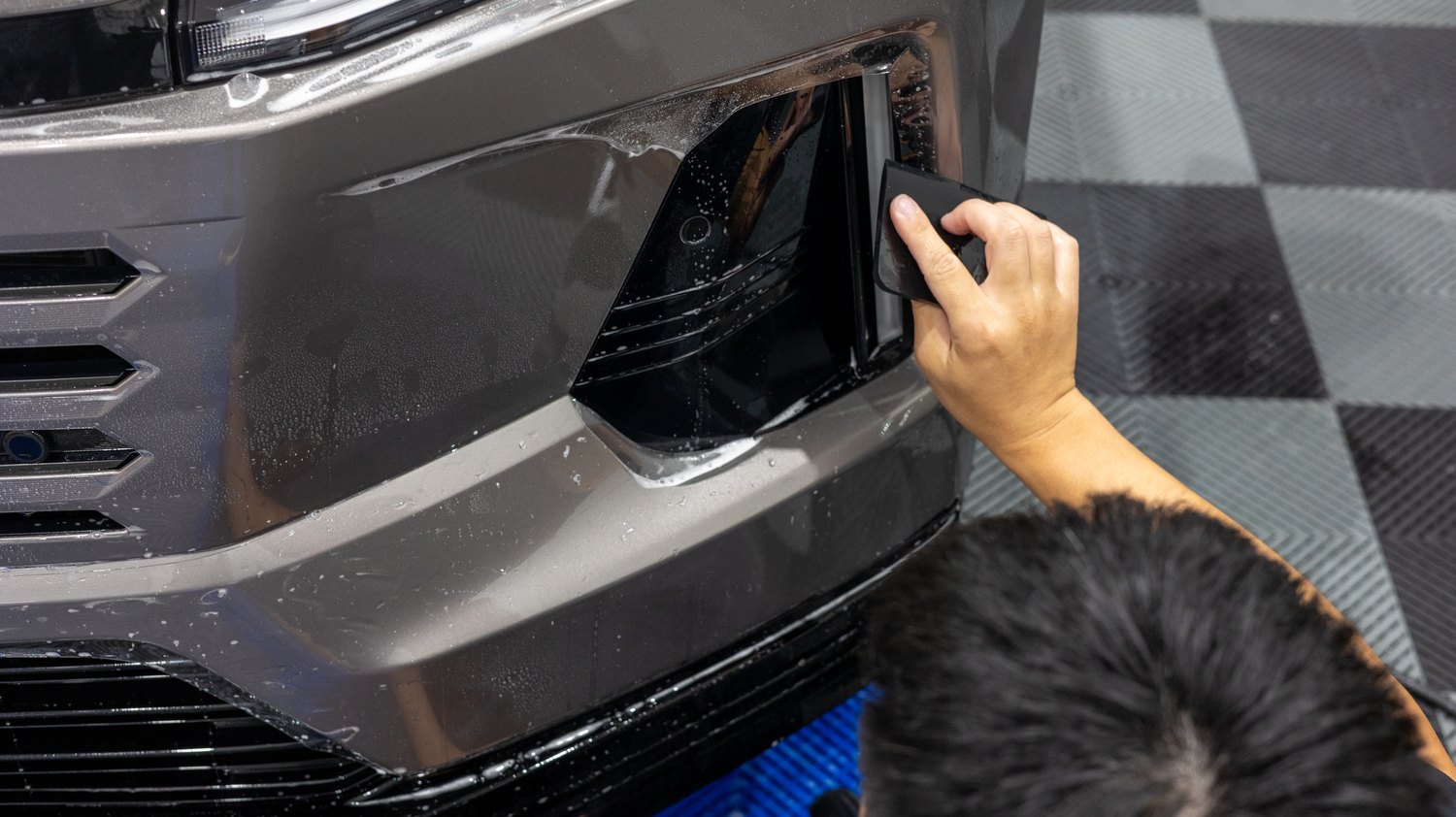
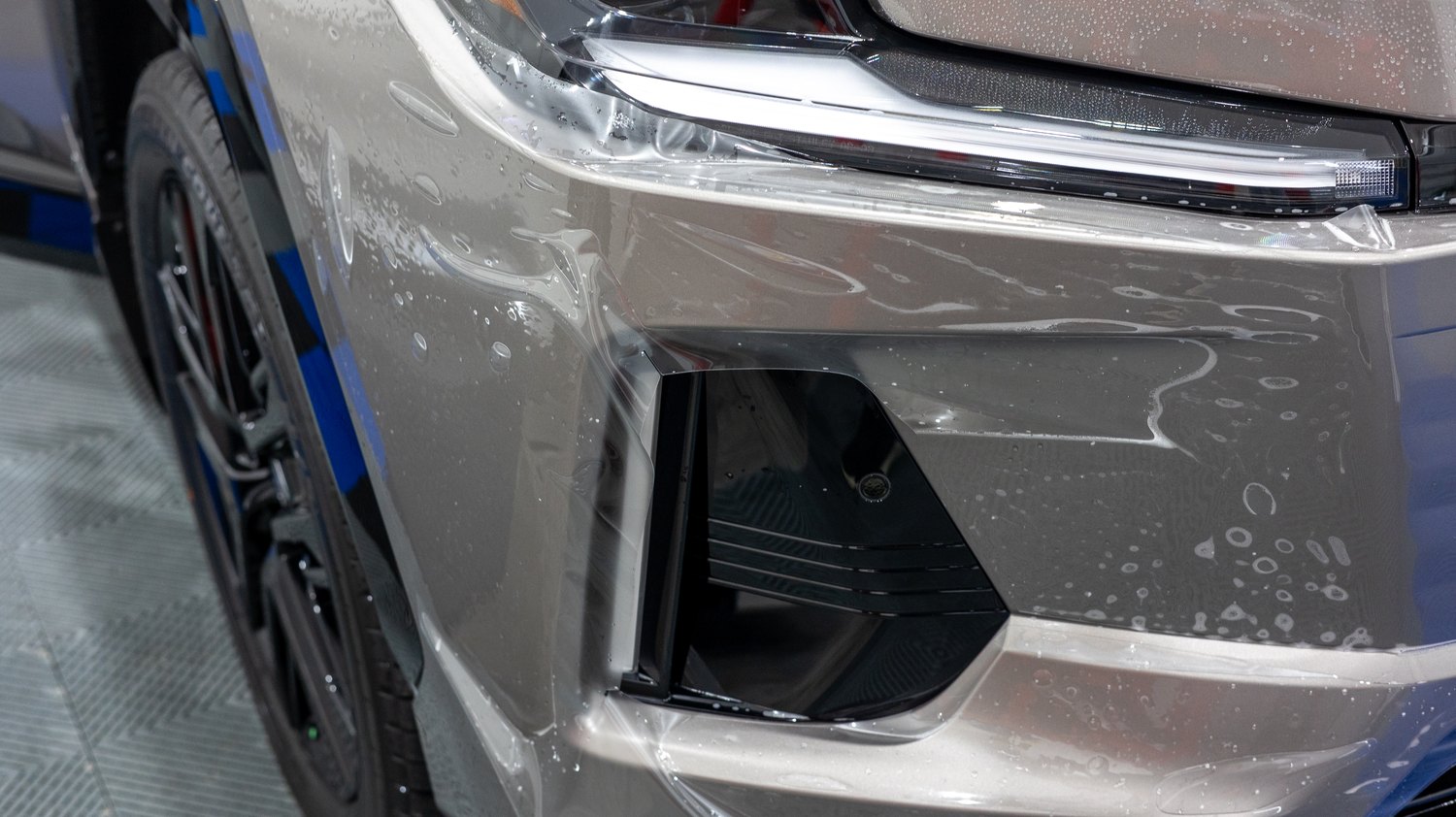
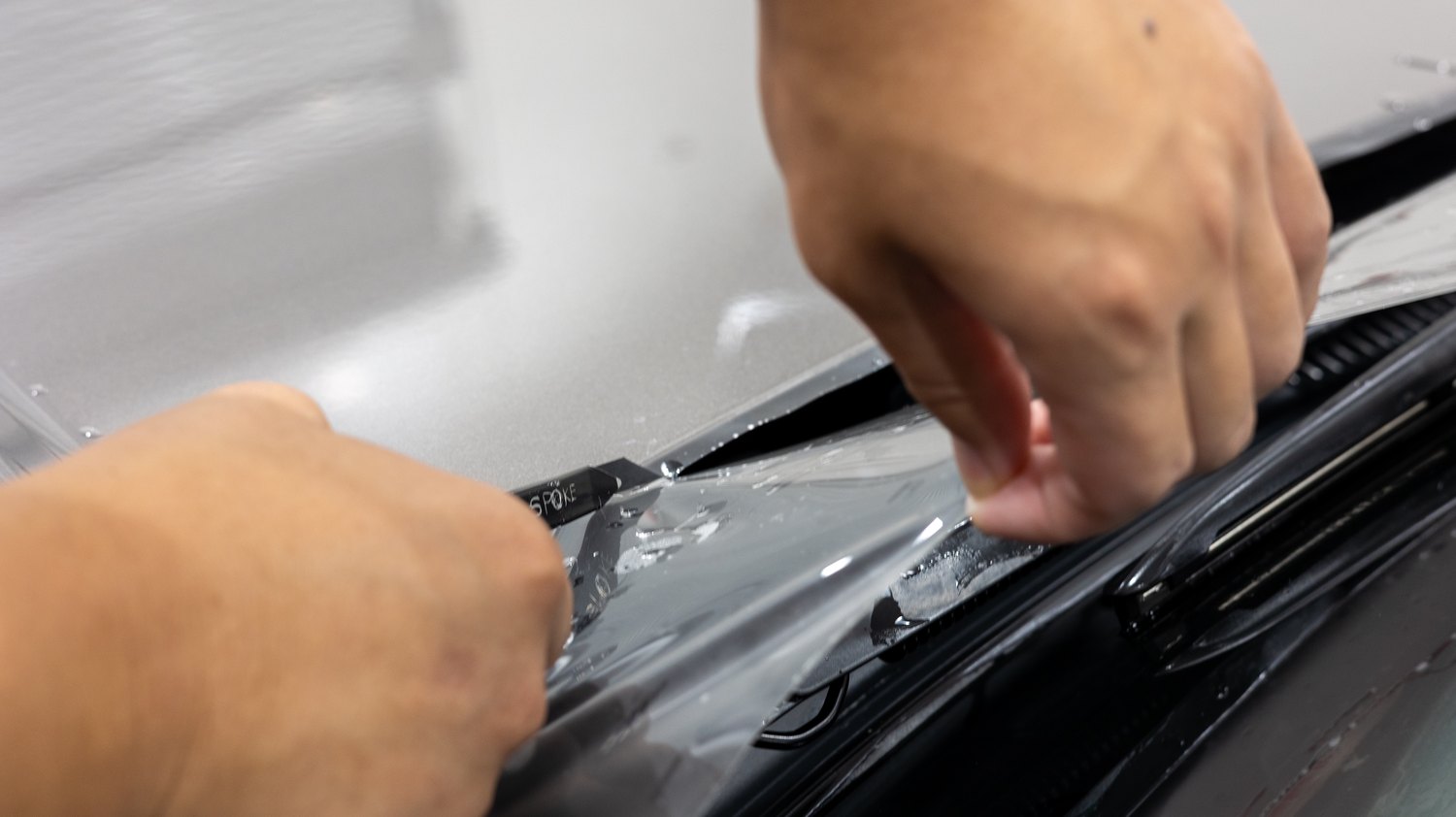
Along the edges, we leave extra material and trim it by hand, then wrap it around the edge of the panel so it ends out of sight. There's a shot of that being done at the edge of the hood. A wrapped edge leaves no line on the face of the panel and nothing exposed to collect dirt or lift.
The film is Ultrafit, and it carries a 10 year warranty against lifting and discoloring.
Was It Worth the Trouble?
Yes. Look at the finished front end. The grille, the bumper and the hood are all covered, and none of it shows. The silver looks exactly like it did before, except now the part of the car that faces the highway has a layer between it and everything coming at it.
I'll keep grumbling about painted grilles, and we'll keep wrapping them properly. A RAV4 owner who plans to keep the car for a decade deserves a front end that still looks good at the end of it.
Have a New Toyota With a Painted Grille?
We're a paint protection film, ceramic coating and window tint shop in Plano, TX, and we protect daily drivers for owners from Frisco, Allen, McKinney, Richardson and Dallas. If you have a new RAV4, or any new Toyota with a painted grille, bring it by and we'll show you exactly what we'd cover and how. There's no pressure, and we're always happy to talk cars.
(469) 954-9735
info@humblecrewautospa.com
535 Talbert Drive STE 113, Plano, TX 75093
Monday to Friday, 8:00 am to 5:30 pm
Want this on your car?
Pick your service and your time, or call the shop and talk it through first.