
/ Journal · Humble Crew Auto Spa
Full Body PPF on a Brand New Ferrari Roma
Jesse Xiong·
This is the only package that makes sense for a car of this caliber.
Full Body PPF on a Ferrari Roma in Plano
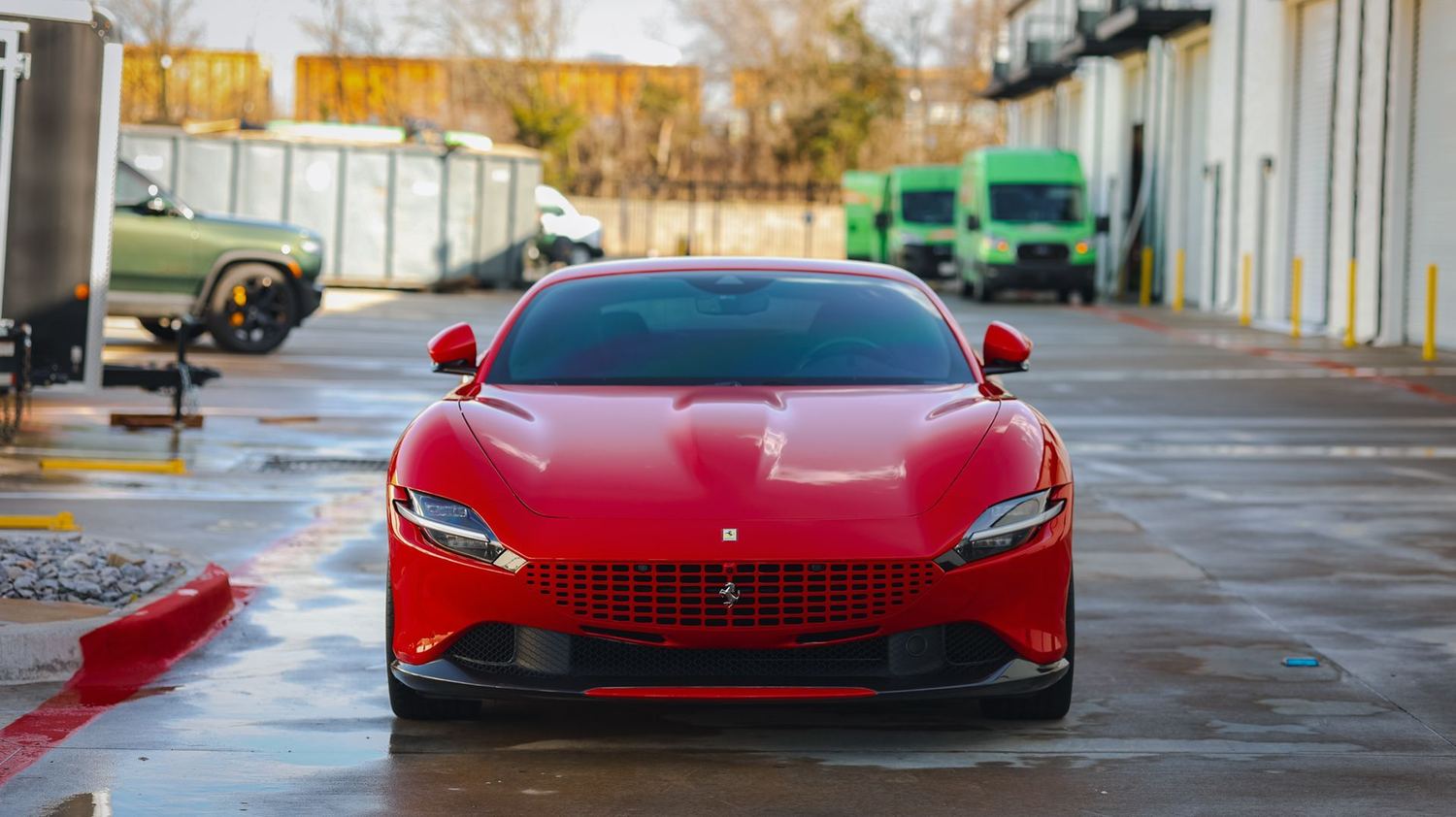
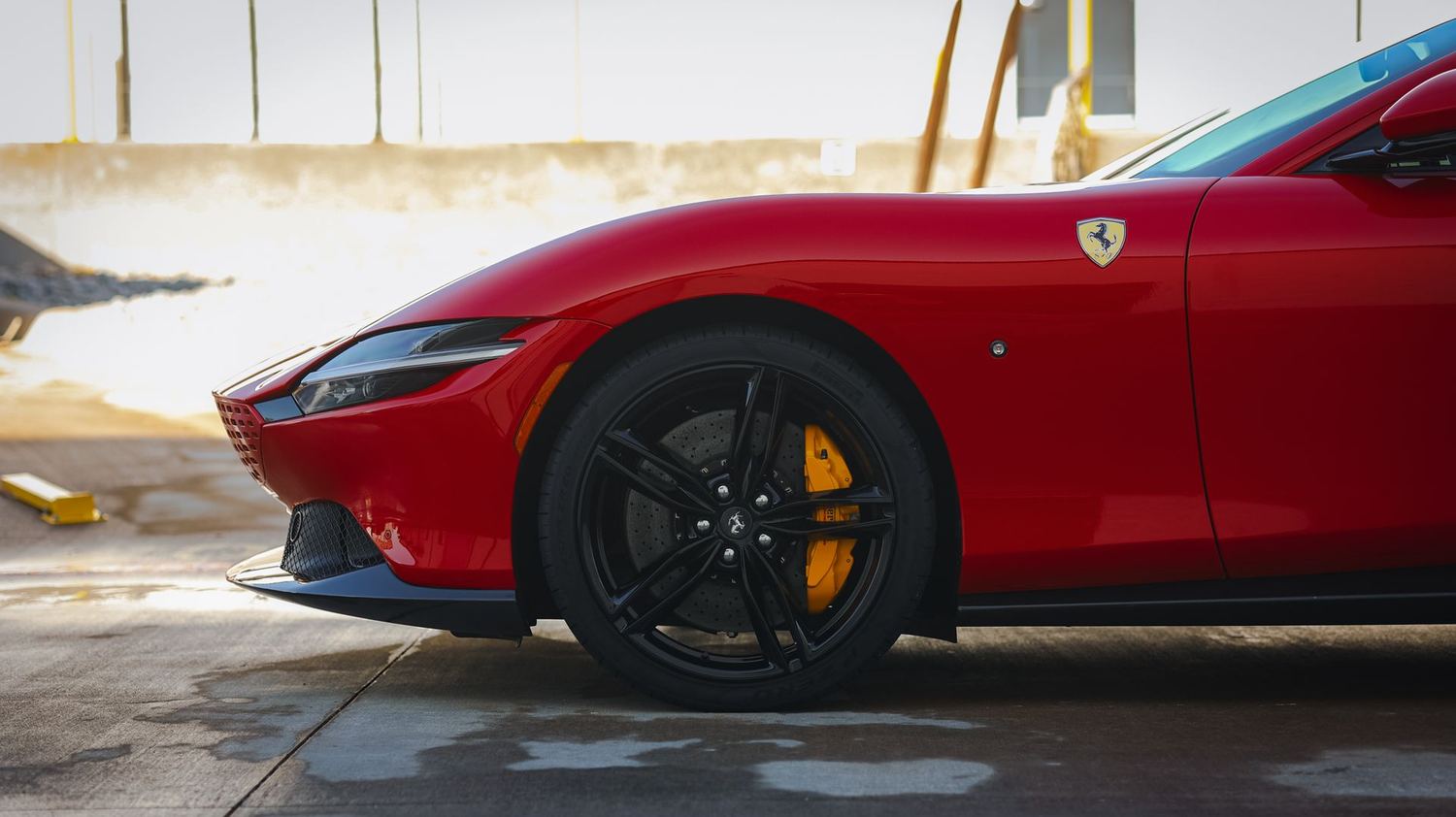
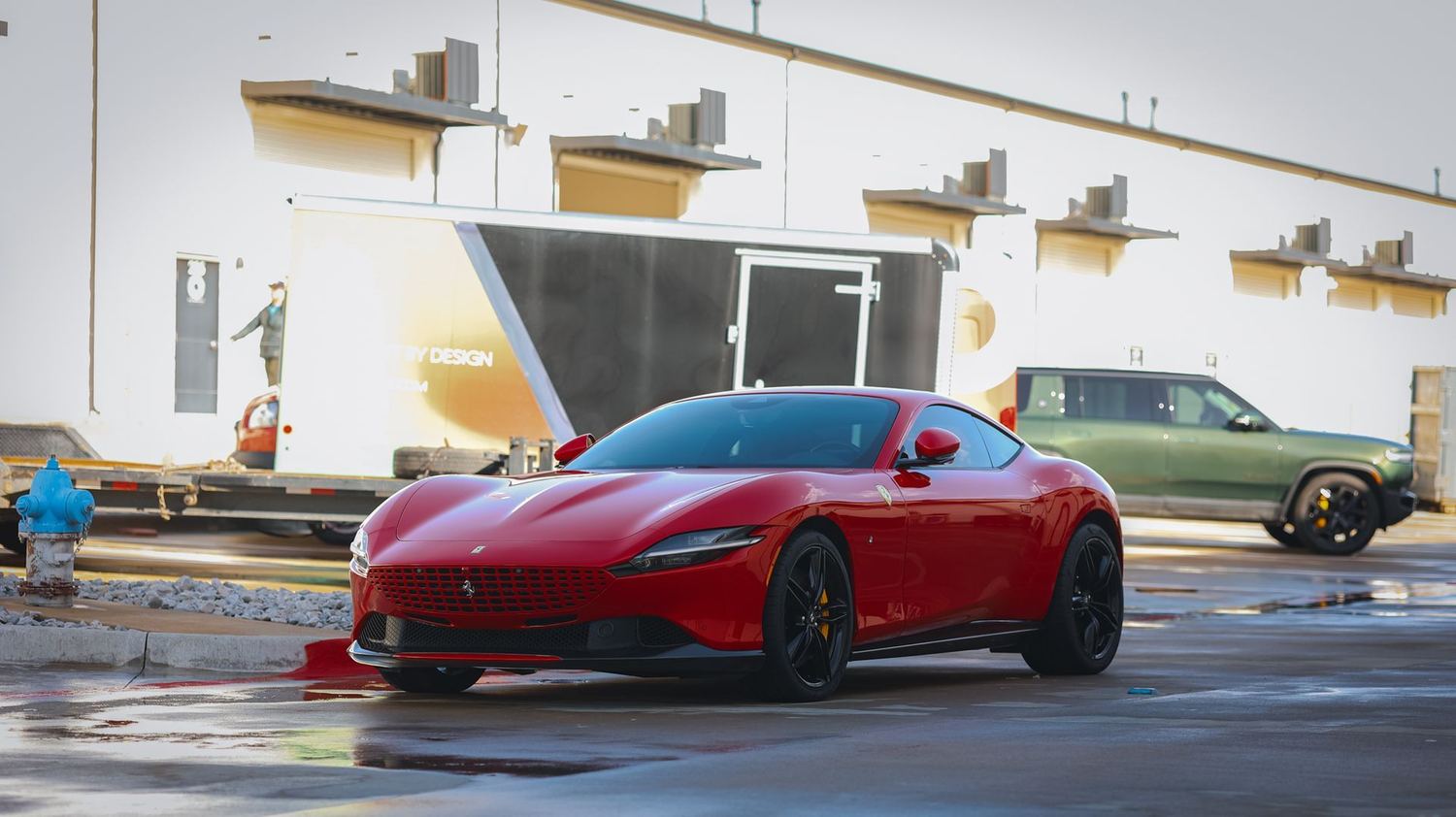
The Ferrari Roma is a step in Ferrari's new and bold design language, and is a departure from their 458/488 mid engine designed sports cars. It’s elegance on wheels, a $250,000 statement of design and performance that deserves to stay flawless. When this Roma arrived at Humble Crew Auto Spa, the owner knew one thing for certain: full-body paint protection film (PPF) was the only way to protect his investment.
You can watch the full installation here:
👉 Ferrari Roma Full Body PPF Install
Video transcript · 1,159 words
Today we've got a super special project. We got a brand new Ferrari Roma and our client shopped the hell out of our competition and we won the bid. So, I'm really really proud to be tackling this Roma today. I'm very honored that we get the privilege to work on this beautiful vehicle. Uh the Roma is such an interesting Ferrari, right?
If you look at the way the angles are, uh it's very very different from different Ferraris. Like this one is not quite as concave as like let's say a 458 or something. And so we're doing full body PPF on a vehicle like this. And so I'm going to walk you through the process front to back and show you how much work goes into full body PPF on this Ferrari.
So every single vehicle that comes to my shop starts with a fantastic hand wash and a prep. So with our hand wash, we use a three bucket method. Two buckets on paint, one on wheels. Doing washes this way mitigates any type of spore marks and scratches that might come with us washing the vehicle. We don't want to install scratches and swirl marks when we're prepping the car.
So, as we prep the vehicle for paint protection foam, we take a brush, we go through and clean all of the uh crevices nice and neat cuz dirt whenever we're laying paint protection foam will come out from those areas and get into the film causing a bump in the appearance and we don't want that for our final product.
Now, the vehicle's all been washed. We're going to pull it inside and start our PPF. We're going to be using core software. And what's really great is that Core allows us to map out all of the body panels of the vehicle for the PPF, giving us a very, very accurate install. With core software, not only does it allow us to map out the film really effectively, so we don't waste any surface area of this sheet, but it allows us to stretch the patterns too, which means that the patterns, if you look with some of the fenders and whatnot, we're going to stretch it past the perimeter, giving us a cleaner tuck.
When paint protection film is tucked this way, is good for two major reasons. First and foremost, it looks fantastic. It looks literally seamless and invisible. So, that is really great on aesthetics, but more important than just looking really pretty. It's also very durable. Paint protection film when it's tucked this way is followed by way to catch and lift, giving you more durability over the life of the film.
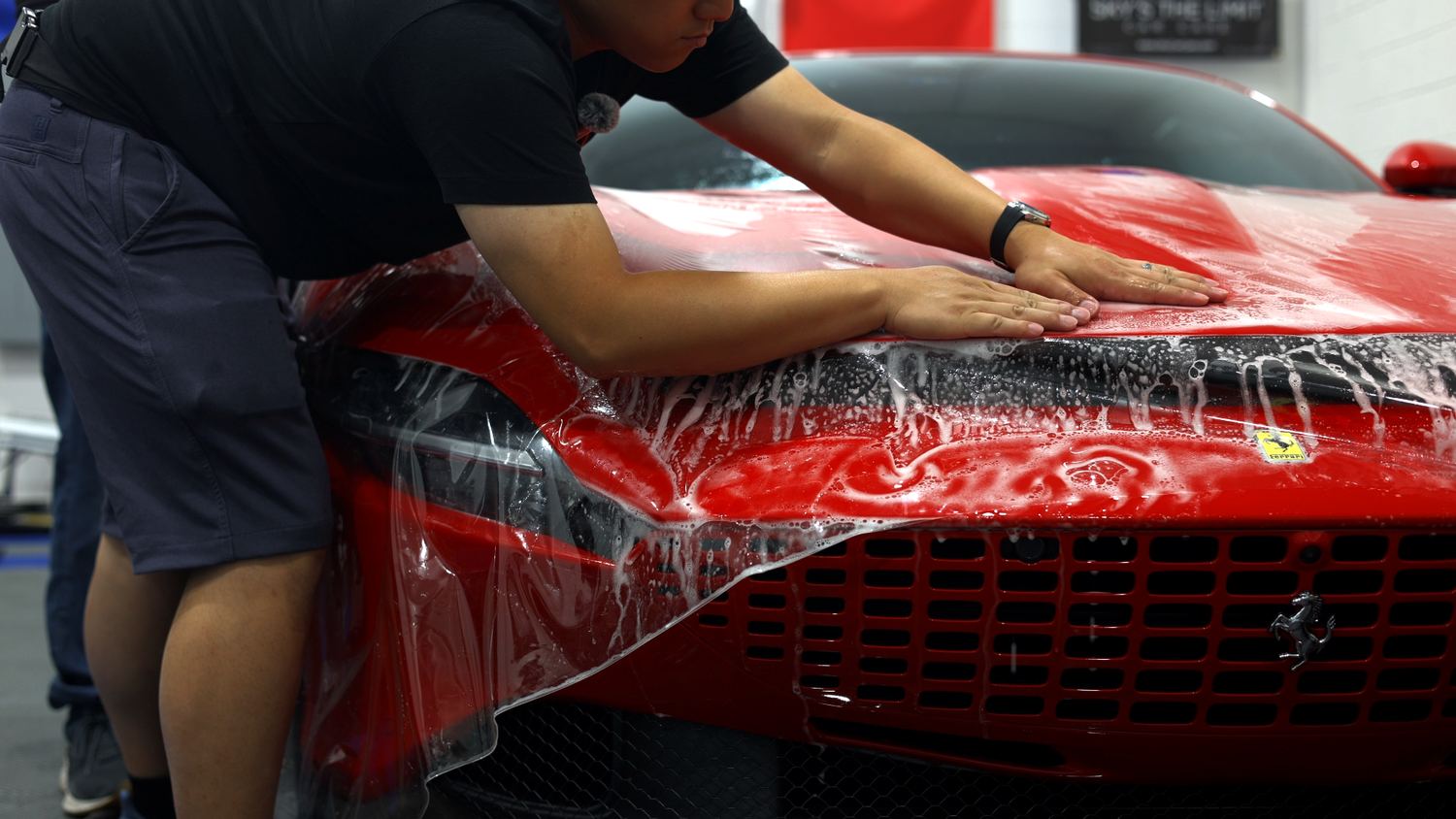
With all of that prep work, we are now finally ready to start laying some film. We usually start with the hood and then we work our way around the vehicle. It's just that's the way that we like to do it. So with the hood, this is the one piece of film that we actually install in one big bulk piece.
You can see my guys installing it this way using a four corner stretch, which has us lay the entire piece of film over the hood and then stretch it across to mitigate any type of stress or any type of areas where the film is lifting to get it flat across the surface. Once it is laid flat, then we move to squeegee.
Now, this looks easy on video, but in reality, you have to be really thorough. Because when we're squeegeeing, we work in small sections. And then we inspect the section to make sure there's not any kind of dirt, dust, or any debris that might have landed on the panel, even though we prepped it so well. Now that the film's been laid, we're going to trim the edges.
And so, you can see we're trimming it by hand with a blade. We cut along the perimeter of the vehicle. I will leave maybe 2 or 3 millimeters. And that 2 or 3 mm is going to get tucked around the edge. When we install paint protection fil more complex pieces like this front bumper, you can see that the film cutout has to get really really precise and you got to work in small sections to make sure that film is not only laid across evenly, but also there's not any bubbles or any kind of dirt and dust.
It's very very tedious and complex and you have to stretch the film a certain way to get it to fit on that panel. But that's the nature of PPF and that's why you're paying the pros to do this and you're not doing this in your garage. With paint protection film, what's really fantastic is that when you do full body this way, you're fully protected from things like rock chips, scratches, swirl marks, dings, bird poop, bubble guts, tree sat, I mean, you name it.
One of the major benefits that people don't really think about with paint protection film is its ability to heal swirl marks and scratches. With paint protection film, it can heal. Which means that if you do accidentally brush up against the car or you accidentally wipe it when it was dirty and dusty and you install swirl marks and scratches, you can park that car in the sun and that paint protection foam will literally heal the swirl marks and scratches away, giving you a increased clarity over a long period of time and the durability you're looking for.
I'm hungry. future. There you guys have it. That's full body clear bra on this Ferrari Roma. The owner of this vehicle wanted the absolute best. He had anxiety about parking his new Ferrari places. He wanted to have his cake and eat it too. And so he did that full body clear bra to give it full paint protection from physical and chemical damage.
These Ferraris and most exotics on the market to be fair are usually really difficult to do paint protection film because they generally will have kind of oddshaped panels or sometimes film has to be stretched a certain way so that it fits. So, when you're doing clear bra on these exotics, make sure you bring it to a shop that understands how this material works and how to get it on correctly so that it stays on that car long term.
So, if you got a Ferrari or you got some sort of exotic or special vehicle and you want to get this work done because you want that peace of mind and you want the best, then bring it to Humble Crew Auto Spa. We specialize in paint protection film, ceramic coatings, and window tint. And when we do these jobs, we really do take our time.
It's Jesse at Humble Crew Auto Spa signing out.
Full Body PPF is the Right Move
We see the same key reasons come up over and over when exotic owners choose full-body protection. Here’s how they break down:
1. The Cost of the Car Justifies the Protection
Full-body PPF is designed to absorb impacts, resist scratches, and prevent paint damage.
On a car worth well into six figures, the cost of PPF is small compared to the cost of even a single panel repaint. Ferrari paintwork isn’t cheap.
You get the peace of mind that your car is protected from the moment you leave the shop, knowing you’ve shielded your investment.
2. Peace of Mind wherever you park
PPF creates a physical barrier between your paint and the outside world.
When you park at a restaurant, hotel, or car meet, you don’t have to stress about a careless door swing or shopping cart grazing your Ferrari.
No more anxiety about parking in public. You can actually enjoy the experience of taking your car out instead of hovering around it nervously.
3. Designed for Long-Term Ownership
Premium PPF comes with warranties of up to 10 years and is built to last. It’s self-healing, UV-resistant, and maintains clarity over time.
Whether you’re driving daily or sparingly, the film keeps your paint locked in perfect condition for as long as you keep the car.
It will look like it just rolled out of Maranello—even years down the road.
The Process
Ferrari designed the Roma to be clean and minimal—no busy vents to hide mistakes. That leaves nowhere to hide for an installer. Here’s what I pay attention to:
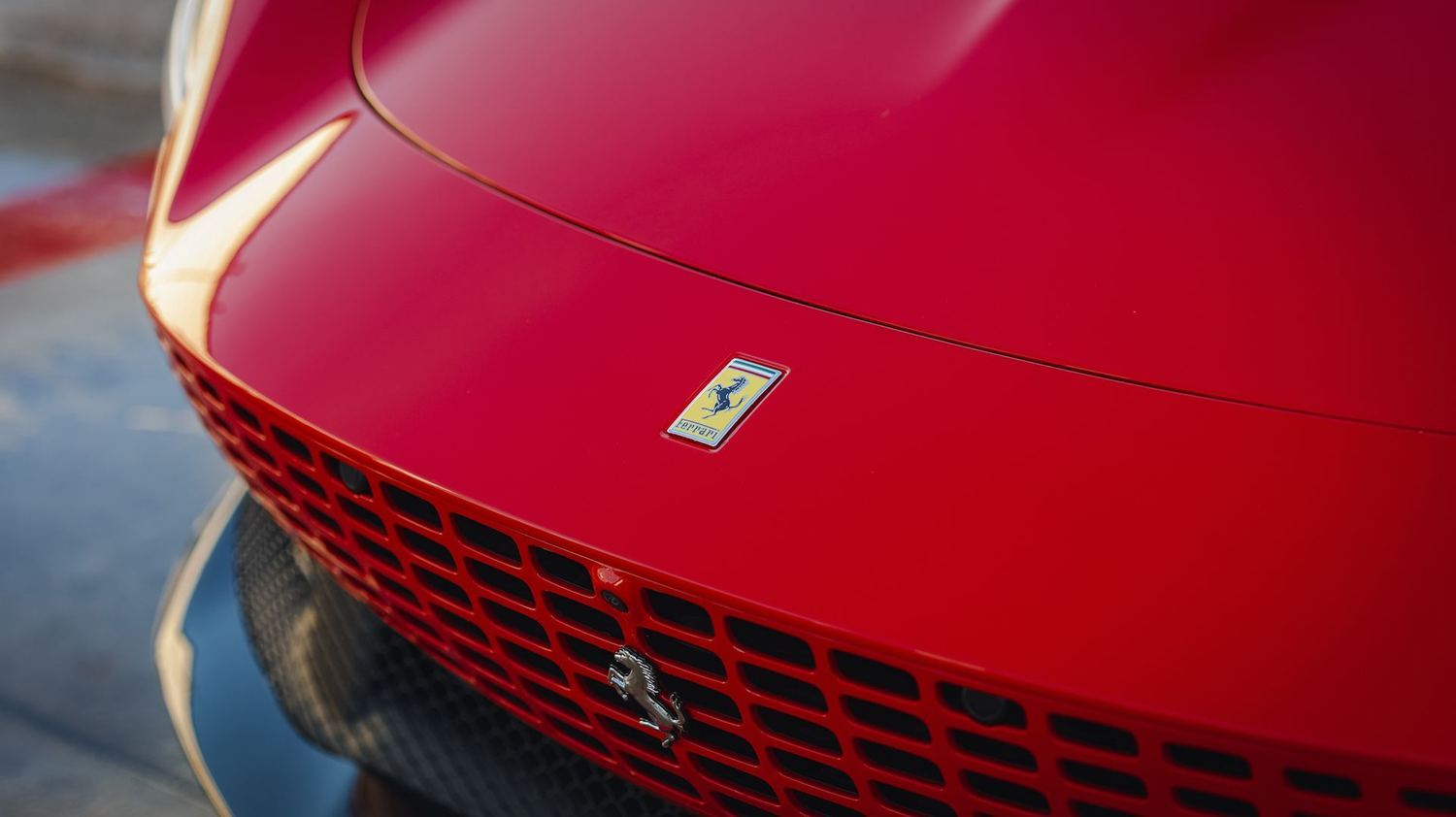
-The long aluminum hood with a subtle crown. I anchor and pre-stretch so the film lays without tension lines across the crown. I remove the hood badge when appropriate (or custom inlay if removal isn’t preferred) and wrap edges underneath for a factory look.
-Front bumper with tight negative radii around the grille corners. This is where hacks over-stretch film and it lifts later. I map anchor points, use controlled heat to set memory, and—when the geometry demands—place a micro-seam deep in a shadow line rather than torture one massive piece.
-Headlamp and DRL pockets. Those “eyelid” recesses create compound curves. I float the film with a low-tack slip, lock reference points, and chase water out in phases so there’s no tension “smiling back” at you a week later.
-Front fenders and (optional) Scuderia shields. Around shield edges, I modify patterns for relief and use micro-inlays so nothing lifts or prints through.
-Doors and the gentle side scallop. The Roma’s doors look simple, but the curvature transitions are sneaky. I wrap into the leading/trailing edges (within safe tolerances) and protect the gloss black B-pillars—they scratch if you breathe on them.
-Mirrors. I’ll bulk a mirror in one piece when the film’s elongation allows clean distortion-free coverage; otherwise, I split it with a seam hidden on the underside. No hero installs that creep back later.
-Roof and A-pillars. I run roof sections with straight, uniform tension so there’s no diagonal shear that can telegraph in sun. A-pillar edges get tucked and heat-set.
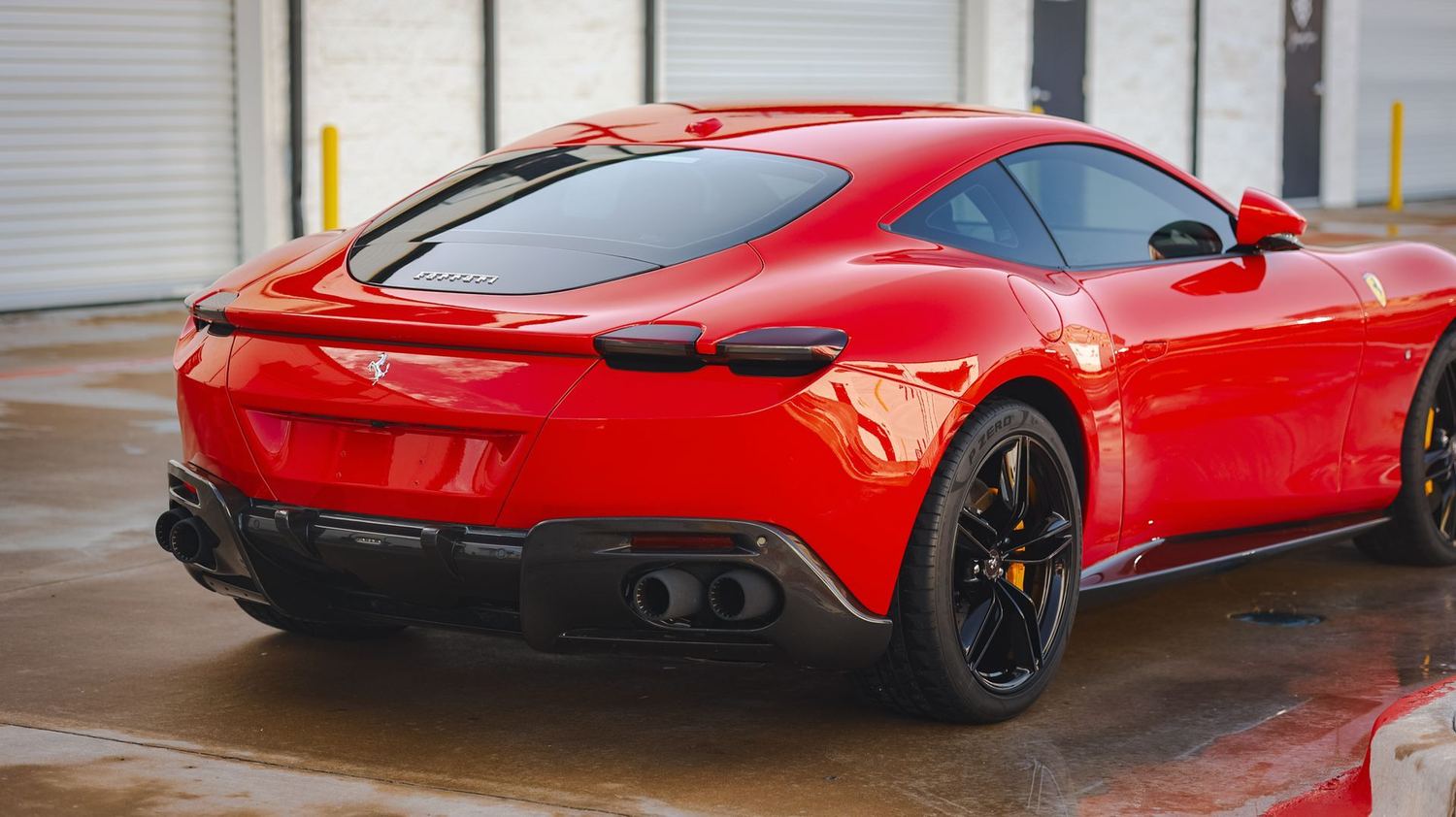
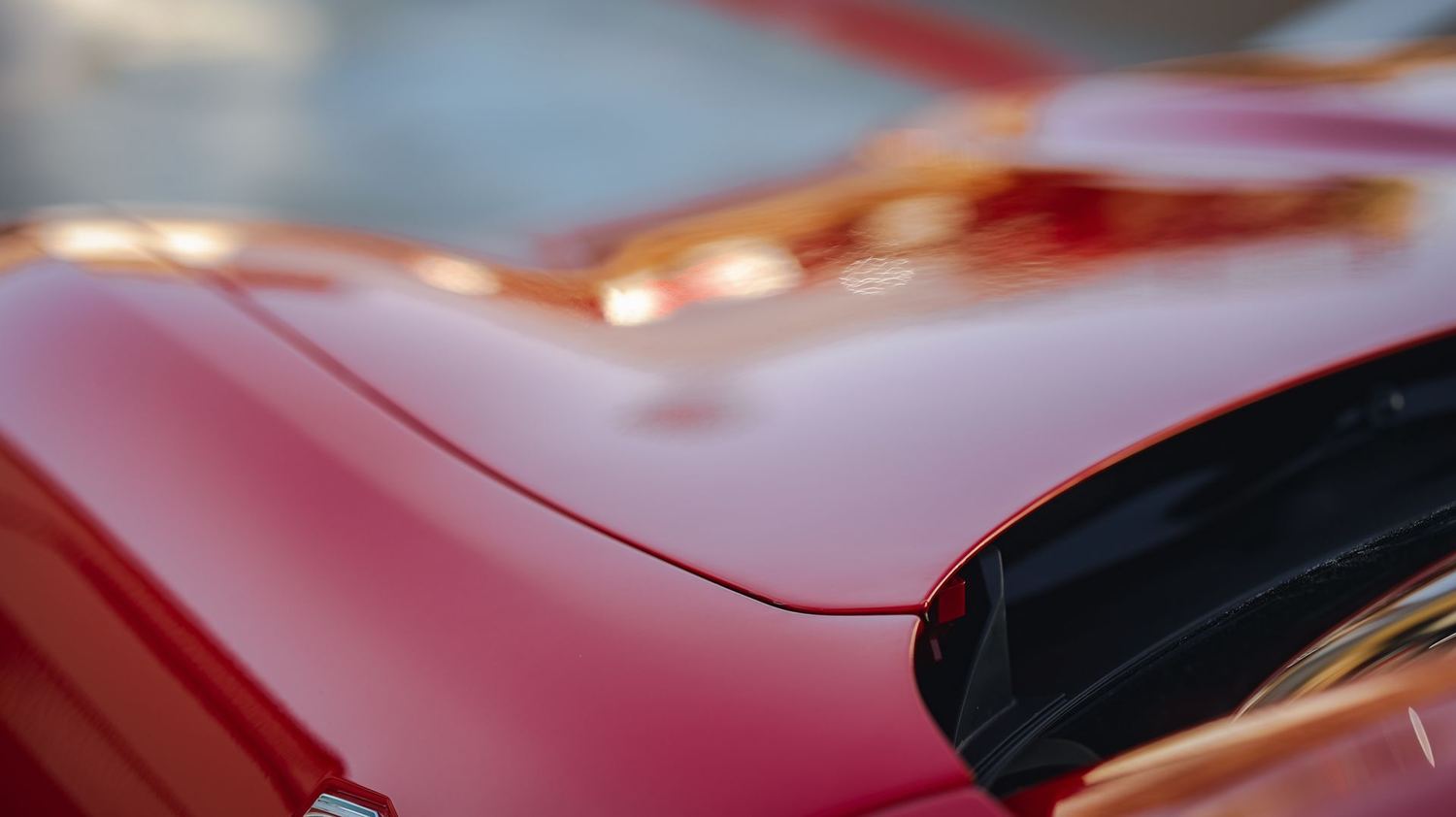
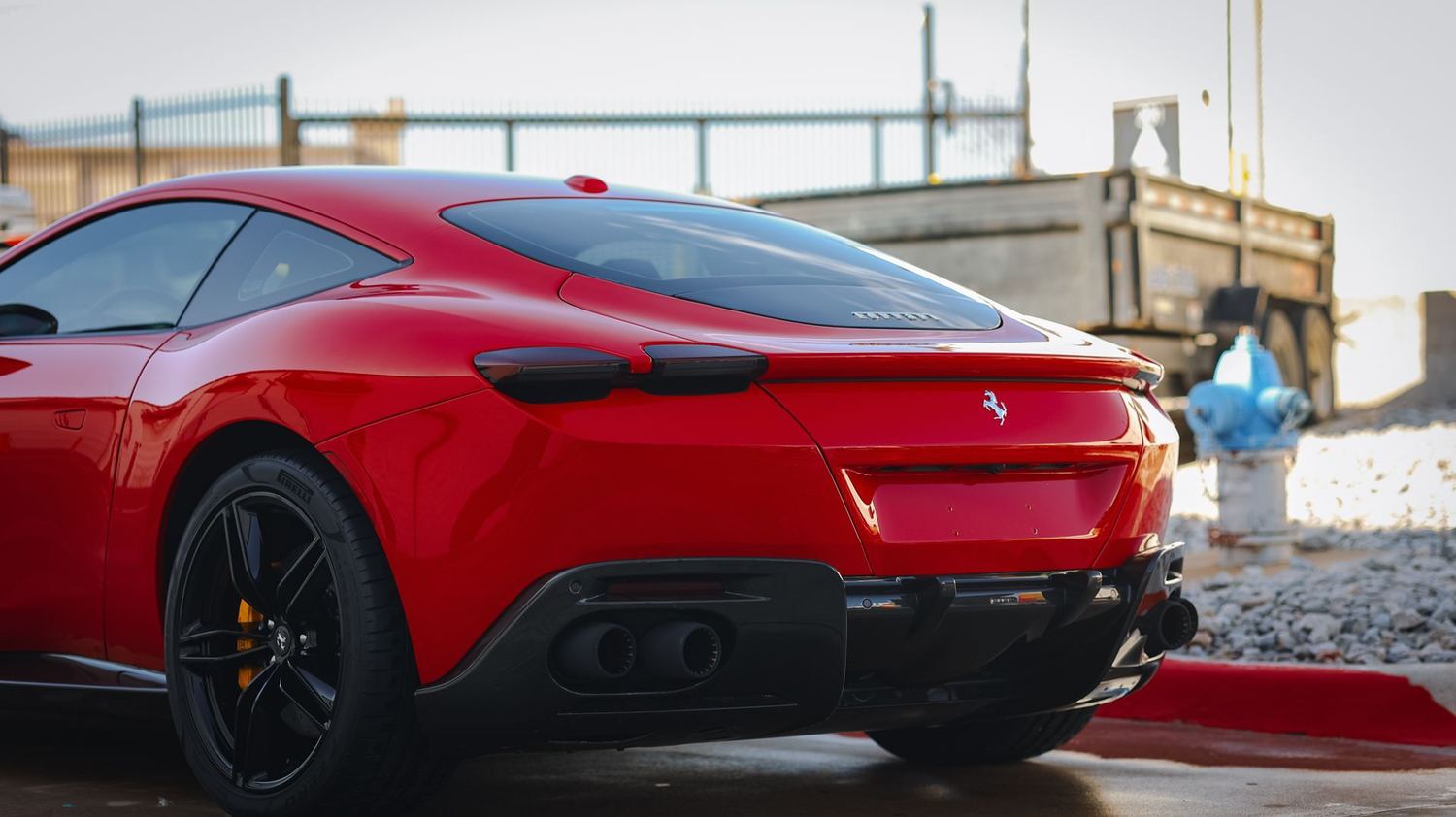
-Rear quarters and hips. This is probably the hardest part about the install. Because the roof is attached to the rear fenders in one long, cohesive piece, there needs to be a seam where the roof meets the rear fenders. We do the seam right where the rear side windows align with the top of the rear glass.
-Fuel door and pocket. I pop the door and wrap the lip so you don’t see paint edges each time you fill up.
-Rear bumper/diffuser. Sensors, corners, and diffuser curves get broken into logical sections with seams buried in natural breaks. I’d rather give you smart, invisible seams than pretend a one-piece is “better” and doom it to lift.
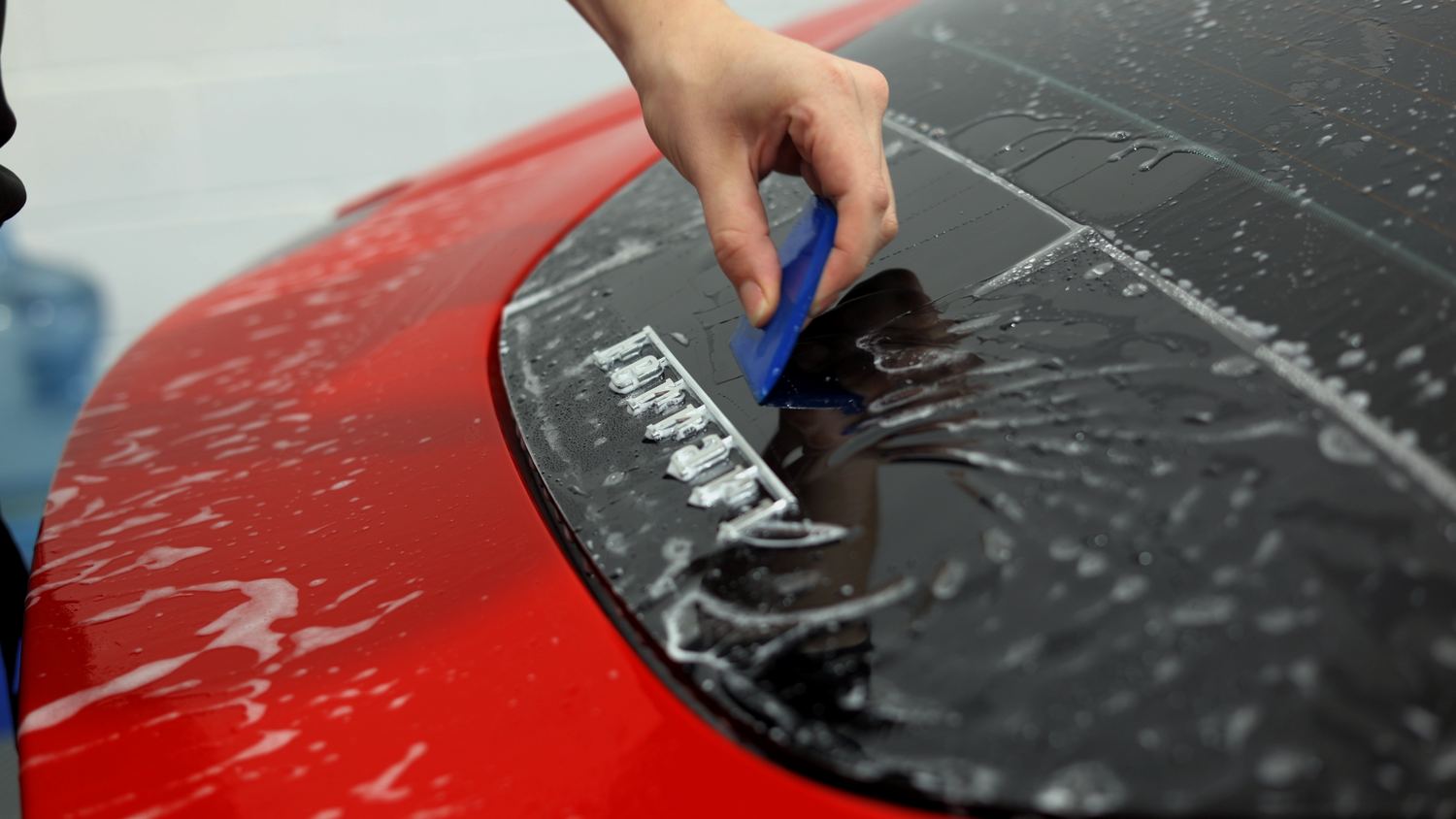
-Badges and scripts. I remove and reinstall with alignment jigs. If not, I plot/hand-trim crisp inlays so the edges are neat and protected.
Bottom line
Full-body PPF on a Roma isn’t about throwing film at panels—it’s about respecting the shape and managing tension so the car looks untouched, just safer. If you bought a Roma, you didn’t buy it to worry. You bought it to drive.
Based in Plano, TX. If you’re in the Dallas area with a Ferrari (Roma, F8, 812, Purosangue), I’ll show you exactly how I’d protect your specific car.
Want this on your car?
Pick your service and your time, or call the shop and talk it through first.